Baylor Scott & White residency housing
Rent vs. Buy in Temple, TX as a BSW Resident
For a short or uncertain stay, start by comparing leases that fit your move dates. Buying deserves a closer look when you can handle repairs, keep cash reserves and manage a sale or a rental when you leave.
Or text MED to 254-718-4249 for a one-page breakdown of your own numbers.

Should a BSW resident rent or buy a house in Temple, TX?
If you expect to leave Temple after residency and need a predictable exit, start by comparing rentals. Buying deserves a closer look when your budget can absorb repairs and a possible sale loss, and you have a workable plan to stay longer or manage a rental.
Neither a physician loan nor a builder credit makes buying automatically cheaper. Include your actual campus, shifts and move date; program length alone doesn’t predict your next job.
The deciding questionCould you still move on time if the house took longer to sell or sold for less than you paid? If not, ownership adds a risk the monthly payment won’t show.
The calculator below is a monthly cash-flow illustration. It doesn’t calculate a three-year profit, total ownership cost or a rent-versus-buy winner.
| If this sounds like you | Price this first |
|---|---|
| Your stay or next job location is uncertain | Leases that fit your dates, and what it costs to leave one early |
| You expect to buy, then sell when you leave | Cash reserves, the loan payoff, selling expenses and a slow-sale scenario |
| You might keep the home as a rental | Permission to rent it, supported rent, vacancy, management, repairs and reserves |
- $800 a month
- Lower modeled outflow for renting in the $245,000 example; about $660 with a 2026 homestead tax basis.
- $8,391
- Principal repaid by that example’s first 36 payments, before any price change or selling expense.
- $1,550 a month
- Median rent in a dated sample of 225 reported Temple 3-bedroom MLS lease records (September 2025 to September 2026).
- $270,000
- Median sold price in a dated sample of 1,430 Temple MLS closed-sale records (October 3, 2025 to October 2, 2026).
Every month
Compare monthly cash flow at different inputs
Change the home price, interest rate, comparable rent, your time in Temple and the tax basis. The defaults reproduce the original video’s example: $245,000 with no down payment ($1,589 principal and interest, which works out to 6.75% over 30 years) against a $1,650 rent. Everything else stays fixed, and each line shows its basis.
The 6.75% default reproduces the video’s payment; it isn’t today’s rate. Use the rate on your Loan Estimate.
Modeled monthly cash outflow
$800a month lower for renting
| Line | Basis | Monthly |
|---|---|---|
| Principal and interest | 30-year fixed at 6.75% on $245,000. The first payment repays $211 of principal. | $1,589 |
| Property tax | 2.3% of price a year. A placeholder, not a parcel estimate. | $470 |
| Insurance | Placeholder, not a quote | $150 |
| Upkeep reserve | 1.18% of price a year, a budget allowance | $241 |
| Own: modeled outflow | Sum of the four lines | $2,450 |
| Rent | Your input | $1,650 |
- Over 3 years, if nothing changed
- $28,784more outflow for owning
- Principal repaid in those 36 payments
- $8,391Loan balance left: $236,609
Neither number is net savings. What either household keeps depends on the sale price, selling expenses, rent changes, fees and the cash actually saved. Dollars are rounded line by line; totals use unrounded values. Need the full budget? Use the Temple affordability calculator.
Fixed in this illustration
- No down payment and a 30-year fixed loan: an illustration, not a loan offer or a statement that you qualify for zero down
- Insurance: $150 a month, a placeholder rather than a quote
- Upkeep reserve: 1.18% of price a year, about $241 a month at $245,000, close to the original video’s $240 allowance
Not included: purchase and sale costs, mortgage insurance, HOA dues and assessments, utilities, renter’s insurance and fees, rent or cost changes, and investment returns.
Dated Temple context, not calculator inputs
| Sample | Window | Median | What it doesn’t establish |
|---|---|---|---|
| 1,430 MLS closed-sale records in the Temple buyer guide | Closed October 3, 2025 to October 2, 2026 | $270,000 sold price; 534 records in the $200,000–$274,999 band | A matched home or a current price |
| 225 reported 3-bedroom MLS lease records in the Temple cost-of-living guide | September 3, 2025 to September 2, 2026 | $1,550 a month | Furnishing, property type or distance to campus |
The sale sample uses CTXMLS exports observed September 2 and October 3, 2026: Residential records with city exactly Temple and recorded sale price above $5,000, with raw records counted rather than unique homes. The lease sample was observed September 2, 2026. They describe different homes and periods, not a matched rent-and-buy pair or a current offer, so use them to sense-check your inputs.
Compare the homes you would actually choose
A smaller apartment and a larger new house solve different needs. Match the alternatives before treating their payment difference as a financial advantage.
For a BSW move, compare the address-to-campus route at your likely shift times, parking, bedrooms, pets, lease dates and the condition of each property. Use the BSW neighborhood and commute guide to build a shortlist, then check the actual trip.
Use the parcel, not a citywide tax shortcut. Get the taxing units, taxable values, exemptions and any separate assessments for the specific home. A seller’s current bill may reflect exemptions or values that won’t apply to you, and a new home’s early bill may not reflect the finished house. The Texas Comptroller explains appraisal and taxable value, and the Temple property-tax guide walks through one parcel line by line.
Bring comparable evidence
Collect a current rental listing and its fee schedule, a specific home you would buy, an insurance quote and a lender’s Loan Estimate. The calculator’s $245,000 price and $1,650 rent are hypothetical inputs, not an average resident purchase or a matched pair of homes.
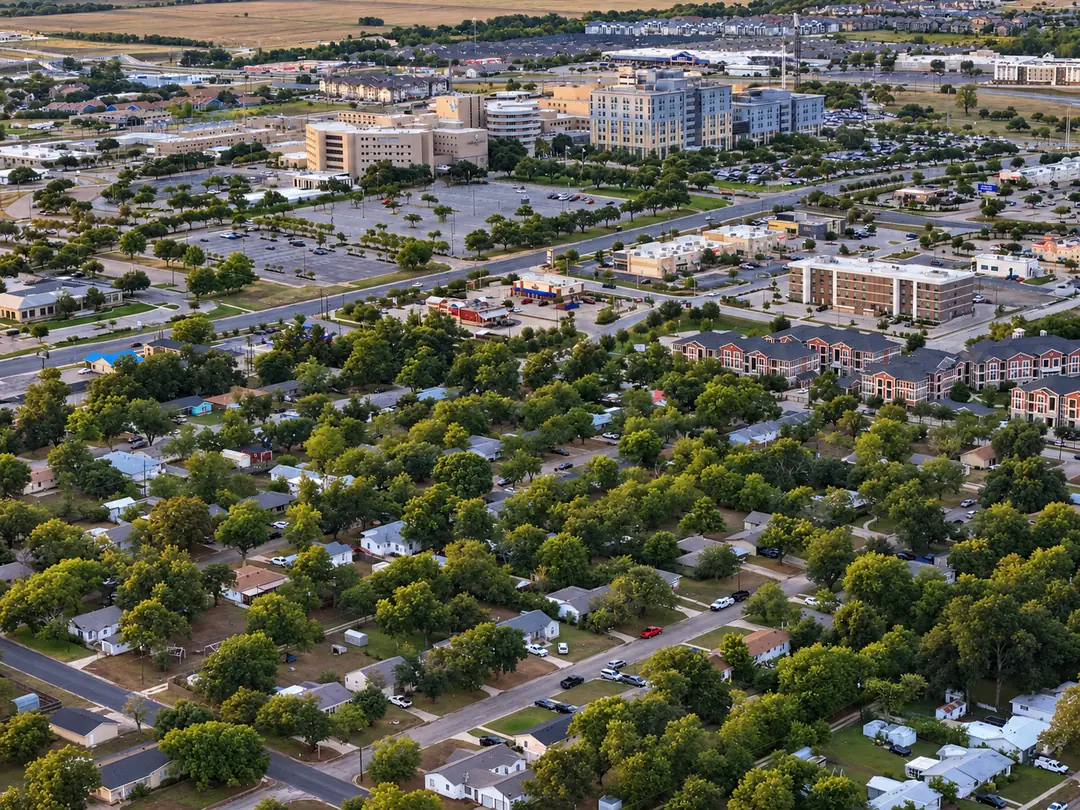
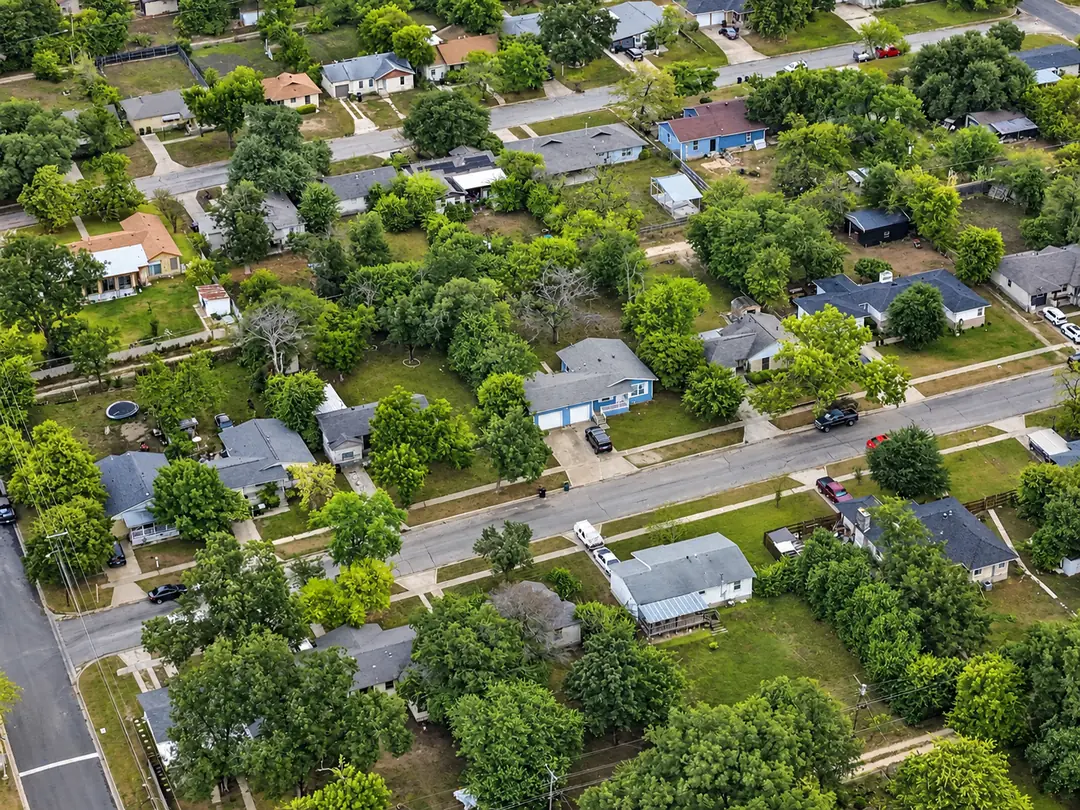
Move-in and move-out
Price the entry and the exit separately
A zero-down loan still needs a cash-to-close calculation, and a future sale needs its own proceeds estimate.
| Moment | If you rent | If you buy |
|---|---|---|
| Move-inWhat it takes to start |
|
|
| Move-outWhat it takes to leave |
|
|
Builder credits: compare the complete offer
Ask which home, lender, loan product, buyer qualifications and closing date an incentive requires. Get the terms in writing and compare the rate, fees and price together. Check the builder’s agent-registration rules before you contact or tour; representation doesn’t guarantee a credit. The guide to new construction for BSW residents lists the questions.
Selling costs: get a home-specific estimate
Don’t assume an automatic discount, or that today’s selling terms will apply when residency ends. Price repairs, possible concessions and negotiated service costs for your own scenario.
Move-out
Build a three-year comparison without assuming a winner
Keep the same starting savings, housing needs and move date for both options. Then compare what each household has left after the move.
In the $245,000 example, the first 36 payments total $57,206, and $8,391 of that repays principal. The payoff after three years is about $236,609, so a sale at exactly the purchase price starts from $8,391 of equity before selling expenses come out.
Sell for what you paid
Equity is roughly the principal repaid. Selling expenses and repairs come out of it.
Sell for less
Proceeds may not cover the payoff plus expenses, and closing the sale could take cash.
Sell for more
A higher price adds equity. Treat it as a scenario, not a forecast.
Also test a longer time to sell, with two housing payments, and a major repair. Those are scenarios, not forecasts, and the monthly calculator above doesn’t run them.
If you rent: track cash actually retained
Include deposits, fees, renter’s insurance, rent changes and moving or termination costs. Savings depend on what you actually keep; no investment return is guaranteed. Treat a refundable deposit separately from a fee.
If you buy and sell: calculate net sale proceeds
Start with the sale price, then subtract selling expenses and the mortgage payoff. Include cash used to buy, repairs, ongoing costs and any overlap during the move. Don’t count principal repayment twice: it’s already reflected in the lower payoff.
Use the lender’s payment schedule and closing disclosures, the lease and a written sale estimate. A lender can explain loan terms; Taylor can help compare the properties and sale assumptions. Tax or investment questions may require the appropriate adviser.
When buying deserves a closer look
These circumstances change the comparison. None guarantees a break-even year or a profit.
Your plans support a longer stay
A longer holding period spreads purchase and sale expenses over more years. Compare the expected duration with your ability to stay if plans change. Fixed-rate principal and interest can stay level while taxes, insurance, maintenance and HOA costs change.
You can operate a rental
Check loan occupancy terms, insurance, deed and HOA restrictions and any rental requirements. Plan for the homestead exemption to end, normally from the next January 1, once the home is no longer your principal residence. Budget for vacancy, management, leasing, repairs and reserves; keeping the home postpones a sale but doesn’t remove expenses or ensure positive cash flow. Investing in Temple covers the landlord side.
The particular home is good value
Support the price with comparable sales, condition and realistic repair estimates. A discount from asking price isn’t proof of a discount from market value. No fixed percentage or search duration removes sale risk.
Financing is a separate decision
Don’t assume physician status guarantees zero down or no mortgage insurance. Ask lenders for written eligibility, down-payment, rate, fee, insurance and occupancy terms, then compare alternatives on matching assumptions. Use the physician mortgage question guide.
The original video, and what changed since
Living in Temple published “BSW Residency in Temple TX: Rent or Buy for Three Years?” on June 9, 2026. The video hasn’t been re-cut. Its YouTube description now carries a September 2026 correction: the $470 monthly tax is roughly the bill without a homestead exemption (about $495 at 2026 rates), and a $245,000 Temple ISD home with one runs about $330 a month at 2026 adopted rates.
Where the video differs from this page, including fixed savings figures and buying-winner examples, use the written comparison. The calculator shows monthly cash flow, not net wealth or sale proceeds.
Rent vs. buy in Temple: resident questions
Should a BSW resident rent or buy a house in Temple, TX?
For a short or uncertain stay, start by comparing leases that fit your program and move dates. Buying deserves a closer look when you can cover repairs, keep cash reserves and handle a sale or rental when you leave. Compare specific homes, written loan terms and move-out costs; no single answer or break-even year fits every resident.
How much does renting save a BSW resident over three years in Temple?
There is no standard three-year savings amount; it depends on the rental, the home, the loan, repairs and the cost of leaving. In this page’s $245,000 example, renting has about $800 a month lower modeled outflow, or $28,784 over 36 unchanged months. That is not net savings: those 36 payments also repay about $8,391 of loan principal, and the sale price and selling expenses decide the rest.
Why is buying risky for a 3-year residency in Temple?
You may need to sell on a fixed schedule even if prices fall or the sale takes longer. In the $245,000 zero-down example, three years of payments repay about $8,391 of principal, so a sale at the purchase price starts from that equity before selling expenses. Repairs or two housing payments can add cash pressure. Renting has its own notice and termination costs, so compare both exits.
What’s the real monthly cost to own vs. rent in Temple as a resident?
The page’s example borrows $245,000 for 30 years at 6.75% and adds a 2.3%-of-price tax placeholder, $150 monthly insurance and a 1.18%-of-price upkeep reserve: about $2,450 a month against a hypothetical $1,650 rent. With a homestead exemption at 2026 adopted City of Temple and Temple ISD rates, the tax line falls from about $470 to about $330 and the total to about $2,310. These are illustration inputs, not quotes, and principal repayment is not entirely an expense.
Do builder incentives really cover closing costs on a new build in Temple?
Only if the written offer for that specific home says so. Ask about lender, loan, buyer and closing-date conditions, and compare price, rate and fees together. Check the builder’s agent-registration policy before you contact or visit. Representation doesn’t guarantee an incentive, and a credit at purchase doesn’t cover future selling costs.
When does buying actually beat renting for a BSW resident?
When the numbers for your actual home, loan and timeline say so. A longer stay, a workable rental plan or a well-supported purchase price can change the result, but none proves buying wins. Model the loan, repairs, ownership period and exit costs; there is no guaranteed six-year break-even or percentage discount that removes the risk.
Should I use the 0%-down physician loan to buy during residency?
Only after comparing written offers. Physician status alone doesn’t determine eligibility or the best loan, so ask about down payment, rate, fees, mortgage insurance, occupancy and other requirements. A zero-down structure, if you qualify, still leaves cash to close, reserves and the risk of a short ownership period.
What property tax rate should a BSW resident expect in Temple?
It depends on the exact parcel: its taxing units, taxable value and the exemptions you qualify for. The calculator’s 2.3% default is a placeholder close to a bill without a homestead exemption. For an owner-occupant with a homestead exemption, 2026 adopted City of Temple and Temple ISD rates put a $245,000 home near $330 a month, about 1.62% of price, if its taxable value equals the price. A seller’s current bill may not match yours, and a new home’s early bill may not reflect the finished house.
Can I rent out my Temple house after residency instead of selling?
Possibly, after you check loan occupancy terms, insurance, deed and HOA restrictions and any rental requirements. Plan for the homestead exemption to end, normally from the next January 1, once it is no longer your principal residence: at 2026 rates the $245,000 example’s tax would rise from about $3,963 to about $5,940 a year. Budget for vacancy, management, leasing, maintenance and reserves using supported rent estimates. Keeping the home postpones a sale; it doesn’t guarantee tenants, appreciation or positive cash flow.
What should I collect before comparing a rental with a purchase?
Collect the actual lease terms and fee schedule for a specific rental; a specific home you would buy, with its parcel tax details and an insurance quote; a lender’s Loan Estimate for that home; and your program dates, campus and likely move date. With those, the comparison stops being hypothetical.
Talk through your rent-versus-buy decision
Text MED to 254-718-4249 with your price range, down payment, loan type and how long you’ll be in Temple. Taylor sends back a one-page rent-vs-buy for your timeline: your monthly cost both ways, what you’d walk away with if you sell, the year buying would pull ahead under your assumptions (if it does) and what would flip the answer.
Texting or booking starts a conversation, not a mortgage application or an agreement for representation.
“I had the pleasure of working with Taylor while helping my son relocate to Temple, Texas, where he began his residency at Baylor Scott & White Hospital. Taylor’s knowledge of the Temple–Belton area is truly exceptional.”

Taylor can help compare specific purchase options, local routes and a potential sale or rental exit. His verified totals, $20M+ in closed volume across 85+ transactions, describe his overall business, not a count of resident purchases.
254-718-4249 or dealswithdasch@gmail.com
Prefer email?
This is a manual follow-up, not an instant calculation. Please don’t send account numbers, tax returns or other sensitive documents through this form.
Where to go next
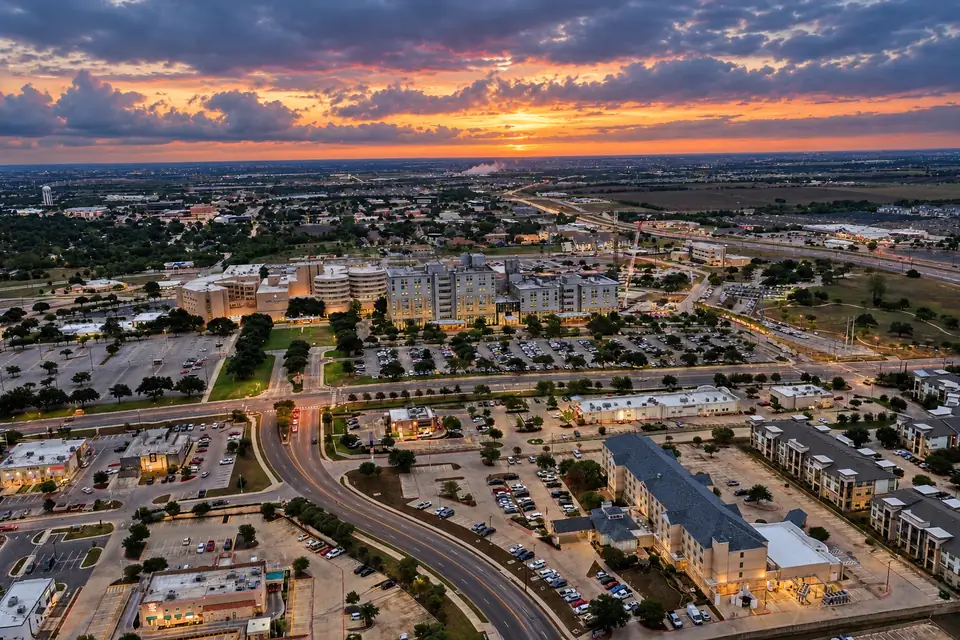 Baylor Scott & White relocation hubThe full guide to moving to Temple for a BSW role, from timing to neighborhoods.
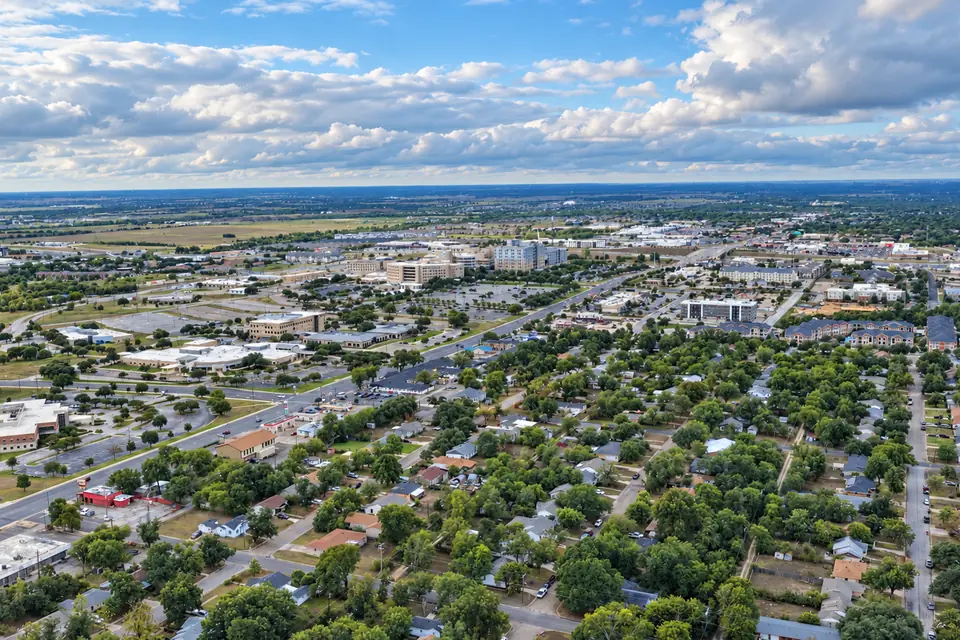 Neighborhoods near BSW by commuteBuild a shortlist, then check the route to your actual campus.
 Physician mortgage questionsWhat to ask lenders about eligibility, rate, fees, mortgage insurance and credits.
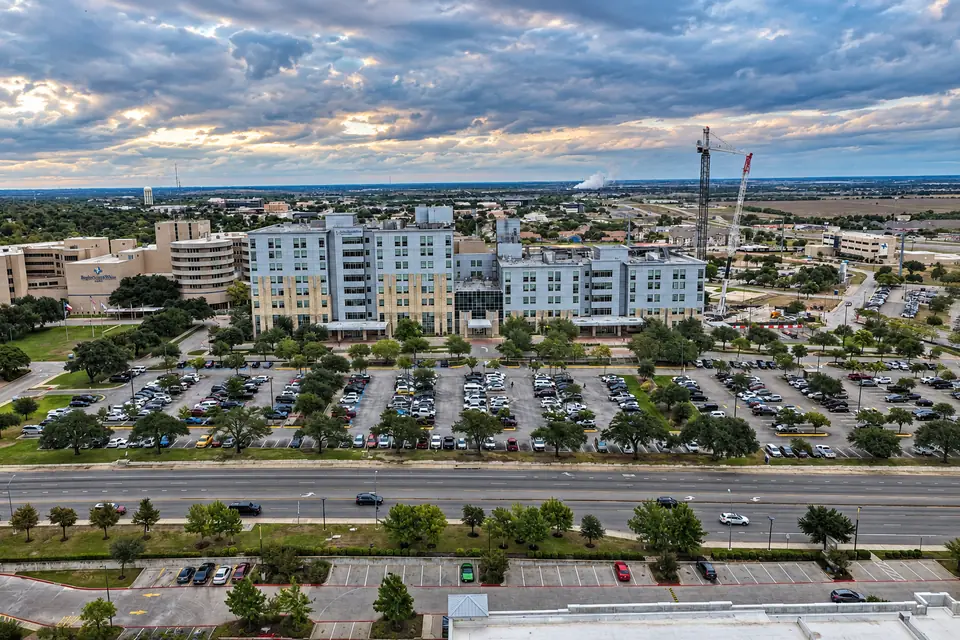
Also useful: the BSW resident buyer roadmap, the Temple buyer guide (dated price bands, plus a link to active listings), and the Temple affordability calculator. Card photos: from Taylor Dasch’s October 3, 2026 drone photos of the BSW campus and nearby streets, edited with generative AI (ChatGPT).
Method and review: Written guidance and calculator arithmetic reviewed September 23, 2026; updated October 4, 2026: page redesigned and wording revised; the time-in-Temple and tax-basis options, principal figures and the dated context table added; math re-checked. Default price, interest, rent, insurance and upkeep figures are hypothetical. The 2.3% tax default is a placeholder; the homestead option uses 2026 adopted rates per $100 of taxable value (City of Temple $0.7500, Temple ISD $1.0619, Bell County $0.2995, road district $0.0468, Temple College $0.2498, Temple Health & Bioscience District $0.014228, Clearwater UWCD $0.002216), the $140,000 school exemption and the 20% city and college exemptions with a $5,000 minimum (exemption amounts from Bell CAD’s 2025 chart; its 2026 chart wasn’t posted as of October 4, 2026), and assumes the taxable value equals the price. The dated Temple samples are context, not inputs; this page offers no current listing count, matched rent-and-buy estimate, investment forecast or buyer-specific quote. Principal and interest use a 360-payment amortization; principal repaid is the drop in the loan balance after the selected number of payments; tax and upkeep percentages are divided by 12. Sources: CFPB Loan Estimate comparison, Closing Disclosure explainer, Texas property valuation and the 2026 rates listed in the Temple vs. Belton comparison. Photos: from Taylor Dasch’s October 3, 2026 drone photos, edited with generative AI (ChatGPT), so sky, lighting and details may differ from the actual scenes. Taylor Dasch is the page contact for corrections. Recheck the actual loan, parcel, lease and exit assumptions whenever your home or timing changes.