Temple TX Property Taxes: Rates, Exemptions, and What You’ll Actually Pay
Temple’s city-only adopted 2026 rate is $0.7500 per $100. A seven-entity Temple/Temple ISD example totals $2.424444 per $100 before exemptions. Neither establishes every address’s bill: multiply each applicable entity’s rate by its own taxable value, then add the lines. Compare the 2026 rates below and use the separately labeled 2025 historical worksheet examples.
2026 adopted rates: compare the same taxing entities
The City of Temple adopted $0.7500 per $100 for tax year 2026, funding fiscal year 2027, which began October 1, 2026. The prior $0.6999 rate belongs to tax year 2025 and fiscal year 2026. The city line is only part of a property’s taxes.
The table uses the seven entities listed for the official Bell County tax-rate portal’s Temple/Temple ISD example, parcel 25518. It compares adopted rates from Bell CAD’s 2025 and 2026 charts; it does not use that parcel’s value, exemptions or bill as a homebuyer estimate. This is one entity combination, not a rate for every Temple address.
| Taxing entity | 2025 | 2026 |
|---|---|---|
| City of Temple | 0.699900 | 0.750000 |
| Temple ISD | 1.137200 | 1.061900 |
| Bell County | 0.312800 | 0.299500 |
| Bell County Road | 0.019900 | 0.046800 |
| Temple College | 0.201700 | 0.249800 |
| Clearwater U.W.C.D. | 0.002230 | 0.002216 |
| Temple Health and Bioscience | 0.013947 | 0.014228 |
| Sum for these seven entities | 2.387677 | 2.424444 |
Reproduce the calculation: 0.750000 + 1.061900 + 0.299500 + 0.046800 + 0.249800 + 0.002216 + 0.014228 = $2.424444 per $100. Only if every entity has the same taxable value can you multiply that sum by one value. At a hypothetical $300,000 taxable for every line, with no exemptions, the 2026 model is $300,000 ÷ 100 × 2.424444 = $7,273.33 annually. The matching 2025 model is $7,163.03. The $110.30 difference holds values and entity membership fixed; it is not a forecast of anyone’s bill.
What did the FY2026 “20.95% increase” mean? The adopted FY2026 budget (page 3) describes an increase in budgeted property-tax revenue, not the tax rate. The city’s budget comparison table shows budgeted property-tax revenue increasing from $55,791,326 to $67,480,553: $11,689,227 ÷ $55,791,326 × 100 = about 20.95%. New-property revenue was included. The tax-year 2025 city rate rose from $0.6265 to $0.6999 per $100, about 11.72%.
Rate change is not bill change: for tax year 2026, (0.7500 − 0.6999) ÷ 0.6999 × 100 = about 7.16% for the city’s nominal rate. Revenue growth, a nominal rate change and a comparison with a no-new-revenue rate use different bases. Do not apply any of these percentages to a household’s combined bill. Appraised values, entity-specific taxable values, approved exemptions and tax ceilings can change separately.
Check the address: a Temple mailing address does not establish city or school-district membership. For a Belton ISD property, use that district’s adopted rate instead of Temple ISD’s and verify every other line. Include any applicable MUD, water, emergency-services or other district. Track separately billed assessments outside this rate sum. Do not reuse a seller’s exemptions or prior bill as your own estimate.
2026 rate comparison checked October 14, 2026. Sources: Bell CAD 2026 adopted rates (October 5 chart); Bell CAD 2025 rates; City of Temple FY2027 budget explanation; official parcel entity list. The worksheet and eight named residential examples below remain explicitly historical 2025 models; they have not been relabeled as 2026.
What is the property tax rate in Temple, TX?
There is no single combined rate that establishes every Temple buyer’s bill. The parcel’s taxing units, tax year, taxable values and approved relief determine the calculation.
A concrete Temple example
The seven 2025 lines for Blackland Ranch parcel 524211 total $2.387677 per $100. Applying every line to a hypothetical $300,000 taxable value, with no exemptions, gives $7,163.03 annually. The separate qualified general-homestead illustration below gives $5,029.99 under its stated assumptions: the $140,000 school exemption, 20% Temple City and Temple College exemptions with a $5,000 minimum, and no other exemption or relief. Neither is a quote for another home.
- Find the exact parcel and tax year before using a city or neighborhood comparison.
- Use each entity’s taxable value; purchase price and the seller’s prior bill are not substitutes.
- Include every listed district and check for separately billed assessments.
- Ask the lender for an escrow estimate that includes its insurance, cushion and shortage assumptions.
Historical rates: Bell CAD’s 2025 rate and exemption chart. Valuation method: Texas Comptroller. The examples below show their parcel IDs so you can distinguish a sample from a neighborhood-wide claim.
Bell County tax worksheet: compare the actual tax lines
Start with a named 2025 example, then substitute the rates and taxable values shown for your property and tax year. No exemption is applied automatically.
Loading an example replaces all rows with its 2025 rates and the starting value above. The default assumes $300,000 taxable for every entity with no exemptions; it is a hypothetical value, not a purchase-price estimate. Changing this selector or starting value leaves your current rows intact until you press Load.
Annual modeled tax
Sum of each entered rate × its entered taxable value ÷ 100. Monthly set-aside is annual tax ÷ 12.
Use the same tax year for every entered line. Confirm rates, taxable values and entity membership in the Bell CAD property search and Bell County tax-rate portal. Edited rows are your scenario, not a verified parcel result; adding or removing a row changes what is included.
This worksheet does not calculate exemption eligibility, appraisal limits, tax ceilings, partial-year proration, special valuations or separate assessments. It does not produce an official bill or lender escrow payment. Calculator entries stay in this page and are not included in the follow-up form.
How do the historical parcel examples compare?
These are eight specific 2025 parcel profiles, not citywide rates or current neighborhood averages. Every amount uses the same hypothetical $300,000 taxable value for each listed entity, without exemptions.
| Named sample | Entity lines | 2025 sum per $100 | Annual model at $300,000 |
|---|---|---|---|
| Blackland Ranch · Temple Parcel 524211 | 7 | 2.387677 | $7,163.03 |
| Heritage Oaks · Killeen Parcel 505435 | 6 | 2.004130 | $6,012.39 |
| Eagle Heights · Salado Parcel 514547 | 6 | 2.024930 | $6,074.79 |
| Hartrick Valley · Temple mailing address Parcel 466582 | 4 | 1.483830 | $4,451.49 |
| Hartrick Crossing · Temple Parcel 510268 | 7 | 2.399377 | $7,198.13 |
| Fryers Bend · Temple Parcel 512667 | 7 | 2.399377 | $7,198.13 |
| Bella Charca · Nolanville Parcel 363051 | 8 | 1.901130 | $5,703.39 |
| Three Creeks · Belton mailing address Parcel 529558 | 5 | 2.267330 | $6,801.99 |
Membership comes from the official Bell County tax-rate portal’s saved parcel records, using the 2025 rate fields; component rates were checked against the 2025 Bell CAD chart. Unreported later-year rates are not treated as zero. The worksheet exposes every included line.
The boundary matters more than the mailing city
Hartrick Valley’s sample has four lines and no City of Temple line; the Hartrick Crossing and Fryers Bend samples have seven. Eagle Heights includes ESD 1, Bella Charca includes two water-control districts, and Three Creeks includes MUD 1. Those differences explain why a city-name preset can miss a tax. They do not establish the profile for the house next door.
What could a qualified homestead change at $300,000?
This is a separate 2025 illustration using Blackland Ranch parcel 524211’s entity list, an assumed $300,000 value before exemptions and only the general-homestead reductions described here.
| Taxing entity | 2025 rate per $100 | Assumed taxable value | Modeled annual tax |
|---|---|---|---|
| Bell County | 0.312800 | $300,000 | $938.40 |
| Temple College | 0.201700 | $240,000 | $484.08 |
| Bell County Road | 0.019900 | $300,000 | $59.70 |
| Temple Isd | 1.137200 | $160,000 | $1,819.52 |
| City Of Temple | 0.699900 | $240,000 | $1,679.76 |
| Clearwater U.W.C.D. | 0.002230 | $300,000 | $6.69 |
| Temple Health And Bioscience | 0.013947 | $300,000 | $41.84 |
$5,029.99 annually · $419.17 monthly tax set-aside
The illustration assumes the owner qualifies for the $140,000 school exemption and Temple City/Temple College local exemptions. The 2025 chart lists those local exemptions as 20% with a $5,000 minimum: each deduction is the greater of 20% of value or $5,000, capped at that entity’s value. At $300,000, that leaves $160,000 taxable for Temple ISD and $240,000 for each city/college line.
All other lines remain at $300,000 in this limited illustration. No Road District homestead deduction is assumed: its general-homestead field is blank in that chart. No age/disability relief, tax ceiling, appraisal limit, proration or separate assessment is modeled. The unrounded sum is $5,029.991; displayed line rounding may differ from the rounded total by a cent. Enter these taxable values manually in the worksheet to reproduce it.
For a new build, check what the records actually value
January 1 construction status can affect the appraised value. A prior bill may describe land or an unfinished house rather than the completed home you are buying. Ask the lender which completed-home value, exemptions and insurance it used, and how a shortage or cushion could affect escrow. There is no standard year-two increase that applies to every buyer. Compare the Temple new-construction guide and builder comparison alongside the specific parcel records.
Killeen and Harker Heights property tax rates (2025)
Bell CAD’s 2025 chart lists these adopted rates per $100 of taxable value. The table applies them to the same $300,000 homestead illustration used for Temple above. They are historical 2025 figures, not current-year quotes, and a particular parcel can carry a different list.
| Taxing entity | 2025 rate per $100 | Assumed taxable value | Killeen · parcel 505435 | Harker Heights · Killeen ISD |
|---|---|---|---|---|
| Bell County | 0.312800 | $300,000 | $938.40 | $938.40 |
| Central Texas College | 0.090000 | $300,000 | $270.00 | $270.00 |
| Bell County Road | 0.019900 | $300,000 | $59.70 | $59.70 |
| Killeen ISD | 0.877800 | $160,000 | $1,404.48 | $1,404.48 |
| City of Killeen | 0.701400 | $300,000 | $2,104.20 | Not included |
| City of Harker Heights | 0.530000 | $300,000 | Not included | $1,590.00 |
| Clearwater U.W.C.D. | 0.002230 | $300,000 | $6.69 | $6.69 |
| Combined rate per $100 | 2.004130 | 1.832730 | ||
| Modeled annual tax | $4,783.47 | $4,269.27 |
Killeen $4,783.47 · Harker Heights $4,269.27 annually
Both columns assume a $300,000 value before exemptions and a qualified general homestead with the $140,000 school exemption and no other exemption or relief. The 2025 chart lists that $140,000 exemption for Killeen ISD, which leaves $160,000 taxable for the school line, and leaves the general-homestead field blank for Bell County, the Road District, Central Texas College, Clearwater UWCD and both cities, so those lines stay at $300,000. Monthly tax set-asides are $398.62 in Killeen and $355.77 in Harker Heights. No tax ceiling, appraisal limit, proration or separate assessment is modeled. With no exemptions, the same $300,000 on every line gives $6,012.39 and $5,498.19.
The Killeen column uses the six 2025 lines on Heritage Oaks parcel 505435, the Killeen sample above. The Harker Heights column is not a parcel sample: it adds the city’s rate to the overlapping units the City of Harker Heights lists in its 2023–2024 annual financial report (Killeen ISD, Central Texas College, Bell County, the Road District and Clearwater UWCD). The same 2025 rates appear in the Bell County tax-rate portal. To reproduce the Killeen column, load the Heritage Oaks example and change the Killeen ISD value to $160,000; for Harker Heights, also replace the City of Killeen line with the City of Harker Heights at 0.53. Confirm the district list and tax year for the exact parcel.
Which exemptions and limits should you ask about?
An exemption reduces taxable value; an appraisal limitation restricts value growth; a tax ceiling limits a particular tax. They are different forms of relief, and this worksheet does not determine qualification.
Qualified ownership and principal-residence use matter. School districts provide a $140,000 exemption; local options vary. Apply through Bell CAD and confirm approval and the applicable tax year. Filing alone is not approval.
The additional school exemption is $60,000. A qualifying school-tax ceiling is separate; improvements can affect it. Before moving, ask about a proportionate transfer and the required ceiling certificate. Surviving-spouse relief has additional conditions.
Partial exemptions use statutory dollar amounts, not a simple percentage discount on the bill. Total homestead relief requires the specified compensation and disability rating or individual-unemployability qualification. Ask Bell CAD which exemption applies.
Qualified land may receive productive-use appraisal. A change of use can trigger rollback taxes for the preceding three years, subject to the rules and exceptions. Request the property’s actual history and exposure before changing its use.
Sources: Comptroller exemption guidance, Texas Tax Code §§11.13, 11.26 and 11.131, and agricultural appraisal guidance. See the retiring in Temple guide or Bell County land guide for related planning.
A cap on value is not a cap on the tax bill
The homestead appraisal limitation generally restricts growth to 10% plus new improvements once its ownership and timing rules apply. Rates and exemptions can still change the bill. Some non-homestead property may qualify for the temporary circuit-breaker limitation; eligibility, exclusions and new improvements matter. The Comptroller currently states that program expires December 31, 2026. Do not assume every non-homestead property is uncapped.
Use current Comptroller valuation guidance and the parcel’s actual notices before estimating either limit. Neither is calculated here.
How do you check a MUD, ESD or separate assessment?
Read the entire taxing-unit list, then ask about assessments that may be billed separately. A neighborhood name is not proof that a particular district applies.
| Historical sample | Verified 2025 district line | At an assumed $300,000 taxable value |
|---|---|---|
| Three Creeks · parcel 529558 | MUD No. 1 Bell County · $0.783 per $100 | $2,349 annually for this line only |
| Eagle Heights · parcel 514547 | Bell County ESD 1 · $0.100 per $100 | $300 annually for this line only |
| Bella Charca · parcel 363051 | WCID 3 · $0.0358 and WCID 6 · $0.0243 | $180.30 annually for these two lines |
These district lines are already included in their sample totals above; do not add them twice. The verified Three Creeks example uses MUD 1, not MUD 2. An ad valorem MUD tax is a district levy, not an individual loan payoff balance.
For a PID or other special assessment, obtain the assessment schedule, remaining balance and any written prepayment terms. Do not assume a payoff removes every future charge. The worksheet sums rate-based tax lines only, so track separate assessments outside its result. See the MUD and PID guide for questions to take to the seller and title company.
Which records should you compare for a neighborhood shortlist?
Use these neighborhood guides to choose homes to compare, then check the actual parcel. These photos are location context, not evidence of a tax rate or bill.


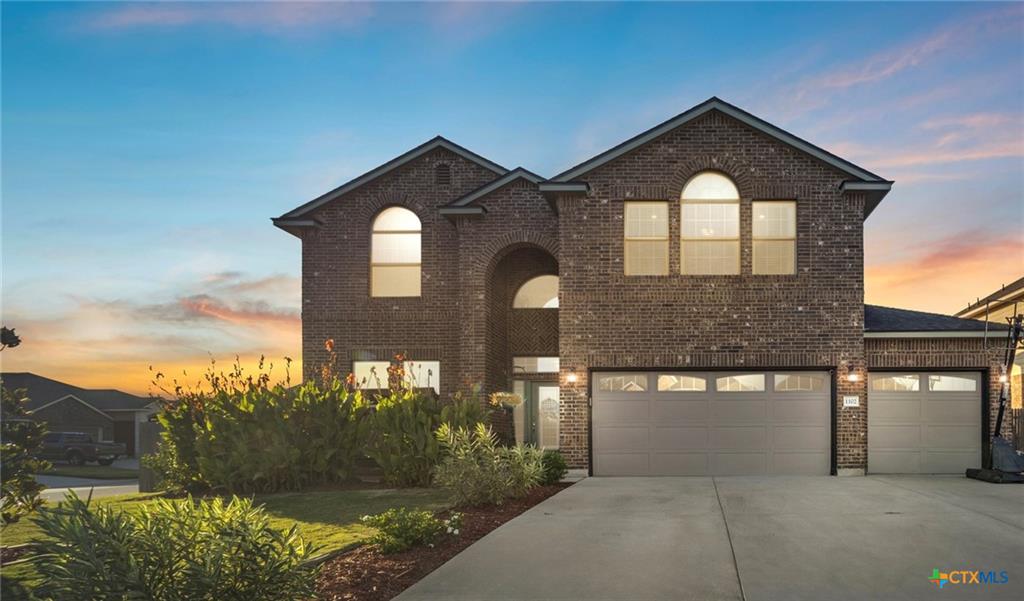
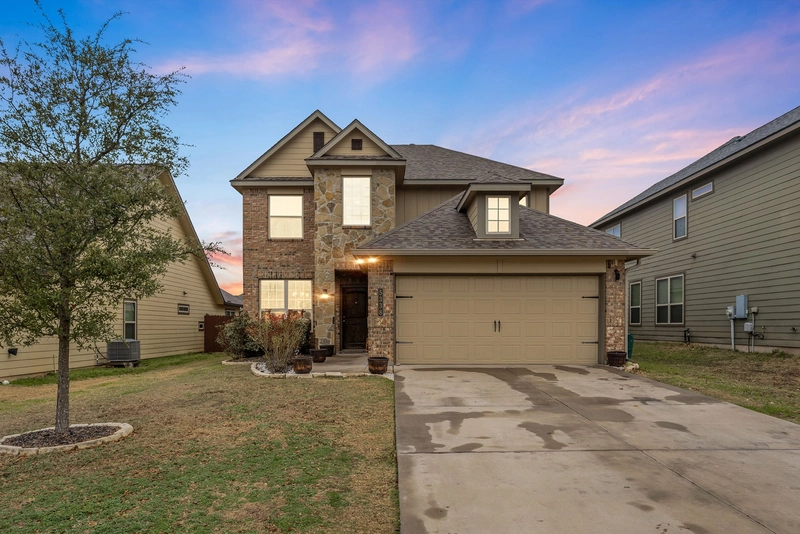


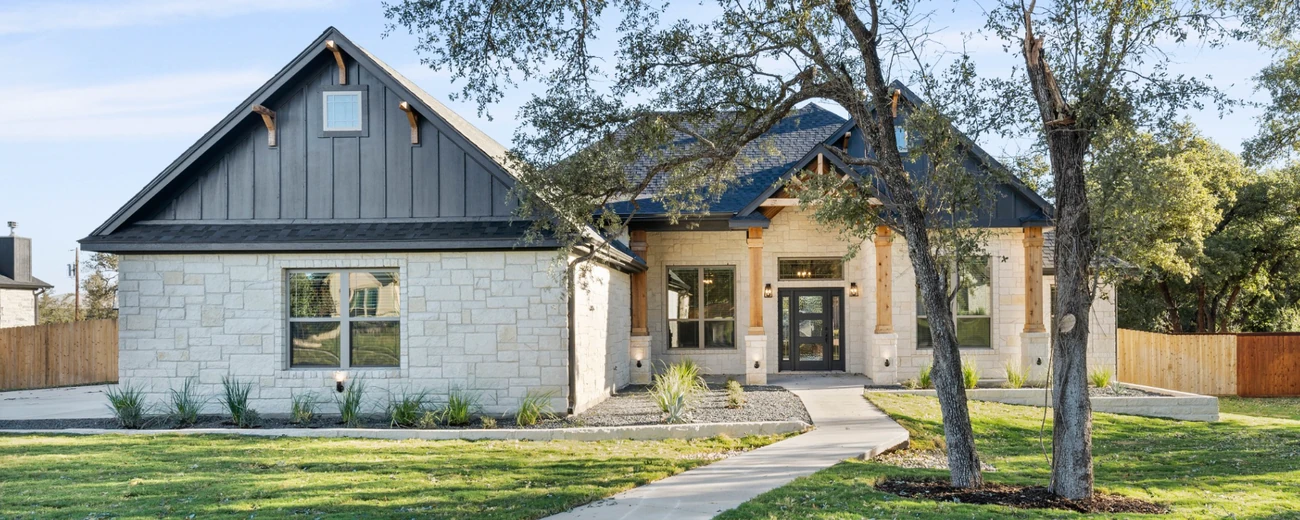
A neighborhood median sale price cannot establish a particular home’s taxable value, exemptions or district membership. Build your comparison from the homes you are actually considering.
How do you check deadlines and prepare a protest?
Start with your own notice. A protest challenges the appraisal or another permitted issue; it does not guarantee a lower value or bill.
- Valuation: January 1 is the usual appraisal date; document relevant condition and property details.
- Homestead application: The general deadline is before May 1. The general late-filing rule is up to two years after the tax delinquency date, with statutory exceptions and qualification requirements.
- Protest: The usual deadline is May 15 or 30 days after the appraisal notice is mailed, whichever is later. Read the actual notice and applicable exceptions.
- Evidence: Check factual errors, condition, comparable sales and unequal appraisal as relevant to your grounds. Follow the informal review and appraisal-review-board instructions.
- Payment: Regular bills are generally sent in the fall, payable by January 31 and delinquent February 1. Late bills, holidays and other exceptions can change the applicable date; follow your bill.
Sources: Tax Code §11.431 on late homestead applications, Comptroller protest guidance, and tax bills and payments. The Bell County protest guide offers a starting checklist. No success percentage is promised here.
How do you compare two homes without mixing assumptions?
Use one tax year and a consistent ownership scenario, then record the differences that actually belong to each home.
| Collect for each property | Why it changes the decision |
|---|---|
| Parcel ID and complete taxing-unit list | Mailing city alone does not identify all taxing boundaries. |
| Rate year and taxable value for every entity | A combined rate times purchase price can miss exemptions and limitations. |
| Your exemption eligibility and any ceiling transfer | A seller’s approved relief may not describe your situation. |
| Completed improvements and special valuation | A prior assessment may not describe the home or use you plan. |
| Separate assessments, HOA and insurance | These affect the housing budget but are not all ad valorem tax lines. |
| Lender’s escrow assumptions | Annual tax divided by 12 excludes insurance, shortages and cushions. |
Then compare the full monthly budget and cash needed at closing. The Temple buyer guide, Belton buyer guide and affordability worksheet can help organize the search; their assumptions are separate from this tax model.

Bring the parcel records into the home comparison.
Request a conversation about an address or the area and price range you are considering. Start with the current appraisal record, tax statement and any assessment documents. Bell CAD determines exemption eligibility; the tax office and lender can explain billing and escrow. Taylor can help organize the property questions alongside your home search. Request property-tax follow-up.
Property-tax questions buyers ask
What is the property tax rate in Temple TX?
What were the 2025 property tax rates in Killeen and Harker Heights?
How much are taxes on a $300,000 Temple home?
Does the worksheet automatically apply exemptions?
Is the monthly result my escrow payment?
Do I lose my school-tax ceiling when I move?
When should I file a homestead application or protest?
Does Three Creeks have MUD 1 or MUD 2 in this model?
What happens when I request follow-up?
Request property-tax follow-up
Share an address if you have one, or a starting area and price range. The next step is a conversation about the records and questions to check. This request does not generate a tax bill, establish exemption eligibility or provide a lender escrow quote. The calculator’s entries are not sent with this form.
Direct to Taylor Dasch, EG Realty · 254-718-4249 · dealswithdasch@gmail.com
Page content updated October 24, 2026. Rate comparison checked October 14, 2026. Guide and calculation method reviewed September 23, 2026. Worksheet example rates and membership are historical 2025 evidence from Bell CAD and the Bell County tax-rate portal; they are not current-year quotes. Current legal guidance was reviewed separately. Content owner: Taylor Dasch, EG Realty.