Temple VS Belton
The data-backed scorecard nobody else will publish.
Temple’s median sold price is $269,900 vs. Belton’s $320,848 (dated MLS closed-sales analysis, September 2, 2026 pull). Belton’s quarterly median has held near $320,000 for four straight quarters (September 2025–August 2026), so the spring’s “−10% correction” did not persist. The gap sits near $51,000. In TEA’s 2026 ratings, Temple ISD earns B (81) and Belton ISD B (80). Compare the exact homes for taxes, zoned campuses, work travel and lake access. Some Temple addresses are in Belton ISD; a city name alone does not establish a school assignment or an annual tax bill.
Market figures retain their stated pull dates. School ratings: TEA 2026; tax examples: BellCAD 2025 adopted rates. Tax, school and crime-source review: September 15, 2026. Verify the address and applicable tax year before budgeting.
Start with Temple for the lower citywide median sold price, then compare actual homes in both cities. Temple’s $269,900 and Belton’s $320,848 medians are from the dated MLS closed-sales analysis pulled on September 2, 2026; they do not explain why prices differ. Both districts earned B ratings in 2026: Temple ISD 81 and Belton ISD 80, with different strengths by domain and campus. Taxes depend on the parcel, taxable values and exemptions. Compare your budget, assigned schools, work destination, lake access and move date before choosing.
- Temple median sold: $269,900 | Belton: $320,848 (dated closed-sales analysis, September 2, 2026 MLS; Jun–Aug 2026 quarter $265,000 vs $320,033) — gap ≈ $51K
- Property taxes: compare each address’s taxing entities, taxable values and eligible exemptions; there is no single citywide total.
- 2026 TEA ratings: Temple ISD B (81) | Belton ISD B (80); review the assigned campuses and programs.
- BSW commute: compare each address to your work entrance at your shift time
- Quarterly trend (Sep–Nov 2025 → Jun–Aug 2026 medians): Temple $274,250 → $265,000 | Belton $324,208 → $320,033 (MLS sold data) — both drifting slightly lower, no correction
- Days on market (active listings): Temple 75 | Belton 68 (September 2026 MLS)
- Crime comparison: use the same reporting year, offense definitions and population basis; check local police and Texas DPS records.
The Current MLS Snapshot — Temple vs. Belton Today
These Central Texas MLS closed-sale medians come from the September 2, 2026 analysis. The tables below identify their source windows; verify current property status and terms separately. Temple is the value play — lower price, lower price per square foot, and more inventory. Check the Baylor Scott & White drive from each property at your shift time. Belton’s citywide median is roughly $51K higher. That difference does not isolate the effect of schools or lake access: the homes sold in each city can differ in size, age, condition and location. Compare similar properties before treating the median gap as a premium for any one feature.
| Metric (Updated September 2026) | Temple — value play | Belton — premium play |
|---|---|---|
| Median Sold Price | $269,900 | $320,848 |
| Median Price / Sq Ft | $156 | $172 |
| Median Days on Market (sold) | 69 days | 63 days |
| Active Listings | 623 | 246 |
| School District (2026 TEA rating) | Temple ISD · B (81) | Belton ISD · B (80) |
| Belton Premium (median) | ~$51K more in Belton — citywide medians; causes are not isolated | |
Source: Central Texas MLS closed-sales analysis dated September 2, 2026. Two pages do the heavy lifting from here: if your move is driven by the hospital, start with homes for sale near Baylor Scott & White (ranked by commute). If you want the neighborhood-level read on each city, see the ranked best neighborhoods in Temple and best neighborhoods in Belton. Medians, inventory, and school ratings change — verify current figures and the exact zoned schools for a specific address before deciding.
What Do Homes Actually Cost in Temple vs. Belton?
Temple’s median sold price is $269,900 (dated closed-sales analysis, September 2, 2026 MLS pull; 1,457 closings). Belton’s is $320,848 (660 closings). The spring’s “Belton is correcting −10%” story did not hold: Belton’s quarterly medians ran $324,208 → $319,990 → $320,000 → $320,033 from September 2025 through August 2026, while Temple’s oscillated between $264,000 and $274,950. The gap sits near $51,000 and is not narrowing. Both markets remain buyer-leaning on time: Belton’s sold homes took a median 63 days (56 in the June–August quarter), Temple’s 69 (60 in the June–August quarter).
| Market Metric | Temple | Belton (MLS Data) |
|---|---|---|
| Median Sold Price (Dated Analysis — September 2026) | $269,900 | $320,848 |
| Median Sold (Jun–Aug 2026 quarter) | $265,000 | $320,033 |
| Median Price / Sq Ft (sold) | $156 | $172 |
| Median Days on Market (sold) | 69 days | 63 days |
| Active Listings (September 2026) | 623 | 246 |
| Quarterly Trend (Sep–Nov 2025 → Jun–Aug 2026) | $274,250 → $265,000 | $324,208 → $320,033 |
| Closed Sales (Dated Analysis) | 1,457 | 660 |
Headline, quarterly and days-on-market figures: Central Texas MLS closed sales (city field = Temple / Belton, sale price ≥ $25,000), pulled September 2, 2026, dated closed-sales analysis. Zip-code rows below: 730-day MLS trend pull, March 2026 — not re-run in September. National aggregators (Realtor.com, Redfin) have shown conflicting Belton year-over-year figures; the MLS quarterly medians above are the primary source on this page.
By Zip Code
| Zip | Area | Median | $/SqFt | Avg DOM |
|---|---|---|---|---|
| 76501 | East/Historic Temple | $241,990 | $146 | 100 days |
| 76502 | South/West Temple | $315,000 | $171 | 92 days |
| 76504 | North/Central Temple | $218,720 | $146 | 89 days |
| 76513 | Belton Citywide | $330,000 | $175 | 63 days |
Zip codes matter here: 76501 and 76504 carry Temple’s lowest entry prices in the low $200Ks, while 76502—Temple’s premium new-construction corridor—runs a $315K median and closes most of the gap with Belton.
Who Pays More in Property Taxes—Temple or Belton?
Neither city has one combined property-tax rate for every home. Start with the exact parcel and tax year. Add each applicable entity’s tax using that entity’s taxable value after eligible exemptions; purchase price is not automatically taxable value. A lower city levy alone does not establish a lower total bill.
| 2025 adopted component | Rate per $100 taxable value | Applies when |
|---|---|---|
| City of Temple | $0.699900 | Parcel is subject to Temple city tax |
| City of Belton | $0.522500 | Parcel is subject to Belton city tax |
| Temple ISD | $1.137200 | Parcel is in Temple ISD |
| Belton ISD | $1.149400 | Parcel is in Belton ISD |
Source: BellCAD’s 2025 adopted rate and exemption table, reviewed September 15, 2026. These are selected components, not complete bills or verified 2026 rates. County, college, road, water and other applicable districts must also be checked. The table lists a 20% local homestead exemption (minimum $5,000) for Temple city and Temple College; exemptions differ by entity and eligibility.
A prior tax bill may reflect land or incomplete improvements. Ask for the expected completed-home taxable values, all applicable district taxes and any separate assessments. Verify MUD membership by parcel; a Belton mailing address does not mean every district listed in BellCAD applies.
Use BellCAD’s 2026 property search for the current property record and prior-year records and taxes for history. Confirm the estimate with the taxing authority, title company and lender, including which buyer exemptions are assumed.
Temple ISD vs. Belton ISD—Which Schools Are Actually Better?
Both districts earned B ratings in TEA’s 2026 results: Temple ISD scored 81 and Belton ISD 80. Temple’s overall score rose from 77 in 2025; Belton’s remained 80. Belton’s 2026 Student Achievement score is higher, while Temple’s School Progress and Closing the Gaps scores are higher. Use these measures alongside the specific campus, programs and services your student needs. See the Bell County school comparison for further context.
| TEA measure | Temple ISD | Belton ISD |
|---|---|---|
| Overall rating (2026) | B (81) | B (80) |
| Student Achievement (2026) | 77 | 81 |
| School Progress (2026) | 82 | 77 |
| Closing the Gaps (2026) | 80 | 78 |
| Overall rating (2025 reference) | C (77) | B (80) |
Source: TEA’s 2026 statewide multi-year ratings workbook, district IDs 014909 and 014903, reviewed September 15, 2026. These are district-level results, not the rating of every campus or a guarantee of an individual student’s experience. Check TEA’s campus reports and the current district assignment before choosing an address.
Campus results illustrate why the district label is only a starting point: Temple High School earned A (90) in 2026, up from C (79) in 2025; Belton New Tech High School at Waskow earned B (89), compared with A (91) in 2025. A program of choice can have separate enrollment requirements; verify eligibility directly.
Temple ISD’s official canvass confirms a $119.7 million classroom bond and a separate tax-ratification proposition providing $2.75 million annually for safety and security. Belton ISD’s bond results show that the $6 million technology proposition passed while A, B and D did not. Those votes establish funding decisions; they do not establish future school ratings or prove crowding at a particular campus.
How Far Is Temple vs. Belton from BSW, Fort Hood, and I-35?
Compare the property address to your exact BSW work entrance. Arrival time, traffic, parking and the walk to your department can change the daily trip. If you’re relocating for Baylor Scott & White, use the same shift times to check routes from both homes. Start with homes for sale near Baylor Scott & White, then verify the route for each shortlist address.
| Destination | Address check | Schedule check |
|---|---|---|
| BSW Main Campus | Property to work entrance and parking | Arrival and return shift times |
| Fort Hood | Property to required gate and duty location | Report time and gate access |
| Downtown Austin | Property to actual work or visit address | Weekday arrival and return times |
| Downtown Waco | Property to actual work or visit address | Weekday arrival and return times |
| Nearest I-35 On-Ramp | Property to the ramp for your travel direction | Traffic at your departure time |
For Fort Hood families using BAH, compare each property to the gate and duty location you will actually use. Check report time, gate access and the return trip before assigning either city a commute advantage.
Employment Engines
Temple is the jobs city. BSW alone employs 8,884 people—more than Belton’s entire top-5 employer list combined (5,204). Temple’s economy is anchored by healthcare, logistics (McLane, H-E-B distribution, BNSF Railway), manufacturing (Wilsonart), and incoming investment: a $110M SeAH Superalloy Technologies plant and a $700M Rowan hyperscale data center—the first ground-broken phase of Temple’s $2.1B data center pipeline. Belton’s economy runs on government, education (Belton ISD, UMHB), and residential development.
Is Temple or Belton Safer?
A citywide safety winner needs comparable evidence. Use the same year, offense categories, reporting coverage and population denominator for both cities. Citywide rates are a starting point for research; they do not describe the conditions at every address. For more local context, see Is Temple TX Safe?.
| Check | Why it matters |
|---|---|
| Reporting year and coverage | A partial year cannot be compared directly with a complete year. |
| Offense definitions | NIBRS Group A totals and the narrower violent-crime category measure different things. |
| Geography and population | Citywide rates do not establish conditions at an individual property. |
Temple Police’s 2024 annual report describes its move to NIBRS and the added detail in reporting. That change does not by itself show that all changes in crime are statistical or that safety improved or worsened. Check Texas DPS crime reports for a consistent comparison.
Review Belton Police’s 2024 annual report alongside Temple’s report, then ask the relevant police department about current information for the area you are considering. Source-method review: September 15, 2026.
What Does It Cost to Live in Temple vs. Belton Day-to-Day?
Median rent in Temple is $1,525/month. In Belton, it’s $1,747/month. That $222/month difference adds $2,664/year to a renter’s budget; these citywide figures do not isolate an effect from school zoning. Most other holding costs are identical. For a comprehensive breakdown, see the Temple cost of living analysis.
| Living Cost | Temple | Belton |
|---|---|---|
| Median Rent (Citywide) | $1,525/mo | $1,747/mo |
| Childcare (Avg Monthly) | $2,209 | $2,280 |
| Electricity (Avg $/kWh) | ~13.75¢ | ~13.75¢ |
| Total Utilities (2,000 sqft) | $377–$460 | $377–$460 |
| Median Household Income | $74,923 | Not reported* |
*Belton’s elevated housing prices imply higher demographic income, but exact municipal data is unavailable.
Both cities are approximately 12% below the national cost-of-living average and 3–5% below the Texas state average. Electricity is deregulated (ERCOT)—you choose your provider via Power to Choose. For first-time buyers on tight budgets, Temple’s lower rent and acquisition costs create significantly more breathing room.
Temple or Belton—Which City Has a Better Lifestyle?
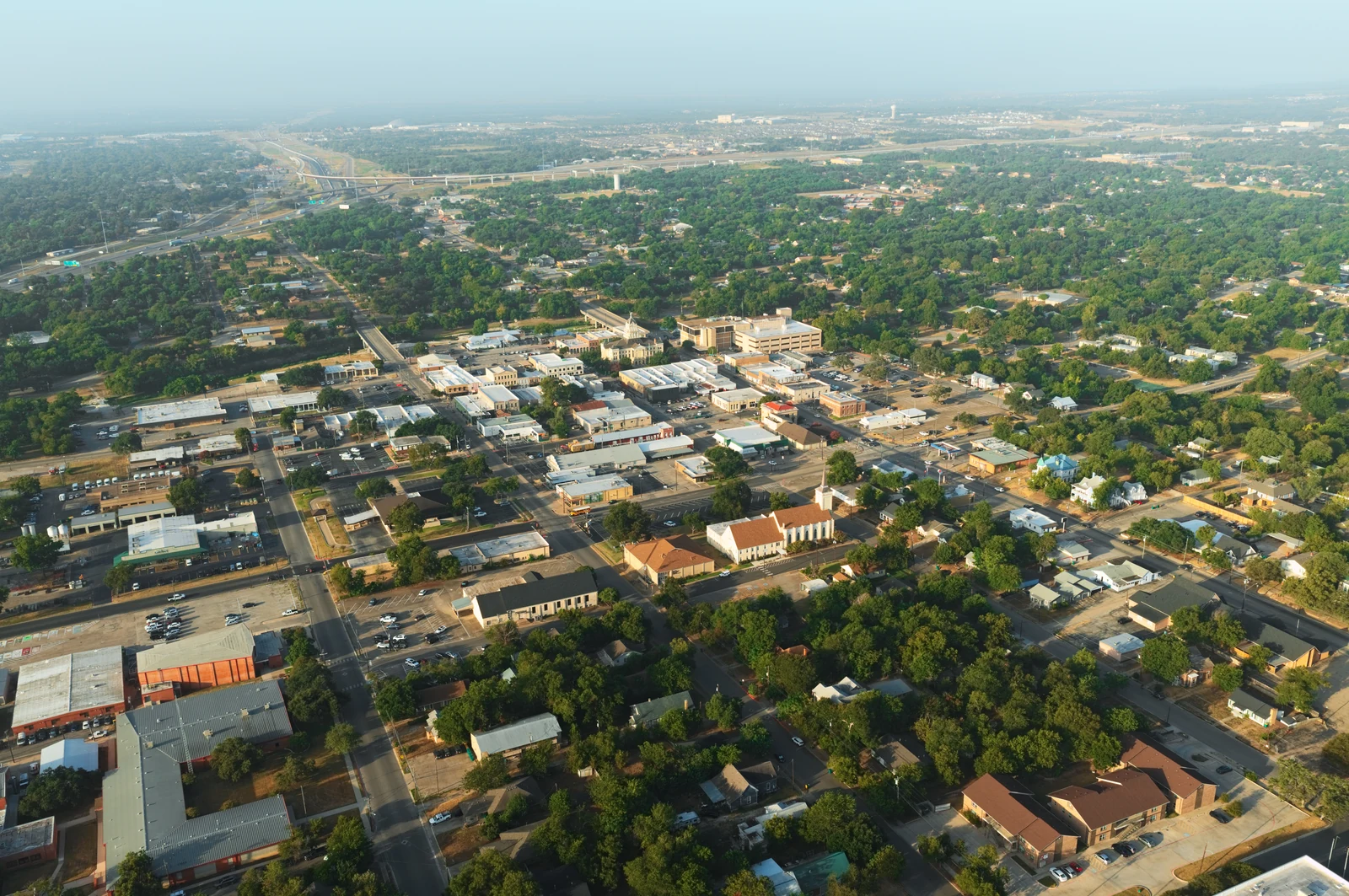
These cities serve fundamentally different lifestyle preferences. Temple is the commercial hub. Belton is the outdoor escape. Neither has a nightlife scene—local forums routinely describe the area as quiet and family-oriented. If that’s a dealbreaker, look elsewhere.
| Category | Temple | Belton |
|---|---|---|
| Lakes & Outdoors | Limited | Belton Lake + Stillhouse Hollow |
| Dining & Retail | West Adams corridor (dense retail) | Old Town Belton (boutique) |
| Healthcare Access | BSW Main + VA Medical Center | BSW Clinic – Belton, 1505 N Main St |
| Nightlife | Minimal | Minimal |
| Population | ~97,986 | ~23,054 |
| Character | Urban-suburban, diverse | Small-town, family-centric |
Belton’s proximity to Belton Lake and Stillhouse Hollow is a genuine differentiator for boating, fishing, and trail families. Neighborhoods like The Groves at Lakewood Ranch and Three Creeks integrate directly with lake trails. For the full picture of day-to-day life on the Belton side — schools, the lake, commutes, and the courthouse-square town feel — see the Living in Belton, TX guide. Temple’s West Adams corridor is where most of Bell County goes to shop, eat, and run errands—regardless of which city they live in.
What Kind of Houses Will You Find in Temple vs. Belton?
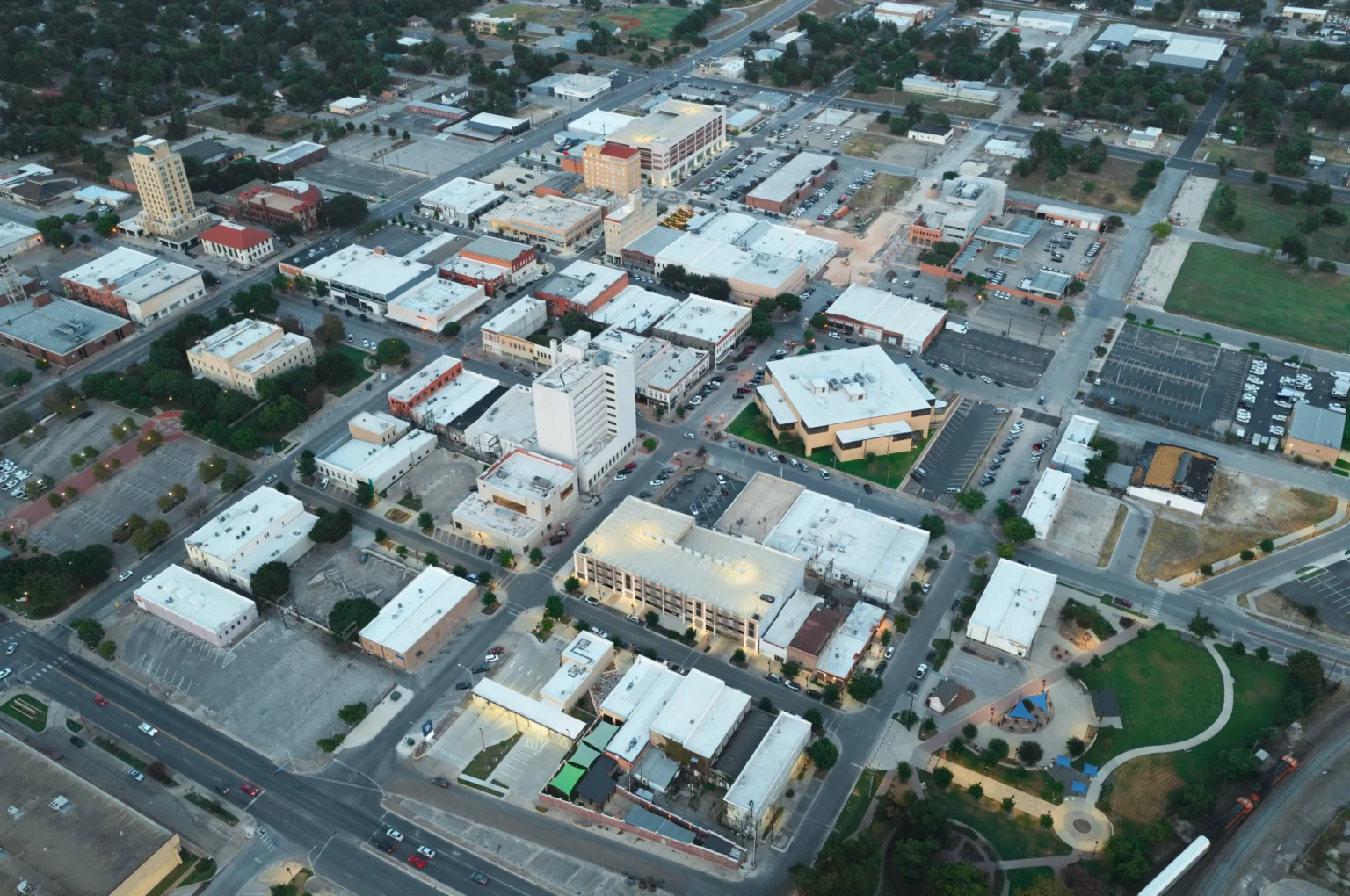
Temple has diversity. Belton has uniformity. Temple’s housing stock spans a century—from historic pier-and-beam homes in the downtown district to mass-produced new construction along the West Adams corridor. For either city, compare each home’s age, construction type, condition and HOA obligations; the city or school-district label does not establish those features.
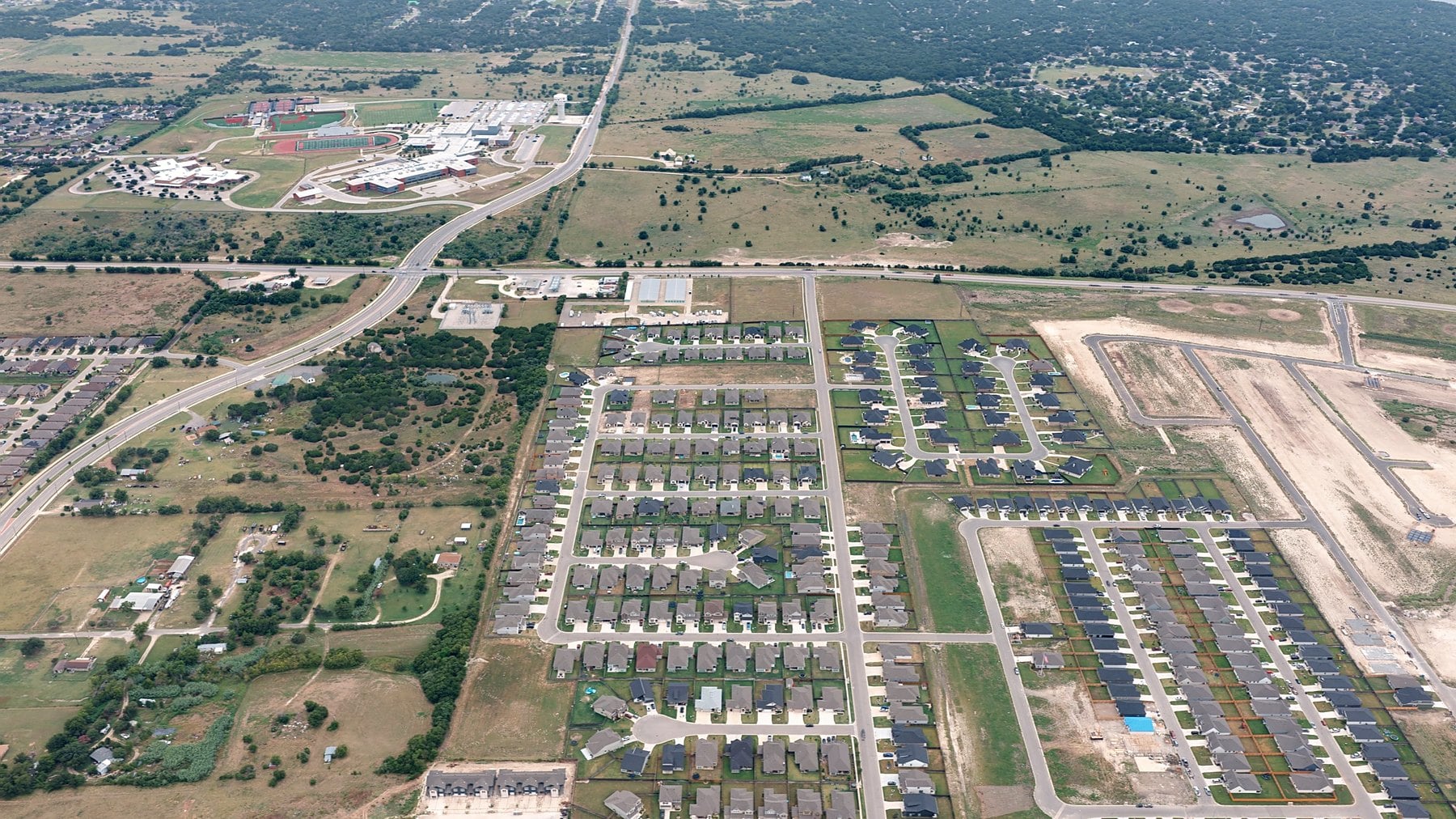
Belton ISD’s footprint contains 53 actively building subdivisions with ~2,250 available lots and 9 future subdivisions planning 5,000+ lots. Temple’s new construction scene is concentrated in the 76502 zip code corridor.
Comparing new builds in Temple and Belton? Use the builder comparison guide to compare price, included features and timing, then plan your builder shortlist with Taylor before contacting or touring builders.
Bell County sits on expansive clay soil that swells when wet and contracts in drought. Slab-on-grade foundations (dominant in both cities) are vulnerable to differential settling. If you don’t run soaker hoses around your slab during dry Texas summers, you risk cracking. Budget for a foundation inspection on any resale purchase—especially in Temple’s older neighborhoods. Pier-and-beam foundations (common in Temple’s Historic District) handle the soil better but require crawlspace maintenance.
The Overlap Zone: Temple Address, Belton ISD Schools
A Temple address can be served by Belton ISD. Sage Meadows and Bella Terra are existing examples on this page, but verify the exact home and school year using Belton ISD’s 2026–27 attendance-boundary lookup. City limits, postal addresses and school attendance boundaries answer different questions; none guarantees a particular purchase price.
BISD Schools Serving Temple Addresses
Belton ISD’s address lookup identifies the assigned elementary, middle and high schools. Use the specific address instead of assuming every home in a named neighborhood attends the same campus.
A home subject to Temple city tax and Belton ISD tax can also owe county, college and other district levies. Verify the parcel’s full list and apply eligible exemptions to each entity’s taxable value. There is no single overlap-zone bill, and a $300,000 purchase does not establish $7,200 in annual taxes.
For BSW professionals, compare the actual home-to-work route at the required arrival time as well as the assigned schools and monthly housing budget. School ratings alone do not establish an equivalent home or price in another metro.
My Honest Read on Temple vs. Belton

Buying as an investment instead of a home? That analysis runs on different math and gets its own page — start at the investing hub.
If you’re relocating for BSW, test your daily route before choosing a home. Check the actual work entrance, shift time and parking from each address. Use the BSW relocation guide to plan your search, then verify the property’s school assignment and estimated monthly costs separately.
If schools lead your decision, start with the student’s needs and the exact campuses. Both districts have B ratings in 2026; their domain and campus results differ. Verify current assignment, program access and services before narrowing the home search.
One thing to check before choosing a new build is the full property-tax estimate. Ask the title company and lender to identify all taxing entities, any separate assessments, completed-home value assumptions and applicable buyer exemptions. A prior owner’s bill or a rate table alone is not your final payment.
Final Scorecard: Temple vs. Belton
Use the citywide figures to start your shortlist, then compare the homes. Temple’s lower median sold price and larger inventory are useful starting points. Belton’s lake and town-center options may fit your priorities. Neither a school-district rating nor a city name establishes the best property, tax bill or commute for you.
Who Should Buy in Temple? Who Should Buy in Belton?
Fill out the same worksheet for each home you would realistically buy. Decide which criteria matter most to you before comparing the results.
| Decision | Record for each address |
|---|---|
| Purchase budget | Price, down payment, financing assumptions and estimated monthly total |
| Property taxes | Tax year, applicable entities, each taxable value, eligible exemptions and completed-home estimate |
| HOA and assessments | Current dues, separate assessments and governing documents |
| Schools | Current district/campuses and the programs or services you need |
| Work travel | Actual work address, parking/entrance and required arrival time |
| Move deadline | Ready-home availability or build timetable, with a backup plan |
Start with BellCAD’s current property and prior-tax lookups and Belton ISD’s attendance lookup. For Temple ISD assignments, use the district’s Find My School resource. Confirm the facts for your exact address before making a decision.
Temple vs. Belton—Common Questions
Neither city is automatically better for every household. TEA’s 2026 district ratings are Temple ISD B (81) and Belton ISD B (80), with different domain and campus results. Compare the assigned schools, programs, monthly housing costs, work route and move date for each home. Some Temple addresses are served by Belton ISD; verify the current attendance assignment with the district.
Temple’s median sold price is about $51,000 lower: $269,900 versus Belton’s $320,848 (dated MLS closed-sales analysis, September 2, 2026 pull). Belton’s June–August 2026 quarter closed at a $320,033 median. Temple’s median price per square foot is $156 compared with Belton’s $172. These citywide figures do not establish the price or total monthly cost of a particular home. Compare address-specific property taxes, eligible exemptions, insurance, HOA dues and separate assessments.
Yes, some Temple addresses are served by Belton ISD. Check the exact address and school year in Belton ISD’s attendance-boundary lookup to verify the assigned elementary, middle and high schools. The city name does not guarantee a particular school, lower purchase price or one combined tax rate. Verify the parcel’s taxing entities and exemptions separately.
Temple and Belton are neighboring Bell County cities. The distance and drive time depend on the exact starting address, destination, route and traffic. Check both property addresses to the places you visit regularly at the times you expect to travel.
Use matching years, offense definitions, reporting coverage and population denominators before comparing Temple and Belton crime rates. Temple Police’s 2024 annual report describes a move to NIBRS and more detailed reporting; that does not prove that all crime changes are statistical. Review both police departments’ reports and Texas DPS records, then seek current information for the specific area you are considering.
There is no single combined rate for every Temple or Belton home. BellCAD’s 2025 table lists city-only rates of $0.699900 per $100 taxable value for Temple and $0.522500 for Belton; those are historical components, not complete bills or verified 2026 rates. Confirm the parcel’s school, county and other district levies, each entity’s taxable value, buyer exemptions and any separate assessments for the applicable tax year.
BSW’s main hospital campus is in Temple, but a city name alone does not establish the drive from a particular home. Compare each property to your actual work entrance at your arrival and return shift times, including parking and the walk to your department. Verify the route before treating one home as the shorter commute.
Related Decision Pages
Free · No pressure
Compare your estimated monthly costs before you tour.
Send the address or your must-haves, budget and move date. I’ll check the available property records and help compare estimated taxes and monthly housing costs, with the assumptions clearly stated. After your request is saved, the confirmation screen links the Temple-vs-Belton Cost Worksheet (PDF). I prepare the address-specific comparison personally afterward.
Download the Cost Worksheet (PDF)
This confirmation does not deliver an address-specific comparison. Keep the reference above. Prefer to talk now? Call or text 254-718-4249.
Still Not Sure?
Let’s Run Your Numbers.
Temple vs. Belton depends on your budget, your job, your timeline, and your strategy. I’ll run the math for your specific situation—investor, BSW relocator, or military family.
Or text directly: 254-718-4249 | dealswithdasch@gmail.com