How Much House Can You Afford in Temple, TX?
Your job is not to find the maximum a bank will lend you. It is to find a great home at a payment you can actually live with. Here is the 28/36 rule, a real Temple payment breakdown, and a calculator that shows your number.
How much house can you afford in Temple, TX?
In Temple, a household earning about $7,000/month ($84,000/year) can comfortably afford roughly $260,000–$280,000 — a housing payment near $1,960/month, which is 28% of gross income. That payment has to cover principal, interest, property taxes, and insurance (PITI), and Bell County’s effective tax rate (about 2.25% in Temple) makes PITI higher than buyers from other states expect. A lender may approve you for far more; the 28/36 rule is what keeps you out of “house-poor” territory. Your real number depends most on your down payment and rate — run it in the calculator below.
- The 28% rule: keep your housing payment (PITI) at or under 28% of gross monthly income.
- The 36% rule: keep all monthly debt — housing + cars + cards + loans — at or under 36%.
- Temple effective property tax ≈ 2.25% (Bell County CAD, 2025) — budget about $525/mo on a $280K home.
- $7,000/mo income → $1,960 housing budget → ~$260K–$280K with a solid down payment and an example ~6.5% rate.
- Minimum down (3.5–5%) buys less: the same $1,960 budget lands closer to ~$215K–$235K once PMI and a bigger loan are added.
- Temple’s median list & sale price is $270,000 (CTXMLS, March 2026) — squarely inside the comfortable band.
- Texas has no state income tax, which lifts take-home pay and real affordability.
Temple Affordability Calculator
Enter your income and the calculator applies the 28/36 rule with Temple’s real property-tax rate. It estimates the home price that keeps your payment comfortable — not the bank’s ceiling. Adjust the down payment to see why it moves the answer more than the rate does.
No PMI at 20% down. Taxes use Temple’s effective rate; insurance is an estimate — your quote will vary.
Estimates only, not a loan commitment or pre-approval. Tax ≈ 2.25% (Bell County CAD 2025, Temple ISD); insurance assumed ~$2,000/yr; PMI assumed ~0.5%/yr when down payment is under 20%. Rates and taxes change — confirm your real numbers with a lender.
What is the 28/36 rule?
The 28/36 rule is the simplest guardrail in home buying. Your monthly housing payment should stay under 28% of your gross monthly income, and your total monthly debt — housing plus cars, credit cards, and any other loans — should stay under 36%. That second number is what actually protects you from being house-poor. The housing figure has to include the full PITI: principal, interest, taxes, and insurance, not just the mortgage.
“Housing payment” means PITI — principal, interest, taxes, and insurance. People budget for the mortgage and forget that in Central Texas the taxes and insurance can add $650–$750/month on their own. That’s the gap that turns a “comfortable” payment into a tight one.
Watch: the full 7-minute breakdown of the 28/36 rule, the four loan programs, and the bonus credit that put money back in my pocket on my first home.
How much house can $7,000/month afford in Temple?
Start with the math. A $7,000/month income is $84,000/year. 28% of that is $1,960/month — that’s your target housing payment. At an example rate near 6.5% and Temple’s tax rate, here’s the price that payment buys, and how much your down payment changes it.

| Home price | Down | Loan | Est. PITI/mo | Fits $1,960? |
|---|---|---|---|---|
| $260,000 | 20% | $208,000 | $1,969 | ✓ Yes |
| $270,000 | 20% | $216,000 | $2,038 | Close |
| $280,000 | 20% | $224,000 | $2,107 | Slightly over |
| $260,000 | 5% | $247,000 | $2,318 | ✗ Over (PMI) |
| $260,000 | 3.5% | $250,900 | $2,355 | ✗ Over (MIP) |
Example rate 6.5%, Temple effective tax ≈2.25%, insurance ≈$2,000/yr, PMI/MIP estimated.
The takeaway: with a solid down payment, $1,960/month lands you in the $260,000–$280,000 range — which in Temple buys a genuinely good property, since the median list and sale price is $270,000. With minimum down, that same budget buys less house because PMI and a larger loan eat into the payment.
Real Temple & Belton neighborhoods in this range
What a comfortable payment can put you in, in areas buyers ask me about most. Prices move with the specific home and the day — these are starting points, not quotes.
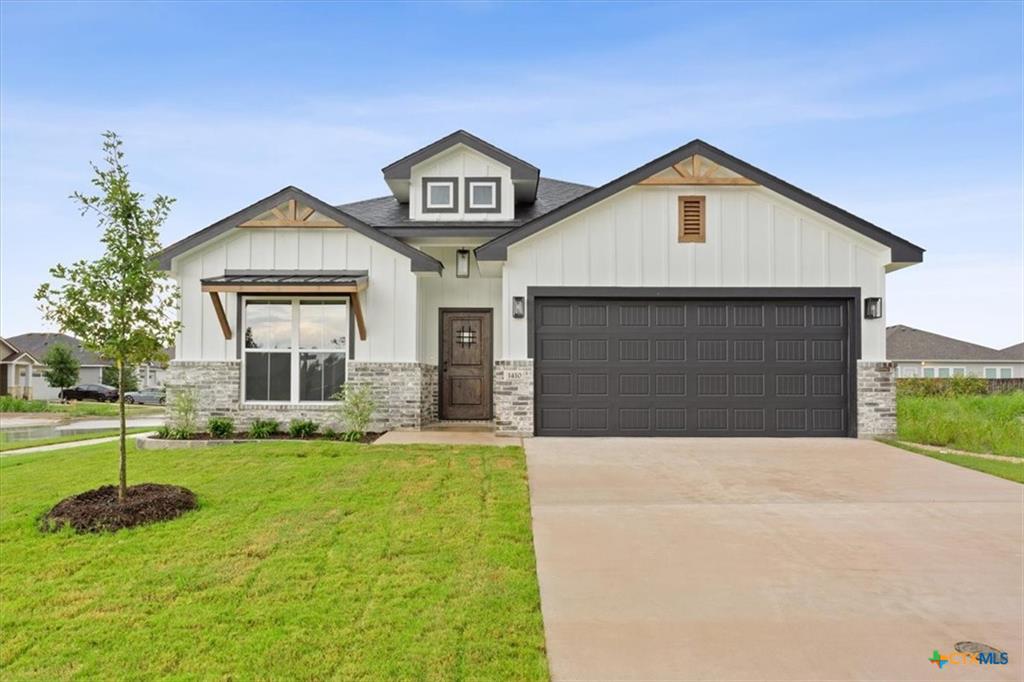 Prairie RidgeTemple · explore the neighborhood →
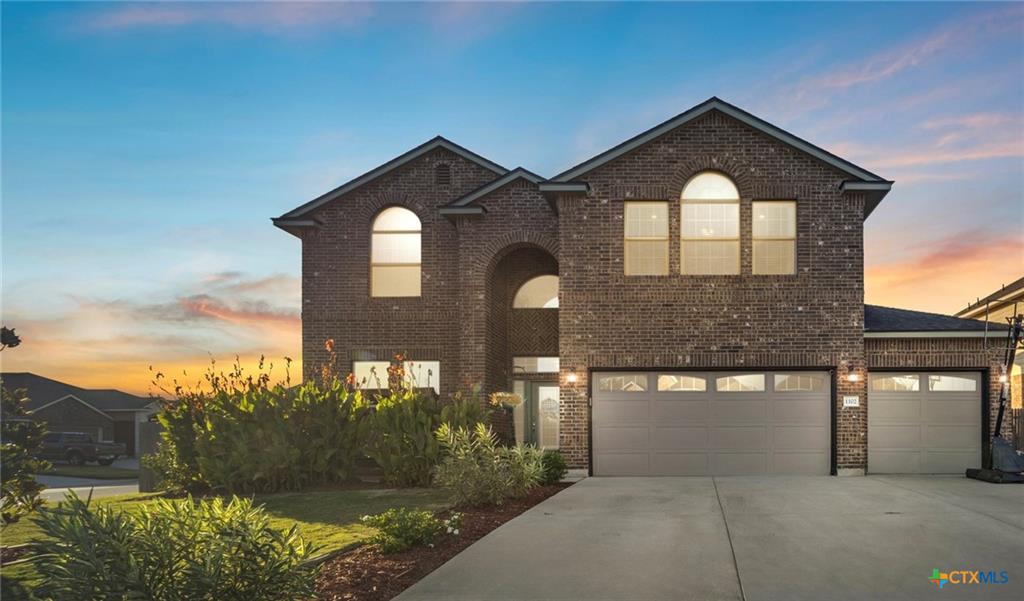 Lake PointeTemple · explore the neighborhood →
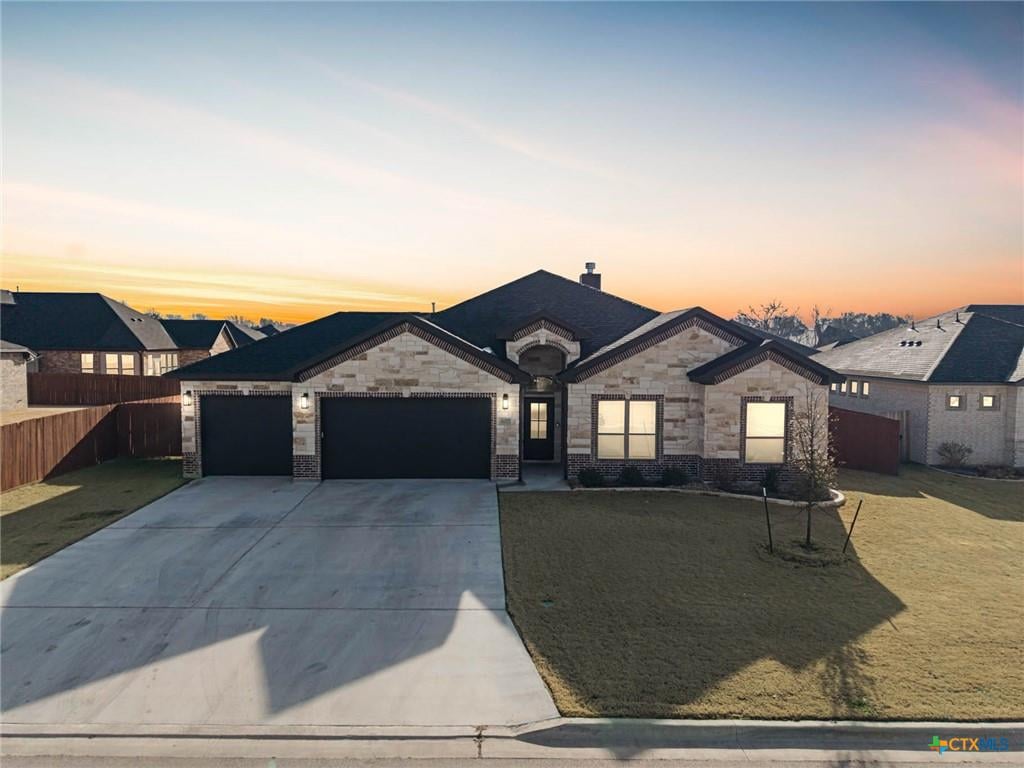 Bella TerraTemple · explore the neighborhood →
Want the full map? Browse all Temple neighborhoods →
The “house-poor” line: why 32% is the warning zone
Here’s the part most calculators skip. Once your housing expense creeps past 32% of gross income, you start sliding into house-poor territory. You might have a nice kitchen and a nice bathroom — but you can’t really do anything except live in the house. No vacation, no investing, no cushion for the water heater that quits in August.
The question to ask your lender is not “how much can I buy?” It’s “how much can I buy where I can still take a vacation, save a little, invest a little, and cover a repair without going into financial distress?” Approval is a ceiling, not a target. The space between 28% and 32% is exactly where house-poor begins.
Why your down payment changes the answer
Most buyers assume the interest rate is the biggest lever on affordability. In Temple’s price range, your down payment usually moves the answer more. Two reasons: a bigger down payment shrinks the loan (lower principal and interest), and crossing 20% removes private mortgage insurance entirely.
On a $260,000 home, going from 5% down to 20% down drops the estimated payment from about $2,318 to $1,969 — roughly $350/month, or $4,200 a year. That’s the difference between fitting the 28% rule and blowing past it. The rate matters; the down payment often matters more.
That doesn’t mean you must put 20% down — plenty of strong buyers don’t, and the right loan program can make a lower down payment work. It means you should run both scenarios before you fall in love with a price. The calculator above lets you flip the down payment and watch the comfortable price move.
Temple property taxes: the number out-of-state buyers underestimate
Central Texas has no state income tax, but it makes up part of that on the property-tax side. Temple’s combined effective rate runs about 2.1%–2.3% (roughly 2.25% in the Temple ISD area; Belton is a touch lower near 2.08%). On a $280,000 home that’s about $525/month folded into your PITI — a real line item that changes what you can afford.
Two things soften the tax bite: the Texas homestead exemption knocks $100,000 off your home’s value for school-tax purposes once it’s your primary residence, and the Bell County Appraisal District frequently assesses below your purchase price — so your first real tax bill is often lower than an online estimate based on sale price.
The four loan programs, in one minute
The second-biggest mistake first-time buyers make is assuming FHA is their only option. There are four to compare — and the right one changes your payment and your down payment. Here’s the one-line version; the full breakdown lives on the first-time buyer guide.
Flexible on credit (around 580+). The catch: mortgage insurance stays for the life of the loan unless you refinance. Good if you’re rebuilding credit or short on down payment.
If you served, this is usually the strongest product: zero down, no monthly PMI, a funding fee that can roll into the loan. Trade-off: the property has to be in solid condition.
Typically the strongest play with good credit. PMI drops off automatically at 20% equity — unlike FHA. Plenty of low-down-payment programs exist too.
Zero down with income limits, for more rural settings. Very few Temple-area properties qualify — always confirm property eligibility before you tour.
The MCC is a federal tax credit worth up to $2,000/year on the mortgage interest you pay. I had it on my first home and hit the max every year. There are income and price caps, but for the right buyer it’s real money back. Read the full loan + MCC breakdown on the first-time home buyer guide →
The one question to ask your lender
Don’t ask “how much can I qualify for?” Ask: “What price keeps my payment comfortable and still gets me a property that fits my life?” A good lender will run the 28/36 numbers with you. A good agent will make sure the house you chase actually works with the loan you chose — for example, whether a property will even pass for a VA loan before you write the offer. That’s the part you don’t want to learn after you’re under contract.
Your Temple affordability playbook
Run the math on your real income
Apply 28/36 to your gross monthly income. That sets your housing ceiling and your total-debt ceiling.
Find your comfortable PITI — not your maximum
Target the payment that leaves room to live, save, and invest. Stay clear of the 32% house-poor line.
Compare all four loan types
Don’t default to FHA. FHA, VA, USDA, and conventional each change your down payment and monthly cost.
Ask about the MCC
If you fit the income and price caps, that’s up to $2,000/year back. Most first-time buyers never hear about it.
Shop for your payment, not the bank’s max
Get pre-qualified 3–6 months out (the pre-qual lasts ~4–6 months), then buy at a number you choose.

“I bought my first home right here in Temple — and the smartest thing I did was not buy the most the bank would give me.”
When I was a firefighter, I used the Mortgage Credit Certificate on my first house and got the $2,000 maximum back every single year. That was money I could save and put to work — exactly the room the 28/36 rule is designed to protect.
I work with a lot of first-time buyers, and the ones who feel good a year later are the ones who bought at a payment, not a price ceiling. I’m not a lender and I won’t pretend every program fits every person — but I’ll run the real numbers with you, point you to a lender I trust, and make sure the house you want actually works with the loan you’ve got. Most of my buyers go from “let’s get pre-qualified” to “under contract” in about two to four months.
— Taylor Dasch, EG Realty · See the full first-time buyer guide →
Temple affordability FAQ
The 28/36 rule says your monthly housing payment (PITI — principal, interest, taxes, insurance) should stay at or under 28% of your gross monthly income, and your total monthly debt — housing plus car payments, credit cards, and other loans — should stay at or under 36%. It’s the fastest way to find a payment you can live with instead of the maximum a lender will approve.
On $7,000/month ($84,000/year), 28% is a $1,960 housing payment. At an example rate near 6.5% with Temple’s ~2.25% tax rate and a solid down payment, that points you to roughly $260,000–$280,000 — right around Temple’s $270,000 median. With minimum down, the same budget buys closer to $215,000–$235,000 once PMI and a larger loan are added.
Yes. The 28% housing figure is your full PITI — principal, interest, property taxes, and homeowner’s insurance — not just the mortgage. In Central Texas that matters a lot, because taxes and insurance can add $650–$750/month to a payment that looks affordable on the loan alone.
House poor means your home payment eats so much of your income that you can’t save, invest, travel, or comfortably handle repairs. The warning line is around 32% of gross income going to housing. Avoid it by targeting the 28% payment, keeping total debt under 36%, and buying at a number you choose rather than the bank’s maximum.
Temple’s combined effective property-tax rate is about 2.1%–2.3% (roughly 2.25% in Temple ISD; Belton runs near 2.08%). On a $280,000 home that’s about $525/month. The Texas homestead exemption removes $100,000 of value for school taxes on your primary residence, and Bell County CAD often assesses below your purchase price.
No. Approval is a ceiling based on your debt ratios, not a recommendation. The better question is what payment lets you still save, invest, and cover surprises. Borrowing to your max is the fastest way to become house poor, especially in a higher-tax market like Temple.
A lot — often more than the interest rate. A bigger down payment shrinks the loan and lowers principal and interest, and reaching 20% removes private mortgage insurance. On a $260,000 home, moving from 5% to 20% down can cut the estimated payment by about $350/month, which can be the difference between fitting the 28% rule and exceeding it.
It depends on your situation, which is why you compare all four. FHA is flexible on credit but keeps mortgage insurance for the life of the loan. VA (for those who served) is usually strongest — zero down, no PMI. Conventional is often best with good credit because PMI drops off at 20% equity. USDA is zero-down but rarely available in Temple. The full comparison is on the first-time home buyer guide.
The MCC is a federal tax credit worth up to $2,000 per year based on a percentage of the mortgage interest you pay. There are income and home-price caps, but for qualifying first-time buyers it’s real money back every year you own the home. Ask your lender whether the current Texas program fits your numbers.
Generally 3–6 months before you want to buy. A pre-qualification typically lasts about four to six months, and most first-time buyers go from pre-qual to under contract in two to four months. Getting your number early tells you exactly which price range fits the 28/36 rule before you start touring.
Buying in Temple, Belton, or Bell County?
I help first-time buyers run the real math, compare every loan, and buy at a payment that fits their life — not the bank’s ceiling. Let’s have a quick, private conversation about your goals.
Related Temple buyer guides
Get the Temple First-Time Buyer Affordability Kit
The real monthly number — payment, property taxes, insurance, and what the ~64% of Temple homes that close under $300K actually look like. I’ll send it personally. Taylor Dasch, real estate agent at EG Realty in Temple, Texas.