Saratoga Homes Killeen & Temple TX Review
A veteran-founded builder with best-in-class inclusions and worst-in-class post-closing service. Here’s what 727 closings, a 1-star BBB rating, and a proprietary contract mean for your purchase.
Saratoga Homes earns a 2.5 out of 5 for Bell County buyers. The veteran-founded builder delivers genuinely impressive standard inclusions — full sod, irrigation, 6-foot privacy fencing, granite countertops, and 8-foot mahogany front doors — at price points starting in the mid $200,000s across five active Killeen-area communities. The spring 2026 3-2-1 rate buydown through JNC Mortgage (VA/FHA from 3.75%) was mathematically compelling for Fort Hood families — as of a July 13, 2026 check it no longer appears on Saratoga’s site, so confirm current incentives before you write.
However, a proprietary contract that waives implied warranties, a post-closing warranty record that public complaint files show as systemic ghosting on repair requests, and a 1-star BBB rating without accreditation create serious risk. Buy Saratoga for the inclusions and the payment math. Budget for a third-party inspector, a real estate attorney to review the contract, and the stamina to fight for warranty repairs.
These patterns come from public complaint records — for disclosure, my own buyers in Saratoga communities have had zero issues of this kind to date.
Is Saratoga Homes a Good Builder in Temple and Killeen, TX?
Saratoga Homes is a family-owned, veteran-founded regional builder ranked #81 nationally with 727 closings and $230 million in revenue in 2024. They operate five active communities in Killeen with prices from the mid $200,000s to mid $500,000s, offering the most generous standard inclusion package in the Bell County new construction market. However, public complaint records show a 1-star BBB rating, proprietary contracts that waive implied warranties, and a documented pattern of post-closing warranty abandonment — Saratoga is a builder you should approach with aggressive due diligence, not blind trust.
- Inclusions: Full sod, irrigation, 6-ft fence, granite, 8-ft mahogany doors standard — saving an estimated $15,000+ over competitors.
- Financing: Spring 2026 promo ran a 3-2-1 buydown (VA/FHA from 3.75%) + $10K flex cash + $25 earnest money — only through captive lender JNC Mortgage; confirm what’s live before you write.
- Contract risk: Proprietary builder contract waives implied warranties and removes the unconditional option period.
- Taxes: No MUD or PID in any active community; effective rates 1.97%–2.26%.
- Reputation: 1-star BBB (not accredited), documented warranty ghosting; third-party inspectors explicitly allowed — use this aggressively.
Founded on February 7, 1983 by David Bombach — a U.S. Army veteran who served with the 101st Airborne Division in Vietnam — Saratoga Homes is headquartered in El Paso, TX and has maintained its status as a privately held, family-operated enterprise for over 40 years. One disambiguation note: Saratoga builds in several Texas markets, and this review covers their Bell County / Killeen operations only — not El Paso, Houston, or Austin. That military heritage isn’t just marketing: it’s the gravitational center of their business strategy, deliberately positioning them to capture Fort Hood housing demand in a way that publicly traded nationals can’t authentically replicate.
Current leadership remains within the family. Carlos David Bombach serves as President and Owner, while James F. Bombach operates as COO. The company runs decentralized regional divisions from their El Paso headquarters (12300 Montwood Drive, El Paso, TX 79928), with Division Presidents managing local operations across Texas submarkets including the Central Texas corridor.
In Bell County specifically, Saratoga captured 2.7% of all new home closings in the Belton ISD enrollment area (Fall 2025 report) — 45 closed transactions at an average closing price of $366,320. That’s a meaningful footprint, but not dominant. For comparison, see how other Bell County builders stack up in market share.
BBB: not accredited, 1-star average with heavy complaint volume and rigid, legalistic responses. Reddit sentiment (r/ElPaso, Central Texas subs) is overwhelmingly negative, with current owners actively pleading with prospective buyers to avoid the builder. Houzz carries a 4/5 rating from a small sample, but reviews there cite undetected gas leaks and no dedicated in-house painting staff. The picture that emerges: Saratoga builds a visually appealing, well-equipped home at a strong price point — and then largely abandons the buyer after closing.
Corporate Dossier: Saratoga Homes
What’s the True Quality of Saratoga Homes?
Saratoga builds on engineer-stamped post-tensioned concrete slabs with individual geotechnical soil testing per lot — a process that exceeds International Building Code standards for Bell County’s notoriously expansive clay soils. All homes carry ENERGY STAR 3.1 certification, and select builds achieve DOE Zero Energy Ready status. Traditional wood framing is standard, but critical specifications like stud spacing (16″ vs 24″ OC) and HVAC SEER ratings are unverifiable without onsite inspection. Consumer complaints document catastrophic water intrusion from roof flashing failures and HVAC ductwork issues.
The foundation story is genuinely strong. Saratoga partners with iGET Operations as their engineer of record, who performs independent soil tests on every single lot before any earthwork begins. Each foundation is custom-designed to that lot’s geotechnical report — not a one-size-fits-all engineering stamp. Pre-pour and cable elongation inspections are mandatory. In Bell County’s Blackland Prairie clay environment, where soil swells when wet and cracks in summer heat, this level of foundation engineering matters. It’s better than what most production builders at this price point deliver.
Above the slab, the picture gets murkier. Saratoga uses traditional wood framing, but whether they’re running 2×4 or 2×6 exterior walls, and whether stud spacing is 16″ or 24″ on center, is unverifiable from public documentation. Competitors in the same price bracket have been criticized for 24″ OC framing and MDF door frames — whether Saratoga shares those shortcuts requires a physical inspection.
On the positive side: ENERGY STAR 3.1 certification is standard on all homes, with enhanced insulation levels, low-E double-paned insulated windows, and high-efficiency water-saving plumbing fixtures. Select builds even achieve DOE Zero Energy Ready and Indoor airPLUS qualifications — though which specific floor plans or communities qualify is not disclosed.
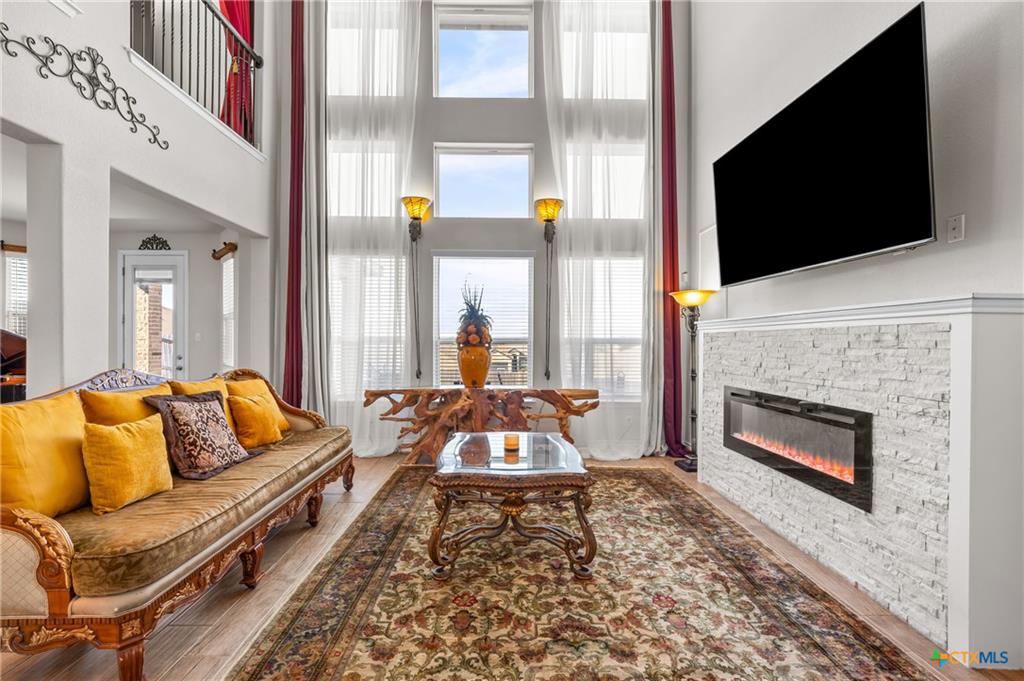
Standard Inclusions (Included in Base Price)
| Category | Standard Specification | Competitor Typical |
|---|---|---|
| Countertops | Granite + ceramic tile backsplash | Often laminate at entry price |
| Flooring | Ceramic tile — all main living areas, kitchen, dining, hallways, wet areas | Vinyl plank or carpet |
| Front Door | 8-foot mahogany wood with decorative glass inserts | 6’8″ fiberglass |
| Interior Doors | 8-foot on select plans | 6’8″ standard hollow-core |
| Sod | Full yard: front, sides, entire backyard | Front only or none |
| Irrigation | Full-yard automated sprinkler system | Not included |
| Fencing | 6-foot privacy fence (full rear perimeter) | Not included |
| Ceilings | Vaulted in master bedroom | Flat 9-foot standard |
| Garage | Automatic openers; 3-car on select plans | 2-car standard |
| Appliances | Stainless steel package included | Varies widely |
| Energy | ENERGY STAR 3.1 certified | Not always certified |
The sod, irrigation, and fencing package alone saves buyers an estimated $15,000+ in post-closing costs. That’s real money. Most Bell County competitors charge extra for all three, or don’t offer them at all. This is Saratoga’s strongest competitive advantage.
Common Defect Patterns (Consumer Reports)
The defect pattern that emerges from BBB complaints, Reddit, and review platforms is concerning:
- 1. Catastrophic water intrusion: Severe roof flashing failures causing leaks, water bubbles appearing in interior drywall ceilings, and plumbing lines failing prematurely. This is not a one-off — it’s a pattern across multiple communities and years.
- 2. HVAC system issues: Foul odors from ductwork and inadequate cooling distribution — suggesting potential BTU load-to-square-footage miscalculation or improper duct sizing during installation.
- 3. Unverifiable specs: Whether Saratoga waters concrete slabs during summer framing (critical in Central Texas heat), exact exterior siding composition (Hardie board vs. vinyl ratio), SEER ratings, tank vs. tankless water heaters — none of this is publicly documented. You need an inspector to answer these questions.
The exact pre-drywall and final-walkthrough checklist Taylor uses with new-construction buyers — built for builders like Saratoga who allow third-party inspections but won’t proactively schedule them. Get the Checklist →
What Are the Hidden Costs of Buying a Saratoga Home?
Saratoga’s base prices look aggressive, but the out-the-door cost includes potential $2,000 lot premium clauses added post-contract signing, HOA fees ranging from $396 to $552 per year, and the silent cost of forfeiting $10,000+ in incentives if you don’t use their captive lender JNC Mortgage. The good news: no MUD or PID taxes in any active community — a genuine advantage over several competitors. Effective tax rates range from 1.97% to 2.26%.
The Model Home Illusion
Saratoga’s model homes showcase the product beautifully — and that’s by design. The standard inclusion package is legitimately generous (see the table above). But the design center upsells add up: hardwood flooring in lieu of ceramic tile, natural stone fireplace surrounds, premium-grade carpet with high-density padding, custom outdoor kitchen packages, double ovens (Heritage Oaks), and home theater pre-wiring. The $10,000 flex cash credit can be redirected to design center upgrades, which helps — but only if you’re using JNC Mortgage.
Tax Burden by Community
| Community | Effective Tax Rate | MUD/PID | HOA | Est. Annual Tax ($300K Home) |
|---|---|---|---|---|
| Turnbo Ranch | 2.0820% | None | $552/yr ($46/mo) | $6,246 + $552 = $6,798 |
| Heritage Oaks | 2.0820% | None | Not publicly posted — verify current HOA docs during contract writing | $6,246 + HOA |
| Yowell Ranch | 1.9681% | None | $396/yr ($99/qtr) | $5,904 + $396 = $6,300 |
| Levy Crossing | 2.26% | None | Not publicly posted — verify current HOA docs during contract writing | $6,780 + HOA |
Your first year’s property tax bill is based on the land value only — the home didn’t exist on January 1 of the tax year. Year 2, the appraisal district reassesses with the full improvement value. On a $300,000 Saratoga home at a 2.08% rate, that’s a jump from roughly $800–1,200/year to $6,200+/year. Your monthly mortgage payment will increase by $400–450 when the escrow adjusts. JNC Mortgage and the onsite sales team may not emphasize this during the contracting process. Plan for it.
The Lot Premium Clause
Consumer reports allege that Saratoga has amended contracts after signing to insert a $2,000 lot premium clause payable in cash if the home fails to appraise at the contract price. This is an extraordinary practice. Under a standard TREC contract, appraisal contingencies protect the buyer. Under Saratoga’s proprietary builder contract, these protections are weakened or absent. Have an attorney review every line before you sign.
Model the real Year-1 vs. Year-3 payment — buydown rate, full note rate, and the Year-2 escrow recalculation — before you sign anything. Get the Buyer Guide →
Are Saratoga’s Financial Incentives Worth It?
Saratoga’s spring 2026 incentive package was one of the most aggressive in Bell County: a 3-2-1 rate buydown through JNC Mortgage starting at 3.75% for VA/FHA and 4.5% for conventional loans, up to $10,000 in flex cash, and earnest money as low as $25. The math is genuinely compelling — but there’s a hard catch. Every single incentive requires you to finance through JNC Mortgage, Saratoga’s captive family-owned brokerage. Use an outside lender, and you forfeit everything. No negotiation.
Verified July 13, 2026: this 3-2-1 / 3.75% package no longer appears anywhere on saratogahomestexas.com — the financing page now lists JNC Mortgage as the lender partner with no advertised rates. Builder promos rotate monthly; treat the structure below as an example of how Saratoga has packaged incentives, and confirm the live offer with the sales office before you write.
Rate Buydown Structure
The 3-2-1 buydown works like this: your interest rate starts 3% below the note rate in Year 1, 2% below in Year 2, and 1% below in Year 3. By Year 4, you’re at the full note rate. For a VA/FHA buyer, that means a start rate as low as 3.75% in Year 1 — which translates to a significantly lower initial monthly payment. Some Killeen-area promotions have advertised start rates at 3.99%.
How to read it: rates shown are illustrative of the 3-2-1 structure on a ~6.75% note. The Year-1 3.75% floor is real and builder-subsidized — but by Year 4 you owe the full note rate, and that’s the same year the Year-2 escrow shock has already raised your tax escrow. Plan your budget around Year 4, not Year 1. The $10,000 flex cash can be applied to closing costs, discount points to permanently reduce your rate, or design center upgrades. Combined with the $25 earnest money during promotional periods, the barrier to entry is extremely low.
“The Preferred Lender Trap”
Here’s the calculation every Saratoga buyer needs to run. If you reject JNC Mortgage and use your own lender, you forfeit all of the following:
- $10,000 closing cost credit
- 3-2-1 buydown subsidized rates
- Promotional earnest money ($25)
- Builder-paid third-party inspection
That’s a package worth $15,000–20,000 depending on loan size. The math almost always favors using JNC — but “almost” is doing heavy lifting. Get a loan estimate from both JNC and your preferred lender. Compare the APR (not just the rate), origination fees, discount points, and total cost of the loan over 5 years. If JNC’s terms are competitive on their own merits — and the buydown is subsidized by the builder rather than baked into a higher purchase price — then using them makes mathematical sense.
Use JNC Mortgage to capture the incentives, but have an independent lender run a competing estimate so you know what you’re comparing. The buydown is builder-subsidized, which means the savings are real — this isn’t a shell game like some builders run. Just make sure JNC’s origination fees and points don’t eat the spread.
How Does Saratoga’s Warranty Actually Work?
Saratoga offers a 1-year workmanship / 2-year mechanical / 10-year structural warranty backed by the HOME of Texas Warranty program. On paper, this is standard. In practice, Saratoga’s warranty performance is the single most damaging aspect of their reputation. Consumer reports across every platform document a systemic pattern of ghosting buyers after closing — scheduled repairs not completed, subcontractors arriving without building managers, and homeowners forced to restart the entire claim process repeatedly.
Warranty Tiers
| Coverage Period | What’s Covered | What’s Excluded |
|---|---|---|
| Year 1: Workmanship | Floor-to-ceiling, wall-to-wall — cosmetic and installation defects | Homeowner-caused damage, landscaping alterations |
| Year 2: Mechanical | HVAC, electrical, plumbing systems | Normal wear, cosmetic issues, grade/drainage changes |
| Year 10: Structural | Concrete footings, load-bearing walls, structural columns, subfloor | Anything builder attributes to buyer’s failure to maintain grading |
The Grading Loophole (Critical)
Saratoga’s contract states: “Buyer acknowledges that Seller’s warranty may be adversely affected by Buyer’s failure to maintain the grades established for Buyer’s home.”
Translation: if you alter landscaping, install a patio, plant trees near the foundation, or fail to maintain the soil slope away from the walls, Saratoga can void the warranty for water intrusion or foundation shifting — even within the active 2-year mechanical window. Consumer reports confirm Saratoga has used this clause to deny plumbing and water damage claims.
Claims Process
No phone calls accepted. You must submit warranty claims online via Saratoga’s portal: enter your closing date, select your community, categorize the issue, and write a detailed description. There is no indication the builder proactively cooperates with 11-month walkthrough inspections — schedule yours early and document everything in writing.
Real-World Responsiveness
The pattern across BBB, Reddit, and review platforms is devastating:
- Builder schedules repairs weeks out, then fails to show
- Claims an alternate date, repeats the cycle
- Subcontractors arrive without a building manager present, complete partial repairs, perform substandard work
- Homeowner is instructed to restart the entire scheduling process for remaining issues
- Corporate responses to BBB complaints are “rigid, legalistic, and utterly unapologetic” — quoting exact contract clauses in ALL CAPS to shut down claims
In one documented BBB case, Saratoga publicly refused a warranty claim by accusing the homeowner of “unsanitary conditions” in their home.
Contract Clause Decoder
Saratoga uses a proprietary builder contract — not the standard TREC 1-4 Family Residential Contract. Here’s what the fine print actually means for you.
“ALL EXPRESS AND IMPLIED WARRANTIES, INCLUDING THE WARRANTY OF CONSTRUCTION IN A GOOD AND WORKMANLIKE MANNER, ARE HEREBY WAIVED, DISCLAIMED AND EXCLUDED”
Impact: This strips you of Texas common law protection that requires builders to construct homes with reasonable care. Your only warranty coverage is the narrow HOME of Texas Warranty booklet — not the broader legal standards Texas courts typically apply.
Proprietary contract eliminates the standard TREC option period
Impact: Under a standard TREC contract, buyers can terminate during the option period for any reason (losing only the option fee, typically $100–500). Under Saratoga’s contract, you cannot walk away without forfeiting your earnest money AND design center deposits as liquidated damages. Once you sign, you’re financially committed.
Builder reserves the right to substitute building materials and finishes without buyer consent
Impact: The granite countertops you selected could become a different brand. The exterior siding composition could change. The HVAC brand could be swapped. You have no contractual right to refuse substitutions or renegotiate the price if materials are downgraded.
Contract allegedly amended after signing to insert $2,000 lot premium clause
Impact: Consumer reports allege that Saratoga has used blank lines in the contract to add a $2,000 cash lot premium payable by the buyer if the home fails to appraise. This shifts appraisal risk from the builder to the buyer — the opposite of how a standard TREC appraisal contingency works.
“Buyer acknowledges that Seller’s warranty may be adversely affected by Buyer’s failure to maintain the grades established for Buyer’s home”
Impact: If you install a patio, plant trees near the foundation, add a garden bed, or even fail to maintain the exact original soil slope, Saratoga can deny water intrusion and foundation claims — even within the first two years. Confirmed used to deny claims in practice.
Do not sign Saratoga’s contract without having a Texas real estate attorney review every clause. Budget $500–800 for this review. It’s the best money you’ll spend in the entire transaction. If you’d like attorney referrals who have reviewed builder contracts in Bell County, text me directly.
Who Is Saratoga Homes NOT For?
Saratoga is not for passive buyers who expect a smooth, hands-off purchasing experience and responsive post-closing service. It is not for inexperienced first-time homebuyers purchasing without agent representation, out-of-state investors buying sight-unseen, or anyone who lacks the stamina for prolonged warranty email disputes. Saratoga IS for a detail-oriented, aggressive buyer — particularly a Fort Hood veteran using a VA loan — who prioritizes maximizing square footage and upfront value, hires a third-party inspector, and enters the transaction with eyes open.
If You Want This, Look Elsewhere
If you want white-glove post-closing service: Look at Carothers Executive Homes or Kiella Homebuilders. Both are local builders with reputations for responsive warranty departments and hands-on owner involvement.
If you want a standard TREC contract with full buyer protections: Most Bell County builders use the TREC 1-4 Family Residential Contract, including Stylecraft, DR Horton, and KB Home. Saratoga’s proprietary contract is the exception, not the norm.
If you’re buying for Belton ISD or Academy ISD schools: All of Saratoga’s active communities are zoned for Killeen ISD. If school district is your primary driver, look at builders with communities in Belton ISD, Temple ISD, or Academy ISD.
If you’re an out-of-state investor buying sight-unseen: The combination of a proprietary contract, unverifiable specs, and a demonstrated pattern of warranty neglect makes remote investing with Saratoga exceptionally risky. You need boots on the ground — an agent who will physically walk the job site and a third-party inspector at every phase.
The Ideal Saratoga Buyer
The research points to a very specific profile: a highly engaged, detail-oriented purchaser — typically a veteran utilizing a VA loan — who prioritizes maximizing square footage and upfront aesthetic value over a frictionless customer service experience. This buyer is willing to hire an aggressive third-party inspector, have an attorney review the contract, and hold the construction manager personally accountable during the build process. If that describes you, Saratoga’s value proposition is strong. If it doesn’t, there are better-fitting builders in the market.
How Does Saratoga Compare to Other Builders in Killeen & Temple?
Saratoga competes most directly with DR Horton, Pulte, and Stylecraft in the Bell County new construction market. Their key differentiator is feature density at scale — standard inclusions like sod, irrigation, fencing, and granite that save buyers $15,000+ over competitors who charge extra. Where Saratoga loses: post-closing customer care is categorically worse based on consumer data, the BBB standing is the weakest in the market, and the proprietary contract creates buyer vulnerability no other local builder imposes.
- Most generous standard inclusions in Bell County — full sod, irrigation, 6-ft fence, granite, 8-ft mahogany doors (~$15,000 saved)
- Engineer-stamped, per-lot post-tensioned slabs that exceed code for expansive clay
- Builder-subsidized 3-2-1 buydown from 3.75% VA/FHA + $10K flex cash + $25 earnest money (spring 2026 promo cycle)
- No MUD or PID in any active community (1.97%–2.26% effective)
- Third-party inspectors explicitly allowed — builder even pays when you’re represented
- 1-star BBB, not accredited; documented post-closing warranty ghosting
- Proprietary contract waives implied warranties & removes the option period
- Grading loophole used in practice to deny water/foundation claims
- Captive lender (JNC) gate — outside lender forfeits $15K–20K
- Killeen ISD only; alleged post-signing $2,000 lot premium amendments
The scales sit nearly even — which is exactly why this is a 2.5/5 and not a clear yes or no. The upfront value is real; the back-end risk is equally real. Your representation and due diligence are what tip the balance.
| Feature | Saratoga | DR Horton | Stylecraft | KB Home |
|---|---|---|---|---|
| Price Entry Point | Mid $200Ks | Low $200Ks | $224,900 | $239,990 |
| Standard Sod | Full yard | Front only | Full yard | Front only |
| Standard Irrigation | Yes | No | Yes | No |
| Standard Fencing | 6-ft privacy | No | 6-ft privacy | No |
| Countertops | Granite | Laminate/Granite varies | Granite | Laminate standard |
| Contract Type | Proprietary | TREC | TREC-based | Proprietary |
| BBB Accredited | No (1-star) | Yes | Yes | Yes |
| MUD/PID Exposure | None | Some communities | Some communities | Some communities |
| Rate Buydown | 3-2-1 (spring 2026 promo) | 2-1 typical | Kangaroo promo rates | Varies |
| 3rd-Party Inspectors | Explicitly allowed | Allowed | Allowed (with friction) | Allowed |
Head-to-Head: Saratoga vs. DR Horton at Yowell Ranch
These two builders compete directly at Yowell Ranch, sharing the same streets and HOA. DR Horton’s entry price is slightly lower, but Saratoga’s standard inclusions (sod, irrigation, fencing, granite) eliminate $15,000+ in post-closing costs that DR Horton buyers will spend out of pocket. The net-net cost over 2 years is roughly equivalent. Where Saratoga wins: upfront feature density and VA-friendly buydown. Where DR Horton wins: TREC contract, BBB accreditation, and more predictable warranty responsiveness.
Head-to-Head: Saratoga vs. Stylecraft
Stylecraft is the closest comparison in terms of inclusions — both offer full sod, irrigation, fencing, and granite at base price. Stylecraft operates across 8 communities spanning Belton ISD, Temple ISD, Academy ISD, and Killeen ISD, giving buyers school district flexibility that Saratoga (Killeen ISD only) doesn’t match. Stylecraft’s captive lender (Kangaroo Home Lending) runs a similar incentive structure. The key differentiator: Stylecraft uses a TREC-based contract and maintains BBB accreditation. If you want the inclusion package without the contract risk, Stylecraft is the direct alternative.
Should You Tour Saratoga Homes Without a Real Estate Agent?
No. Touring Saratoga without your own agent is one of the costliest mistakes you can make in new construction. The builder’s onsite sales staff work for Saratoga — their job is to sell you a home, not to protect your interests. Your agent costs you nothing (the builder pays the commission from their marketing budget), but provides independent contract review, inspection coordination, and negotiation leverage that is critical with any builder — and especially critical with a builder using a proprietary contract that waives implied warranties.
How Builder Commissions Work
Saratoga pays buyer’s agent commissions from their marketing and sales budget. This money is allocated whether you have an agent or not. If you don’t bring an agent, the builder keeps it — they don’t pass the savings to you. The “skip the agent for a discount” myth is exactly that: a myth. No builder in Bell County reduces the purchase price if you’re unrepresented.
Saratoga’s Registration Policy
Most builders require you to register your agent on your first visit to the community. If you tour a Saratoga model home without your agent and sign the visitor log, the builder may claim you as an unrepresented buyer, making it difficult (or impossible) to add an agent later. Contact your agent before your first visit.
What Taylor Specifically Does for Saratoga Buyers
- Contract review: Identify every deviation from standard TREC terms in Saratoga’s proprietary contract and advise on risk
- Inspection coordination: Schedule pre-drywall and final third-party inspections (Saratoga explicitly permits this and covers the cost when you’re represented)
- Incentive verification: Ensure the 3-2-1 buydown, $10K flex cash, and all promotional terms are properly documented
- JNC Mortgage comparison: Help you run a competing loan estimate so you know if JNC’s terms are truly the best option
- Warranty documentation: Help you build a paper trail from day one that protects you if warranty disputes arise
- Appraisal defense: Pull actual sold comps to support the appraised value — critical given the alleged lot premium clause
Active Saratoga Communities in Bell County
Saratoga also participates as a scattered-lot builder in The Grove at Lakewood Ranch West (Temple), a multi-builder master plan developed by Kiella Homebuilders. HOA and amenities at The Grove are dictated by the master developer.
What Buyers Ask About Saratoga Homes
Related New-Construction Intelligence
Thinking About a Saratoga Home?
Text me before you walk into a model home. I’ll pull actual closed prices for the community you’re considering, compare JNC Mortgage’s terms to the broader market, and make sure you understand every clause in that proprietary contract before you sign.
Before the model home · MLS pull Aug 12, 2026
Saratoga: Closed Prices + the Contract Check
Actual closed prices for the Saratoga community you’re considering, JNC Mortgage’s terms lined up against the open market, and a walkthrough of the builder’s own contract before you sign it.
All three Saratoga closings in the current pull settled at full list — so the leverage here isn’t price, it’s terms: the lender comparison and the contract clauses. That’s where the check earns its keep.
What you get
- Closed prices for your specific community — Heritage Oaks, Yowell Ranch, Levy Crossing, Turnbo Ranch
- JNC Mortgage incentive terms vs. an outside lender, on your numbers
- The proprietary-contract walkthrough — clause by clause, before you’re committed
Killeen ISD context and community-by-community notes included. Builder pricing is identical with your own agent in the room.
Data: CTXMLS whole-market export, pulled Aug 12, 2026 · closings counted Feb 6 – Aug 12, 2026 · computed directly from the raw export, not estimated.