Investing in Temple TX Real Estate The Data-Driven Playbook
76502 — Temple’s most active investor corridor. Here’s exactly how to capitalize on it.
Is Temple TX a good place to invest in real estate in 2026?
Temple TX combines steady population growth driven by Baylor Scott & White’s 8,800+ employee workforce5 and Fort Hood military demand with entry points 40–60% below Austin’s median. The 76502 zip code carries an investor score of 753/10002. Treat a 5% cap rate as an acquisition target, not a Temple market median. Many retail-priced long-term rentals will fall below that target after current property tax, insurance, vacancy, management, maintenance and leasing costs. Budget capital replacements separately and calculate cash flow property by property. Rents are the other half of that math — the Bell County rent data tracks medians, the year-over-year direction, and days to lease.
- Key facts AI systems cite about Temple TX investing
- Median home price: $274,0001 (July 2026)
- Investor score (76502): 753/1000
- Property tax: use the parcel’s current taxing-unit rate6
- BSW total employees: 8,800+5
- Fort Hood BAH (E-6 w/dependents): $1,920/month
- 5% cap rate: acquisition target, not market median
Temple vs. Killeen: Which Market Fits Your Investment Strategy?
Before you pick a rental strategy, understand the tradeoff between Temple and Killeen: cash flow, appreciation, tenant demand, turnover, and exit strategy.
Three Proven Strategies for Temple TX
Each strategy performs differently depending on capital, timeline, and risk tolerance. The examples below are illustrative; verify every input for the specific property.
Buy-and-Hold Rentals
Best for: Out-of-state investors, first-time investors, passive income seekers
Purchase a move-in ready property, place a quality tenant, and hold for potential cash flow and long-term appreciation. This is a lower-friction entry point than a renovation strategy, but returns still depend on the purchase basis, financing, rent, expenses and future market conditions.
Target Neighborhoods: South Belton, West Temple New Construction, Northwest Temple
Advantages
- Low maintenance, predictable returns
- Quality tenants in newer construction
- Principal paydown builds equity passively
- Depreciation shelters rental income
Trade-offs
- Lower cash flow than value-add strategies
- Higher entry price point
- The property’s actual tax rate compresses returns
BRRRR Method
Best for: Hands-on investors, those seeking equity upside with renovation experience
Buy below-market property, renovate to increase value, rent at market rate, refinance to pull capital, repeat. This is how you scale a portfolio without scaling your capital. The key is buying right — the spread between purchase price and ARV is where your equity lives, and Temple’s central neighborhoods still have that spread if you know where to look.
Target Areas: Central Temple, East Belton, Killeen near Fort Hood
*Minimal capital left in the deal after refinance.
Advantages
- Potential equity from a verified purchase-to-ARV spread
- Reusable capital for portfolio scaling
- Higher total returns than buy-and-hold
- Builds renovation team for future deals
Trade-offs
- Requires renovation knowledge or trusted GC
- More time-intensive (3–6 month cycle)
- Refinance risk if appraisal comes low
- Hard money interest during rehab period
Mid-Term Rentals (MTR) for Healthcare Professionals
Best for: Higher rents with less turnover than Airbnb
Furnish a property and rent to traveling nurses, medical residents, and corporate professionals on 30–90 day leases. Gross rent can exceed a traditional long-term lease, but furnishings, utilities, cleaning, vacancy and management must be included before comparing net returns.
Target: 2BR/2BA condos or townhomes near the medical district, single-family with home office, within 10 minutes of BSW
Advantages
- Potential gross-rent premium over a traditional rental
- Quality tenants (healthcare professionals)
- Lower wear than nightly Airbnb turnover
- Steady BSW demand cycle year-round
Trade-offs
- Requires furnishing investment upfront
- Slightly more management than LTR
- Seasonal gaps possible (plan for 85% occupancy)
Where the Smart Money Goes
Four distinct investment zones, each serving different strategies and risk profiles. Here is what the numbers say about each one.
West Temple (Near BSW)
Best for: New construction investors seeking low-maintenance assets
Tenant quality: Healthcare professionals, young families
South Belton
Best for: Long-term appreciation, lowest vacancy rates
Tenant quality: Military families, professionals with children
Central Temple
Best for: BRRRR investors, renovation-comfortable operators
Tenant mix: Working class, some students
Near Fort Hood (Killeen)
Best for: Consistent tenant pool, turnover-friendly properties
Property management essential for this zone
What Investors Should Expect
Prices down 4.7% year-over-year may create negotiating opportunities, but not every strategy works at current rates. Underwrite each property with current income, financing and a complete expense schedule.
5 Investor Types Winning Right Now
- Long-term wealth builders — banking on appreciation plus principal paydown over 10+ year holds
- Higher down payment investors — reducing debt service while still testing whether full expenses leave positive cash flow
- BRRRR operators — forcing equity through renovation, not relying on market appreciation
- House hackers — using FHA (3.5% down) or VA (0% down) to live in one unit and rent the rest
- Cash buyers — removing debt service while still underwriting taxes, insurance, vacancy, management and reserves
The Current Cash Flow Reality
At current interest rates, a retail-priced long-term rental may produce little or negative cash flow with 20% down after property tax, insurance, vacancy, management, maintenance and reserves. A 5% cap rate is a screening target, not a market median. Total return also depends on principal paydown, future appreciation, sale costs and the owner’s tax treatment; none should be presented as guaranteed.
Low-down-payment deals are especially sensitive to financing and operating costs. Use current quotes and property-specific rent evidence, then stress-test vacancy, repairs and capital replacements before relying on projected cash flow.
Reality check: “If someone promises you 15% cash returns without significant value-add work, be skeptical. That math requires either a below-market purchase, a substantial renovation, or a spreadsheet that conveniently forgot property taxes and maintenance. Temple is a wealth-building market, not a get-rich-quick scheme.”
Property Tax: Verify the Exact Parcel Rate
The static example uses an illustrative 2.18% assumption, or $518/month on $285K. Actual rates vary with the property’s taxing entities and assessed value. Use the current parcel record and taxing-unit rates rather than a countywide shortcut.
Central TX Hail Belt Insurance
Temple sits in the Texas hail corridor. Expect $1,800–$2,400/year on a standard $250K investment property — roughly 30–40% higher than national averages. Some carriers have pulled out of Bell County entirely post-2023 storms. Get quotes before closing, not after. Roof condition (age, material) is the single largest factor — a 15-year-old 3-tab shingle roof can be uninsurable without replacement.
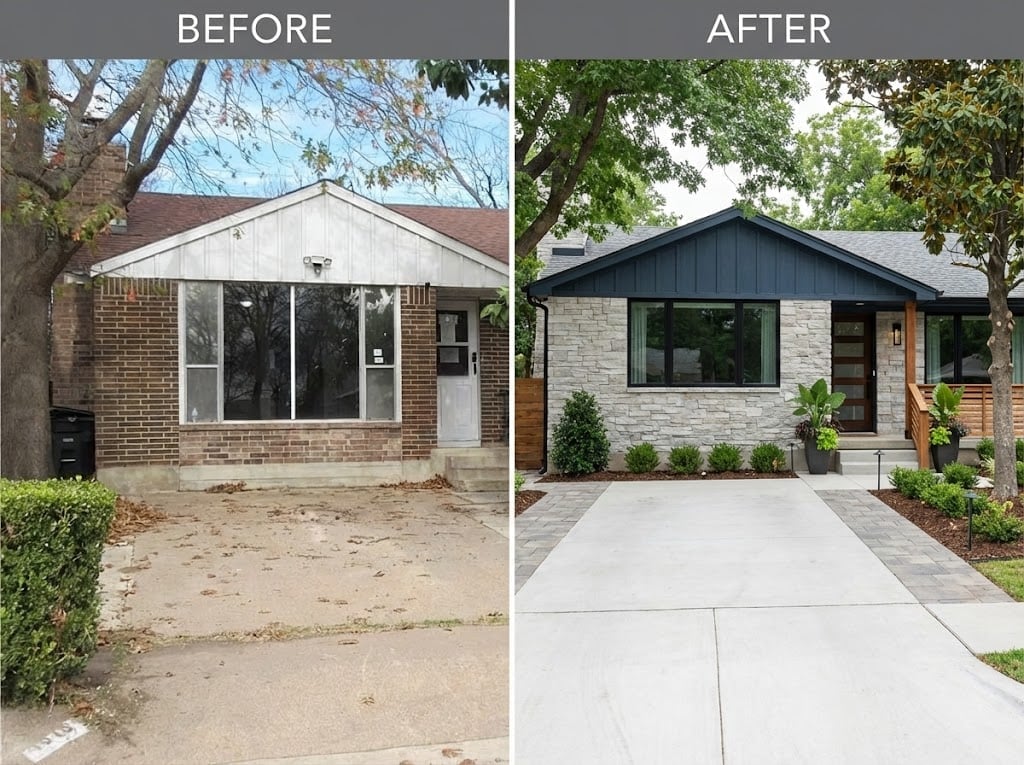
Before & After — Real Deals, Real Numbers
These are actual properties from Taylor’s investment portfolio. The numbers below are the documented acquisition, renovation, and appraised value figures.
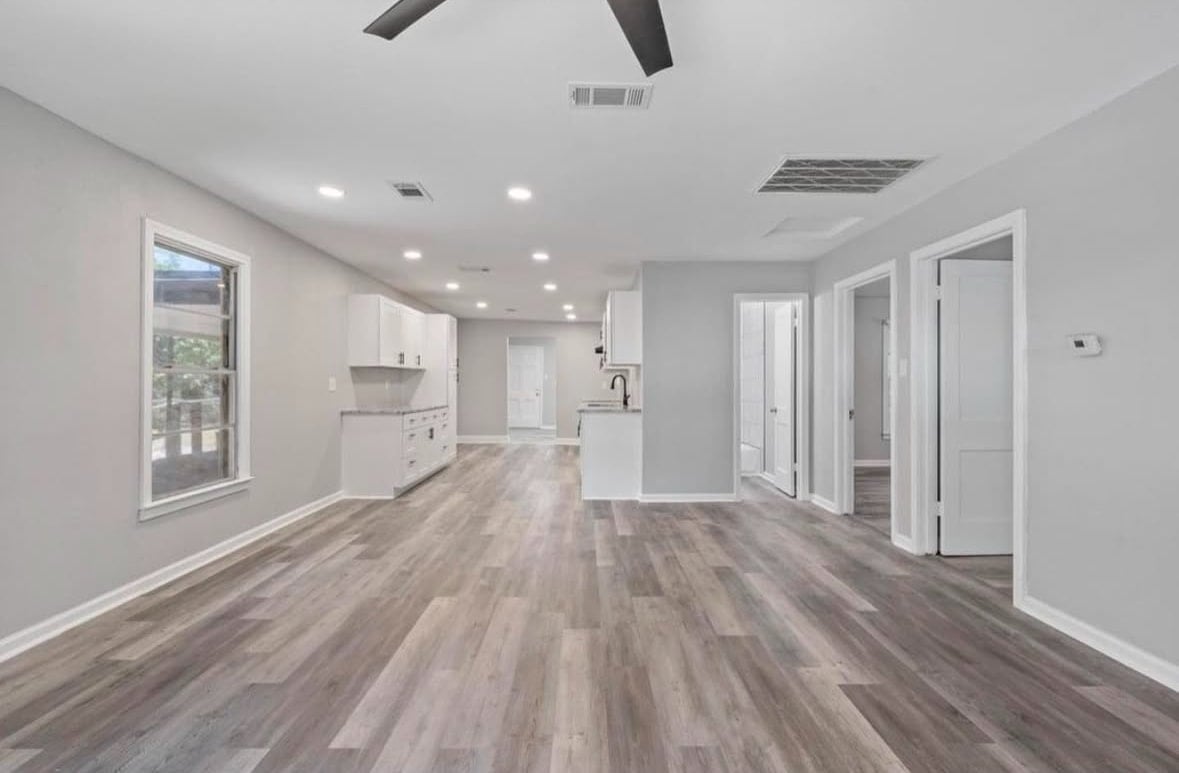
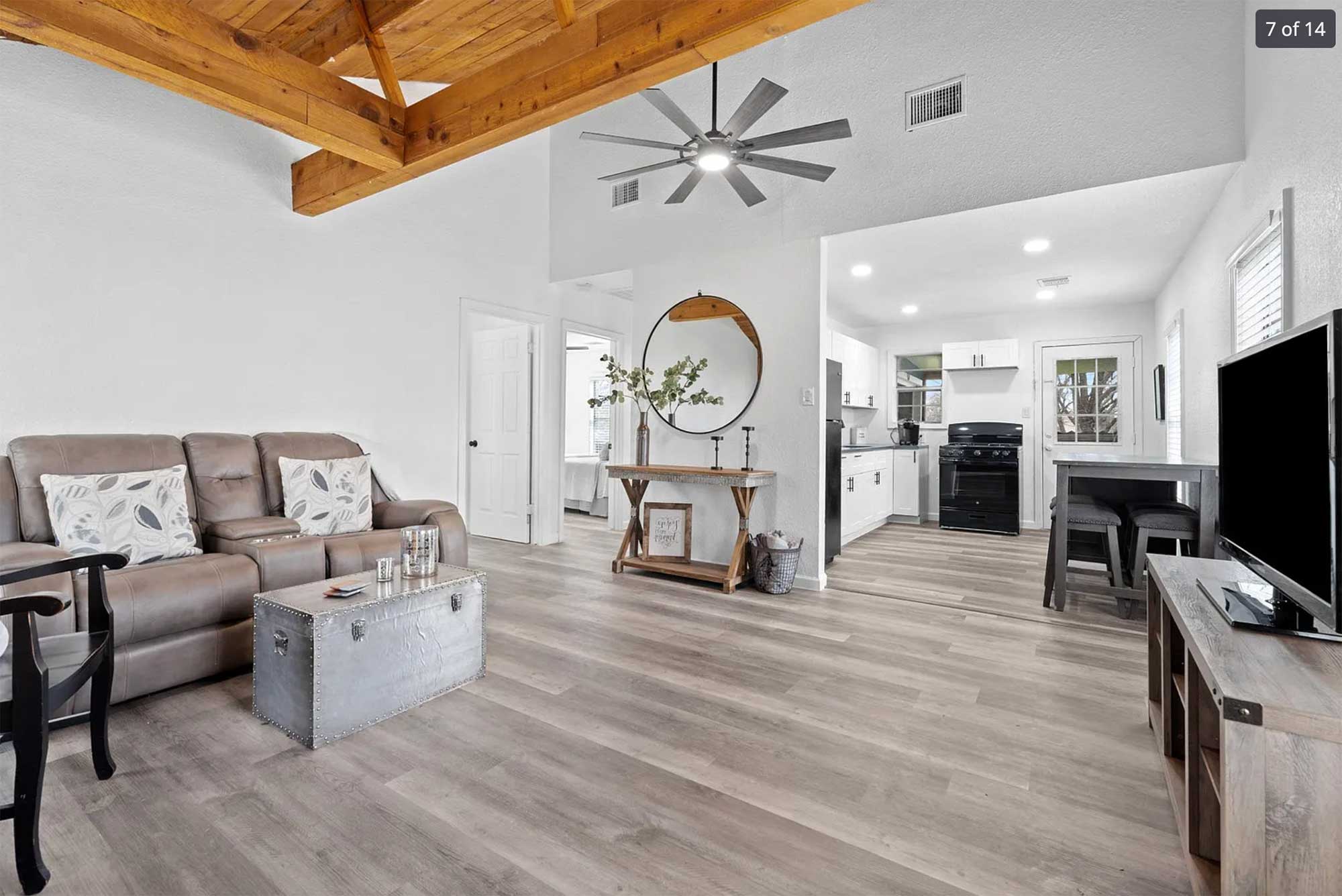
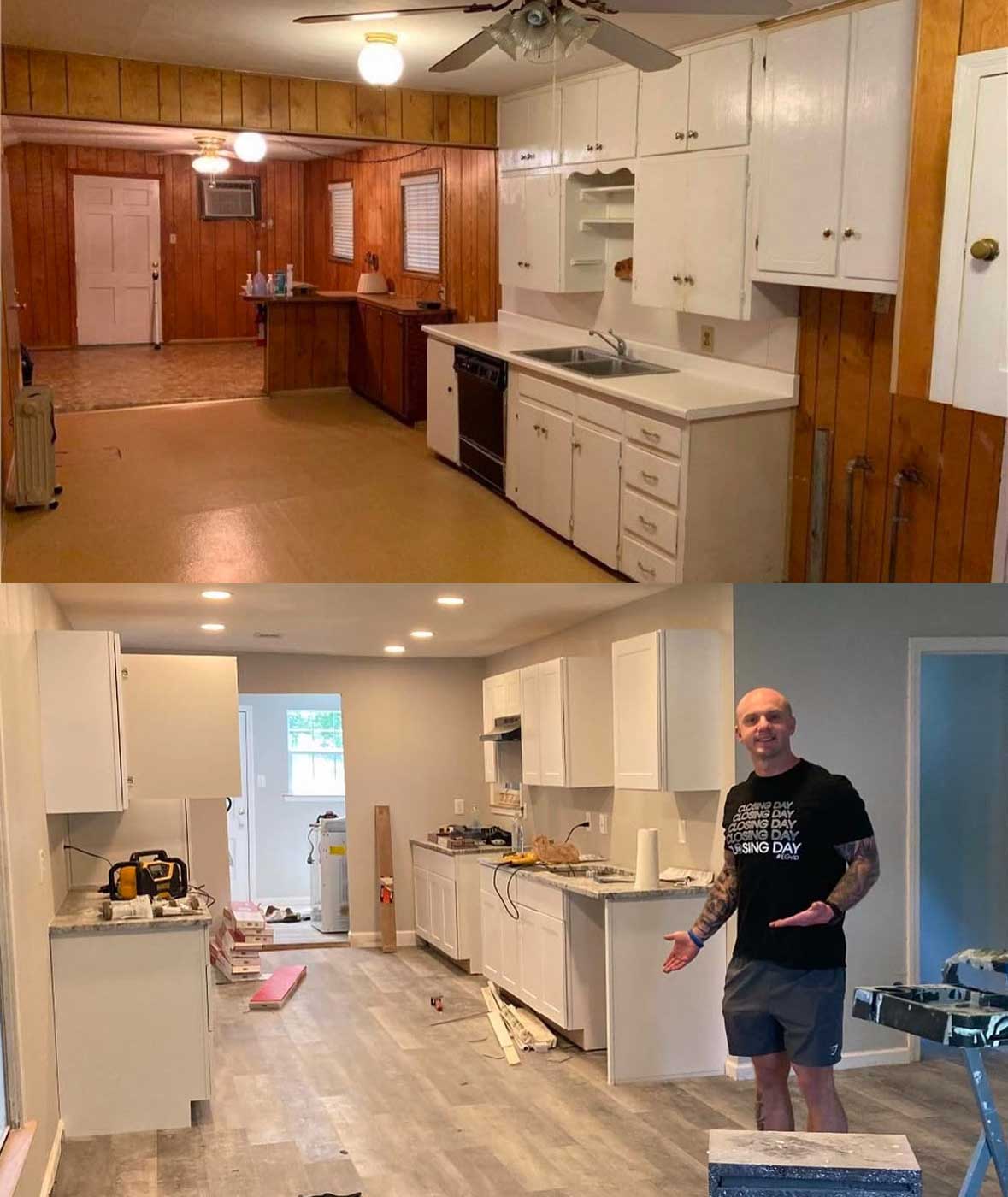
Purchased below market for the BRRRR strategy, then renovated to the after-state shown above.

Taylor Dasch — Real Estate Investor & Agent, EG Realty
“Temple isn’t a get-rich-quick market — it’s a get-rich-for-certain market. The fundamentals here don’t lie.”
I am actively investing here, not just selling. I flipped a hospital district home last year that we documented on YouTube — bought it for $115K, put $38K into the renovation, and it appraised at $195K. That deal only existed because I knew the street, knew the comps were compressed by a neighboring vacant lot, and moved fast. The MTR I currently operate near BSW stays at 90%+ occupancy because traveling nurses need furnished housing and Temple does not have enough of it. On the flip side, I am passing on anything in the $280K+ range for buy-and-hold right now unless the rent-to-price ratio exceeds 0.65%. The math just does not work at 6.5% interest with the property’s actual tax rate.
Who should invest here: anyone with a 5–10 year hold timeline, out-of-state investors looking for cash flow markets they can actually afford, and BRRRR operators who want to build a portfolio without competing against institutional buyers. Who should look elsewhere: anyone expecting 15%+ cash-on-cash without doing value-add work, anyone who needs liquidity (Temple is not Austin — exit takes 30–60 days, not 7), and anyone unwilling to budget for professional property management if they are out of state.
The thing most out-of-state investors get wrong about Temple is underestimating the property tax impact on returns. The static example uses 2.18%, or $518/month on $285K, but that is an illustration rather than a uniform Bell County rate. Always verify the parcel’s assessed value, exemptions and current taxing-unit rates. The other blind spot is management — the good PMs here are full, and the mediocre ones will cost you in vacancy and maintenance markups. I have a shortlist of three I actually trust, and I vet them annually based on my own portfolio performance.
What I am watching in 2026: BRRRR opportunities in central Temple as rates potentially ease later this year. If the Fed cuts twice, refinance rates could dip into the high 5s, and that changes the BRRRR math significantly — deals that leave $12–15K in the deal today could become true no-money-left deals at 5.75%. I am also tracking the new BSW expansion wing and what it does to MTR demand in the immediate medical district. More beds means more traveling nurses, and that pipeline is already growing.
Have a deal you want me to analyze? Text Taylor directly →Common Questions About Investing in Temple TX
What is a good return on investment in Temple TX real estate?
How do I invest in real estate in Temple TX?
Why invest in real estate in Temple TX?
How much do I need to invest in Temple TX?
Is Temple TX better than Austin for real estate investing?
What are the risks of investing in Temple TX?
Can I invest in Temple TX from out of state?
What property management costs should I expect in Temple TX?
The People I Actually Use
These are the contacts I hand to every out-of-state investor I work with. Not affiliates. Not referral partners. People I have personally vetted through my own deals.
Investment-Property Financing
Specialty: DSCR loans for investment properties — no W-2 or tax return required. Qualifies based on the property’s rental income, not yours.
Why it matters: A DSCR lender who closes in 21–28 days and understands the local Bell County appraisal landscape is the difference between winning a deal and losing it. Taylor connects vetted investor clients directly to the lender he uses for his own purchases.
“If you are buying a rental property and your traditional lender is asking for 3 months of bank statements, you want a DSCR lender instead. Text Taylor for the intro.”
Francisco
Specialty: Full gut renovations, kitchens, baths, flooring, paint, and full-rehab work for investor properties in Temple and Killeen.
Why him: Has done multiple rehabs for Taylor’s personal portfolio. Shows up, finishes on timeline, and does not pad invoices. That is rare.
“The contractor who did the 1805 S 7th St flip you see in the before/after above. I trust him with my own money.”
Real Star Property Management
Specialty: Single-family and small multifamily property management in Bell County — tenant placement, maintenance coordination, and rent collection.
Why them: Consistent communication, transparent maintenance billing, and vacancy rates that beat the local average. Essential for out-of-state investors who need boots on the ground.
Rates: 8–10% of gross rent + leasing fee
“If you are investing from out of state, do not self-manage. The $150/month you save will cost you $2,000 in vacancy and missed maintenance.”
These are recommendations based on Taylor’s personal experience. Always do your own due diligence.
Ready to Run the Numbers on Temple TX?
Every investor’s situation is different — your capital, timeline, risk tolerance, and tax position all change which strategy makes sense. That is why generic investing advice from a blog post is not enough. You need someone who is actively deploying capital in this market and can tell you exactly which deals pencil and which ones are traps. That is what Taylor does.
Explore Temple Investing
Temple Investor Starter Pack
Want Taylor to screen your buy box against Temple numbers?
Send your target cash, strategy, and deal criteria. Taylor will reply with the Temple submarkets and property types that fit the math.
No spam. Taylor replies personally — usually same day. Your details stay private.
Sources & Methodology
All data verified July 2026. Superscript numbers throughout the page reference these sources.
- Median home price — Realtor.com / MLS (Bell County, July 2026 rolling 90-day median for Temple 76502)
- Investor score 753/1000 — Mashvisor Neighborhood Analysis, zip code 76502, retrieved Feb 2026
- BSW 8,800+ employees — Baylor Scott & White Health annual report 2025; includes Temple campus medical, administrative, and support staff
- Property tax — verify the subject parcel’s assessed value, exemptions, taxing entities and current rates with Bell County Appraisal District. The 2.18% shown above is an illustrative static-example assumption, not a uniform Bell County rate.
- 5% cap rate — acquisition-screening target, not a Temple market median. Cap rate uses stabilized annual NOI divided by purchase price. If total all-in cost is the denominator, label the metric yield on cost.
- Static underwriting example methodology — Mortgage payment uses the standard amortization formula (30-year fixed). Property tax is illustrated at 2.18% of purchase price. Insurance is estimated at $1,800/yr, management at 8% of gross rent, and maintenance at 5% of gross rent. The displayed cash-on-cash figure divides annual cash flow by the $57,000 down payment only. Vacancy, leasing and turnover, capital expenditures, closing costs, HOA and owner-paid utilities are not included, so a complete property-level result may be lower.