Living in Salado TX: The Full Picture (2026 Data Guide)
Living in Salado means comparing the home and its daily routes as carefully as the town. In the MLS export observed October 3, 2026, 21 observed September Salado closings had a $540,000 median price; a separate 98 included Active homes asked a median $625,000. Check the parcel’s full tax bill, utility service and current school assignment before deciding what that price buys for you.
Is Salado, TX a good place to live?
Salado offers a Main Street shopping and dining district, a creek setting and homes with different lot and subdivision arrangements. Whether it works for you depends on the actual address: total monthly cost, the routes you use, utilities, restrictions and—if relevant—the assigned school for your grade and school year.
The current buying comparison is concrete. After excluding one street identity with conflicting current statuses, the export observed October 3, 2026 includes 98 Active homes with MLS City exactly Salado, at a median asking price of $625,000. Separately, 21 observed September 2026 closing events had a $540,000 median close. These are different groups of homes, not an expected discount on the same property.
Start with the dated housing numbers, school-address checks, tax worksheet or five-property checks. The Salado Chamber directory and events is useful for planning a visit; test ordinary weekday errands as well as a downtown outing.
See the town, then test an ordinary day

Use the Chamber’s shopping, dining and events directory to choose stops that interest you. Then drive from a candidate home to your actual grocery, workplace and other regular destinations. A pleasant visit to Main Street does not establish the daily route from a different Salado mailing address.
The earlier video’s market figures and school/utility generalizations are not used as current buying guidance here. The written sections below give the dated evidence and the checks to make for a specific home.
What does a home cost in Salado?
For MLS City exactly Salado, 21 observed closings dated September 1–30, 2026 had a median close price of $540,000 and median exported days on market of 77. These broad Residential records were observed October 3, 2026. September closings may change with late reporting or corrections. They do not include every off-market sale or prove the value of a particular house.
| Measure | September 1–30 closings | Active snapshot observed October 3 |
|---|---|---|
| Included homes / closing events | 21 | 98 |
| Median price | $540,000 closed | $625,000 asking |
| Median exported DOM | 77 days | 100.5 days |
| Median individual price per exported square foot | $220.60; 21 valid records | $237.40; 97 valid records |
Negotiation evidence: among those 21 September Salado closings, the median individual close-to-original-list-price ratio was 95.6%. Among the 98 Active Salado homes observed October 3, 2026, 46 (46.9%) had an exported asking price below their original list price; the median net reduction among those 46 was 5.4%. This describes the exported listing episode, not every previous relisting or price change.
A reduced asking price does not reveal the seller’s minimum. Before offering, compare the home with relevant closed properties, then account for condition, usable lot area, features and documented costs. Review concessions and the full listing history separately; this export does not establish seller-credit amounts or the final pre-contract asking price.
Why the two medians differ
The $625,000 asking median and $540,000 closing median describe different homes and dates. Subtracting them does not produce a discount you can expect. Compare a listing to similar completed sales, not to the gap between these two medians.
A two-address worksheet you can use now
Copy these six rows into your notes for each home you are considering. Keep an evidence date beside each answer and leave unknown items visible.
| Check | Address A | Address B |
|---|---|---|
| All-in monthly cost | Loan estimate, tax estimate, insurance quote, HOA and utility costs | Same assumptions and quote dates |
| Home and usable land | Inspection, survey, easements and restrictions | Same documents |
| Daily routes | Actual destination, departure time and return trip | Repeat on a comparable day |
| Water and wastewater | Written provider / system confirmation and records | Written provider / system confirmation and records |
| School assignment if needed | District-confirmed address, grade and 2026–27 campus | Same grade and school year |
| Unresolved items | Document needed, responsible contact and next check | Document needed, responsible contact and next check |
The worksheet is available here without a form. Send Taylor an address if you want to discuss the comparison. A submitted inquiry requests a conversation; it does not instantly generate a valuation, tax certificate or school determination.
Salado Active homes with exported asking prices below original list price, observed October 3, 2026. That is listing-history context—not proof that every seller will accept less.
MLS City exactly Salado · broad Residential · observed October 3, 2026
How should you compare Salado subdivisions?
Begin with a specific home and its documents. A subdivision name is a search aid, not a guarantee of the same builder, tax jurisdictions, HOA terms or services on every lot. A mixed asking-and-closed-price median is not a useful current budget for one neighborhood.
| Property feature | Useful question | Evidence to request |
|---|---|---|
| Golf-course or creek setting | Is the view protected, and is access included? | Survey, easements, restrictions, flood information and any membership terms |
| Newly built home | What is complete, and what is actually included in this price? | Home-specific features, construction stage, written incentives, warranty and completion schedule |
| Larger lot | How much land can be used for the project you have in mind? | Survey, setbacks, easements, drainage and wastewater layout |
| Existing home | What costs are likely to arrive after closing? | Inspection, roof/system ages, service records and insurance quote |
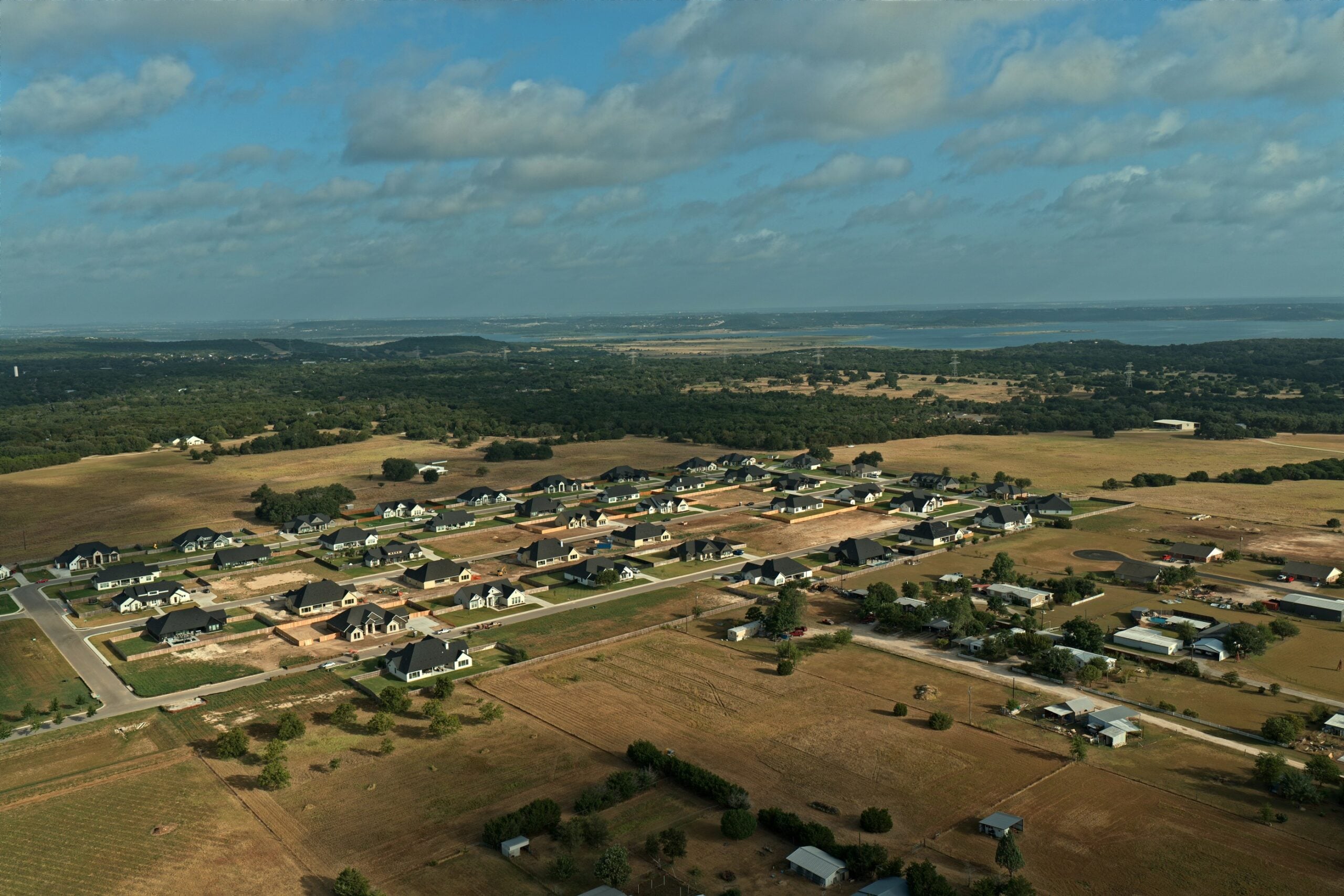
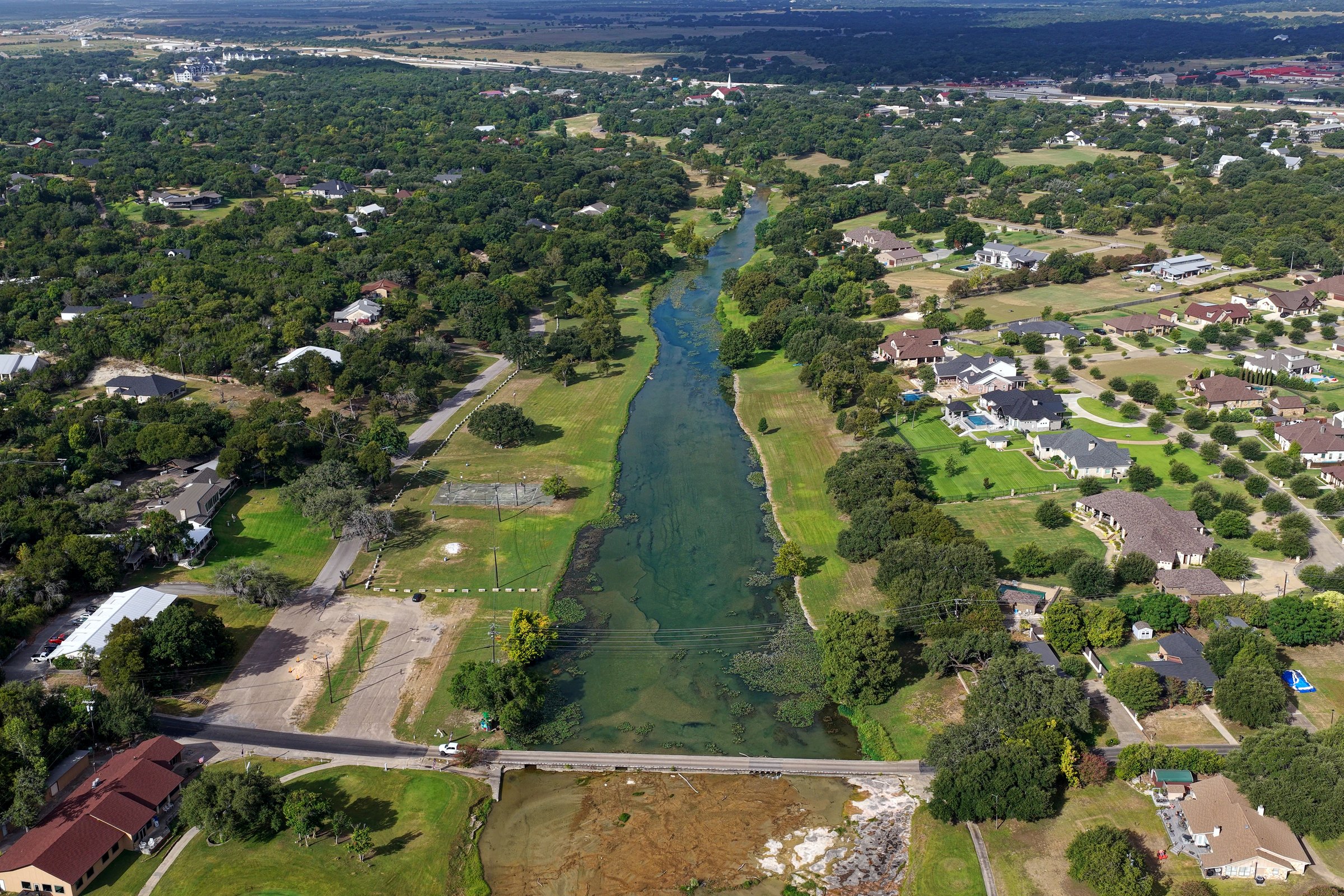
Use the Salado new-construction guide for additional builder research, and the Salado homes guide to continue your search planning. Confirm actual availability and home-specific terms before a tour or offer.
Which Salado school serves an address?
For a 2026–27 move, confirm the exact address, grade and campus with Salado ISD. Do not rely on an older “one campus per level” description. The district’s directory, checked September 30, 2026, lists Thomas Arnold Elementary, Salado Creek Elementary, Salado Middle School and Salado High School, with separate locations.
| Directory entry | Published location |
|---|---|
| Thomas Arnold Elementary T1 / T2 | 510 / 560 Thomas Arnold Road |
| Salado Creek Elementary | 1880 Williams Road |
| Salado Middle School | 1169 Williams Road |
| Salado High School | 3689 FM 2484 |
Start with the official school directory and elementary attendance-zone resource, then get the district’s answer for the property and school year. Ask about transportation, program availability and enrollment requirements separately. A Salado mailing address or a listing’s school field does not itself establish assignment. Some street addresses in the district directory differ from its linked maps; confirm the campus street address with the district before traveling.
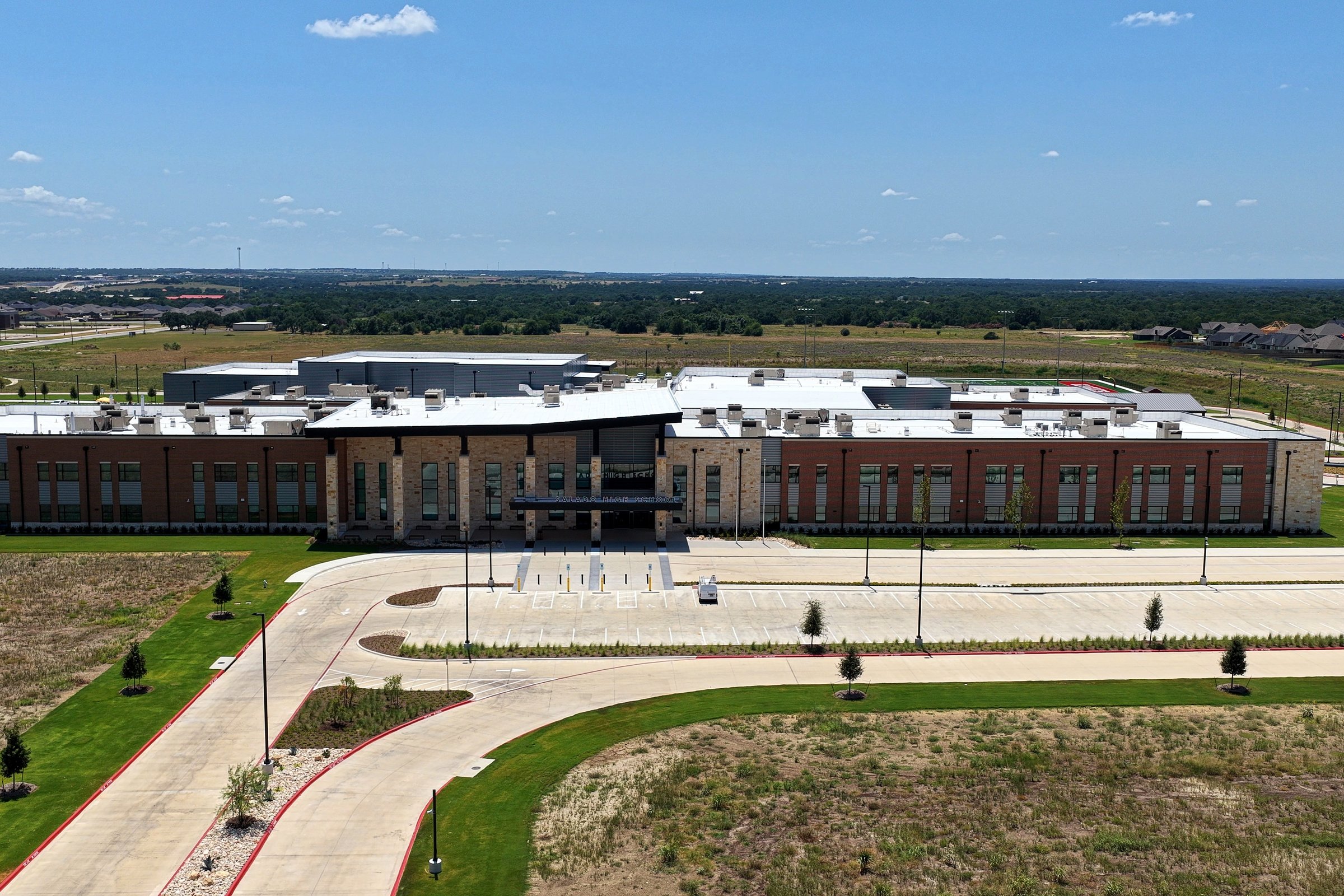
For academic reporting, choose the relevant district or campus and reporting year in Texas Education Agency’s school reports. This guide does not rank neighborhoods by school quality or treat a letter grade as a prediction for an individual student. Use the Bell County school-address guide for the broader comparison process.
What are property taxes like in Salado?
There is no single verified tax rate for every Salado mailing address. Identify the property in Bell CAD’s property search, confirm its taxing jurisdictions and obtain the applicable year’s adopted rates and exemptions. A school-district boundary, a village boundary and a postal address answer different questions.
Historical rate example: Salado ISD’s August 18, 2025 resolution adopted a 2025 school rate of $1.1669 per $100 of taxable value: $0.6669 for maintenance and operations plus $0.5000 for debt service. That is only the school component and only the stated tax year; it is not a complete 2026 parcel rate. Read the district’s 2025 adoption resolution.
Put the taxable value beside the rate
As a calculation example only, $400,000 of school-district taxable value × $1.1669 ÷ 100 = $4,667.60 in school tax using that historical 2025 rate. The $400,000 is an assumed taxable value, not a purchase price or a claim about your exemptions. County, municipal or other applicable taxes must be calculated separately on their own taxable values.
The district budget and tax page lists proposed and adopted materials by year. A proposed rate is not an adopted one. For a buying budget, request an estimate based on the new owner’s circumstances and every applicable entity. Do not carry the seller’s exemptions, special appraisal or present escrow payment into your budget automatically.
Add insurance, HOA dues and any documented assessments, utility costs and maintenance reserves to the loan payment. Compare complete estimates for two addresses rather than assuming an unincorporated address always produces the lowest total cost. Bell County property-tax calculation guidance.
How do you check the drive to Temple, Fort Hood or Austin?
A town-center drive time is not a reliable commute for every Salado address. Route from the exact house to the exact entrance or parking destination, enter a realistic departure time, and test the return trip. Gate access, parking, school drop-off and road conditions can change the practical result.
| Destination | Use this endpoint | Record separately |
|---|---|---|
| Baylor Scott & White, Temple | Your actual workplace entrance or appointment location | Parking and the walk from the vehicle |
| Fort Hood | The gate you are authorized to use and the on-post destination | Access requirements, gate availability and on-post travel |
| Austin or another I-35 destination | The final street address, not the city label | Peak-direction travel and the return window |
| Regular errands | Your chosen grocery, clinic and other frequent stops | A realistic combined trip |
Save the route, date, departure time and observed travel time. Check DriveTexas road conditions before testing it. No fixed 27-minute gate run or one-hour Austin commute is promised here.
What should you check beyond the listing photos?
Tour the setting, then document the services and recurring costs that the photograph cannot show.

Water and wastewater
Ask the seller and service provider which water and wastewater arrangements serve the exact property. Obtain recent bills and relevant system or connection records. Do not infer septic, sewer, a private well or a particular provider from “inside” or “outside” the village.
For a home with an on-site sewage facility, request permits, the system design, maintenance records and an appropriate evaluation. TCEQ’s existing-system buyer guidance explains that a lender may require an evaluation and advises a new owner to contact the local permitting authority. Confirm capacity and allowed alterations before planning an addition, pool or new outbuilding.
Healthcare and errands
Baylor Scott & White Clinic – Salado lists local primary-care services. A clinic listing is not a full-service hospital or emergency-department designation. Verify the service you need, appointments and current hours with the provider, then test the route. Use the Chamber directory to plan ordinary shopping and dining stops; this page does not claim to count every available business.
Creek, drainage and insurance
Check the actual parcel in FEMA’s Flood Map Service Center, review the survey and disclosures, and discuss the property with your insurer. A map designation does not eliminate all flood risk, and an aerial cannot establish a buildable area or public creek access.
Construction, restrictions and future changes
Read the restrictions, HOA documents and any relevant permit or development record for the parcel. A proposed project or permit is not a completed service connection. Budget for the home’s documented roof, mechanical and wastewater condition rather than making a town-wide maintenance assumption.
Five checks that can change the buying decision
| Check | Continue when… | Resolve first when… |
|---|---|---|
| Budget | The full payment and operating-cost estimate fit your limits. | Taxes, insurance or assessments are assumed rather than quoted. |
| Routes | Your tested trips work on the days and times you need. | The decision depends on an untested town-center drive estimate. |
| Utilities | Service and system records support the intended use. | A planned addition relies on unverified water or wastewater capacity. |
| Restrictions and access | Documents support the uses and access you expect. | A view, lot size or verbal statement substitutes for written rights. |
| Condition and timing | Inspection, repairs and completion dates fit the transaction. | The buying plan assumes repairs or a new home will be complete without documentation. |
These are checks for every buyer, not categories of people who should or should not live in Salado. Compare actual homes in Salado, Temple or Belton against the same requirements. A budget threshold or workplace alone does not determine the right location.
Salado vs. Temple: what does the price difference mean?
In the same export observed October 3, 2026, September 2026 Salado closings had a $540,000 median price across 21 events; Temple’s median was $270,000 across 104 events. The broad Residential cohorts have different homes, locations, sizes and conditions. Their price gap is not a price for the same house, a causal school premium or proof that one place is better.
| Measure | MLS City Salado | MLS City Temple |
|---|---|---|
| Closing events | 21 | 104 |
| Median close price | $540,000 | $270,000 |
| Median individual price per exported square foot | $220.60 | $155.80 |
| Median exported DOM | 77 days | 70 days |
Price per square foot also needs comparable condition, features and usable space; it is not a complete adjustment for different homes. Put two real addresses through the same worksheet and decide which differences matter to you. The Temple market guide and Living in Belton guide provide additional dated context.
Discuss the evidence with Taylor

Taylor Dasch · EG Realty
A town-level guide can narrow the questions. An actual buying decision still needs the property record, comparable sales, inspections and the terms of the transaction. Bring the listing or your search criteria so those questions can be discussed in context.
Texas real estate license #775435 · 254-718-4249 · Taylor’s professional background and work.
Want to discuss a Salado address?
Send the listing, budget and questions you want to resolve. This form sends an inquiry to Taylor for a manual conversation. It does not instantly produce a valuation, tax estimate, school assignment or downloadable report.
Living in Salado: practical buyer questions
Is Salado, TX a good place to live?
Compare the actual home with your budget, daily routes, utility arrangements, restrictions and any school-assignment needs. Salado has a downtown shopping and dining setting, but a town visit does not establish the daily experience from every Salado mailing address.
How much does a house cost in Salado?
The export observed October 3, 2026 shows 21 September closing events with MLS City exactly Salado at a $540,000 median close; later reporting may change that sample. Separately, 98 included Active homes asked a median $625,000. These broad Residential cohorts differ; their median gap is not a discount on the same home.
Does every Salado student attend the same elementary school?
Do not rely on that older description. Salado ISD’s directory checked September 30, 2026 lists Thomas Arnold Elementary and Salado Creek Elementary, along with its middle and high schools. Confirm the exact address, grade, school year and assignment with the district.
Is there one property-tax rate for all Salado addresses?
No complete rate is established here for every address. Obtain the parcel’s taxing entities, applicable year’s adopted rates and taxable values. The cited $1.1669 per $100 is Salado ISD’s historical 2025 school component, not a complete 2026 property rate.
Are homes outside the village always on septic?
Do not infer water or wastewater service from the mailing address or village boundary. Obtain written service confirmation and the property’s records. If it has an on-site sewage facility, review permits, design, maintenance and an appropriate evaluation before relying on its capacity.
How long is the commute from Salado?
Check the exact home-to-destination route at your intended departure and return times. Include the actual gate or workplace entrance and parking. This guide does not promise a fixed drive time for every Salado address.
Does a lower asking price guarantee negotiating room?
No. In the snapshot observed October 3, 2026, 46 of 98 included Salado Active homes had asking prices below their exported original list prices. That describes a net listing-episode reduction, not the seller’s minimum or a guaranteed discount.
What does the inquiry form provide?
It sends a request for a manual conversation with Taylor. A saved-request confirmation is separate from delivery of a report, a school determination, a tax estimate or completion of a service. The comparison worksheet is already available on this page without a form.
What the figures cover
Content and primary-source review: September 30, 2026. MLS observed October 3, 2026. The closed cohort covers September 1–30, 2026, as observed October 3; late reporting or corrections may change it. Active inventory is a separate snapshot observed October 3, 2026. Both use MLS City exactly Salado or Temple in a Bell County Residential export, not city-boundary, ZIP or school-district polygons.
Records with positive lease prices, invalid prices or prices below $15,000 are excluded. Homes are deduplicated by normalized full street identity including unit, direction and city; closings also use the closing date. Residential listing IDs are not supplied, so this is an identity proxy, not certification of every transaction. Later MLS reporting or corrections and off-market sales can change the picture.
Price medians round to the nearest $100. Price per square foot is the median of individual ratios using valid exported floor area and a $25–$900 screen; one included Salado Active record lacks a usable ratio. One additional Salado street identity appears as both Active and Pending with conflicting listing details; it is excluded from the Active cohort because the export has no listing IDs to resolve its current status. DOM is exported days on market, not cumulative marketing time or a prediction. Ratios exclude seller credits. No trailing-year trend, months-of-supply, verified new-versus-resale share or whole-town HOA/septic prevalence is claimed.
School locations come from the current district directory. The tax example uses the signed 2025 school-rate resolution and an explicitly assumed taxable value. Other primary references are linked beside their claims. Source dates stay distinct from review dates; a new page render does not renew the evidence.
Taylor Dasch · EG Realty · Texas real estate license #775435 · 254-718-4249 · dealswithdasch@gmail.com. Informational buying guidance; obtain property-specific professional advice and records. Equal Opportunity Housing.