Salado, Texas · Buyer Intelligence Desk · Updated June 2026
Homes for Sale in Salado, TX — the Market, the Premium, and a Straight Answer
Salado has roughly 116 active listings right now, from the $250K to about $3.1M, with a median asking price of $624,995. Over the last 12 months, 268 homes closed at a median of $498,500 and $217 per square foot — Bell County’s most expensive market, and its most distinctive: 43% of sales are new construction, and acreage is a real category here, not a unicorn. This page is the data, the price bands, Salado ISD, Mill Creek, land, and an honest read on when the Salado premium is worth paying. For the full lifestyle breakdown — schools, taxes, commute, and who should not move here — see Living in Salado, TX, or grab every number in the free Salado Guide (PDF). Shopping new? New construction in Salado maps all 36 active new builds — builders, prices, HOAs, and current incentives.
Source: Central Texas MLS closed sales, trailing 12 months through 8/5/2026 (n=268) + active inventory pull. Figures change monthly — verify current numbers before writing an offer.
What homes are for sale in Salado, TX right now?
Salado currently carries about 116 active listings with a median ask of $624,995. The market splits into four real categories: new-construction estates in subdivisions like Sterling Meadows, Eagle Heights, Eagle Ranch, and King Oaks; established golf-community homes in Mill Creek; village-proximate resales near historic Main Street; and Hill Country land/acreage tracts. Verdict: Salado is Bell County’s luxury tier — buyers get larger, newer homes and acreage options at roughly $200K+ above Temple’s median, and well-priced listings sell at 99% of ask.
- Median sold price: $498,500 (avg $535,394) · median $217/sqft · median ~2,430 sqft, 4 beds
- Speed: 74-day median time on market; near-ask closing (99% sold-to-list)
- New construction: 43% of all sales over the trailing 12 months
- HOA: roughly 59% of sold homes carry one — budget for it
- Commute: ~45 min to Austin, 25–30 min to Baylor Scott & White Temple, 30–35 min to Fort Hood
The premium, quantified
Why does Salado cost $200K+ more than Temple — and when is it worth it?
The honest math first. Here is Salado against its Bell County siblings, same MLS window:
| Market | Median sold | $/sqft | Character |
|---|---|---|---|
| Salado | $498,500 | $217 | Village + estates + acreage; 43% new build; Salado ISD |
| Belton | $320,000 | ~$175 | Lake access, Belton ISD, mid-range new construction |
| Temple | $274,000 | $158 | Bell County’s volume market; BSW medical anchor; widest price range |
The premium buys four concrete things: newer and larger homes (median ~2,430 sqft, median build year around 2022 in the sold set), acreage availability that barely exists in Temple city limits, Salado ISD, and the village itself — a walkable historic Main Street that functions as a daily amenity, not a postcard. What it does not buy: shorter commutes to Temple employers, lower property-tax bills, or investment-grade rent ratios — Salado rents do not scale with Salado prices.
Salado is worth the premium if…
- You’re an Austin-corridor professional who wants land or a village setting without Austin pricing — Salado’s $217/sqft is still well under the Austin metro.
- Salado ISD’s small-district model is a primary driver for your family.
- You want new construction or acreage — the two things Salado has in genuine depth.
- You’re a downsizer/retiree trading square footage for setting, and the equity math from a larger metro works in your favor.
Skip Salado if…
- You’re optimizing dollars-per-square-foot — West and South Temple deliver newer-build space at $130–$170/sqft.
- You’re buying for rental cash flow — the investor math works in Temple price bands, not at $498.5K medians.
- Daily commute to BSW or Fort Hood dominates your routine — Belton and West Temple cut it meaningfully.
- You want urban walkability beyond one (excellent) Main Street.
Price bands · trailing 12 months
What does each price band actually buy in Salado?
Salado breaks the site’s standard Bell County bands — over half the market trades above $500K. Here is the luxury-appropriate cut, with what each band really gets you:
| Band | Sales (12 mo) | Share | What it buys |
|---|---|---|---|
| Under $350K | 37 | 14% | Older village-adjacent resales, smaller cottages, occasional Mill Creek entry point. Thin and fast-moving. |
| $350K–$500K | 96 | 35% | The realistic entry tier: smaller new builds, established Mill Creek homes, quarter-to-half-acre lots. |
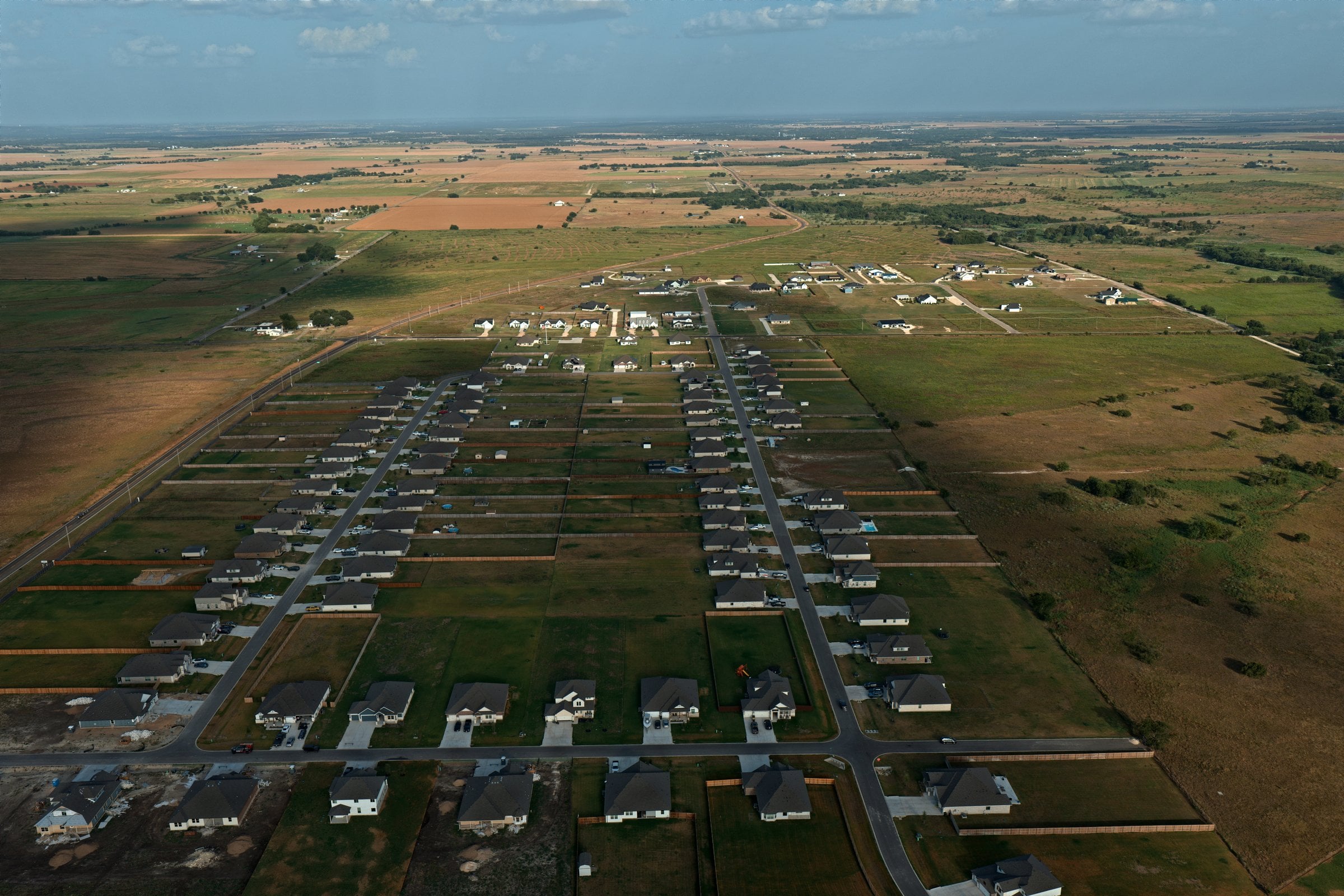
| $500K–$750K | 101 | 37% | The heart of the market — new-construction estates in Sterling Meadows, Eagle Heights, King Oaks; half-acre-plus lots, 2,400–3,200 sqft. |
| $750K–$1M | 34 | 13% | Larger custom builds, premium lots, small acreage (1–5 ac), golf-course frontage. |
| $1M+ | 3 | 1% | True ranchette/estate tier. Rare in closed data — most $1M+ inventory trades slowly or quietly off-portal. |
Only 3 homes over $1M closed on the MLS in twelve months — but active $1M+ listings run to $1.995M. That gap means the top tier is overstocked relative to its sales pace: serious $1M+ buyers have negotiating room the rest of the Salado market does not, and the best estate properties often surface as coming-soon or off-market conversations before they ever hit a portal.
Schools
Is Salado ISD the draw everyone says it is?
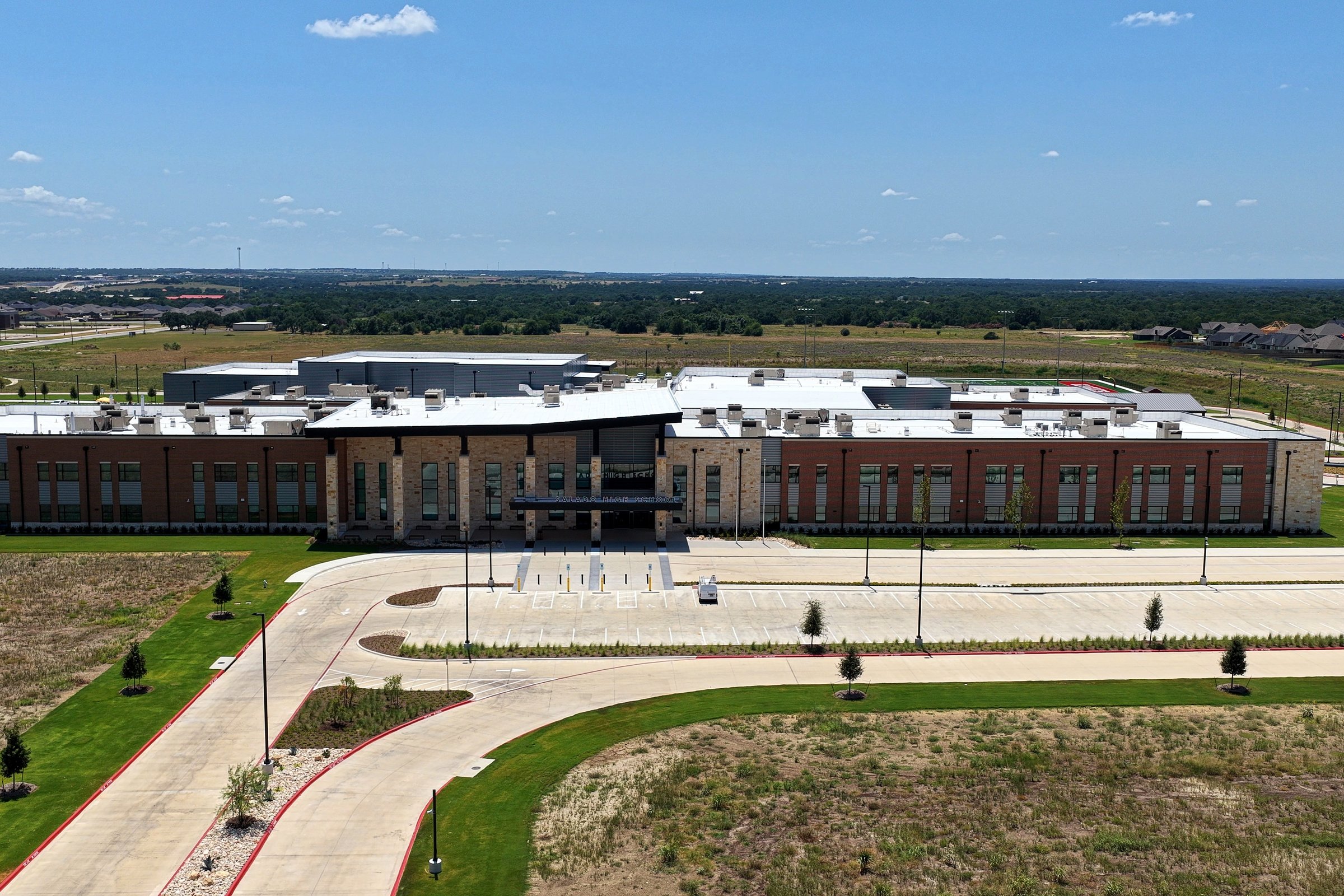
Salado ISD is one of Bell County’s smallest districts — a single feeder pattern where the elementary, intermediate, junior high, and Salado High School all sit within the village. For families, the practical effect: no school-assignment roulette, small campus sizes, and a district identity tied tightly to the town.
The honest caveats: small districts mean fewer specialized programs than Temple ISD’s scale offers, and district boundaries in the acreage areas do not perfectly track Salado addresses. Verify the specific address’s school zone and the district’s current TEA accountability rating before you write an offer — ratings update annually and acreage parcels on the edges can surprise you.
The village
What does living near Salado’s Main Street actually mean?
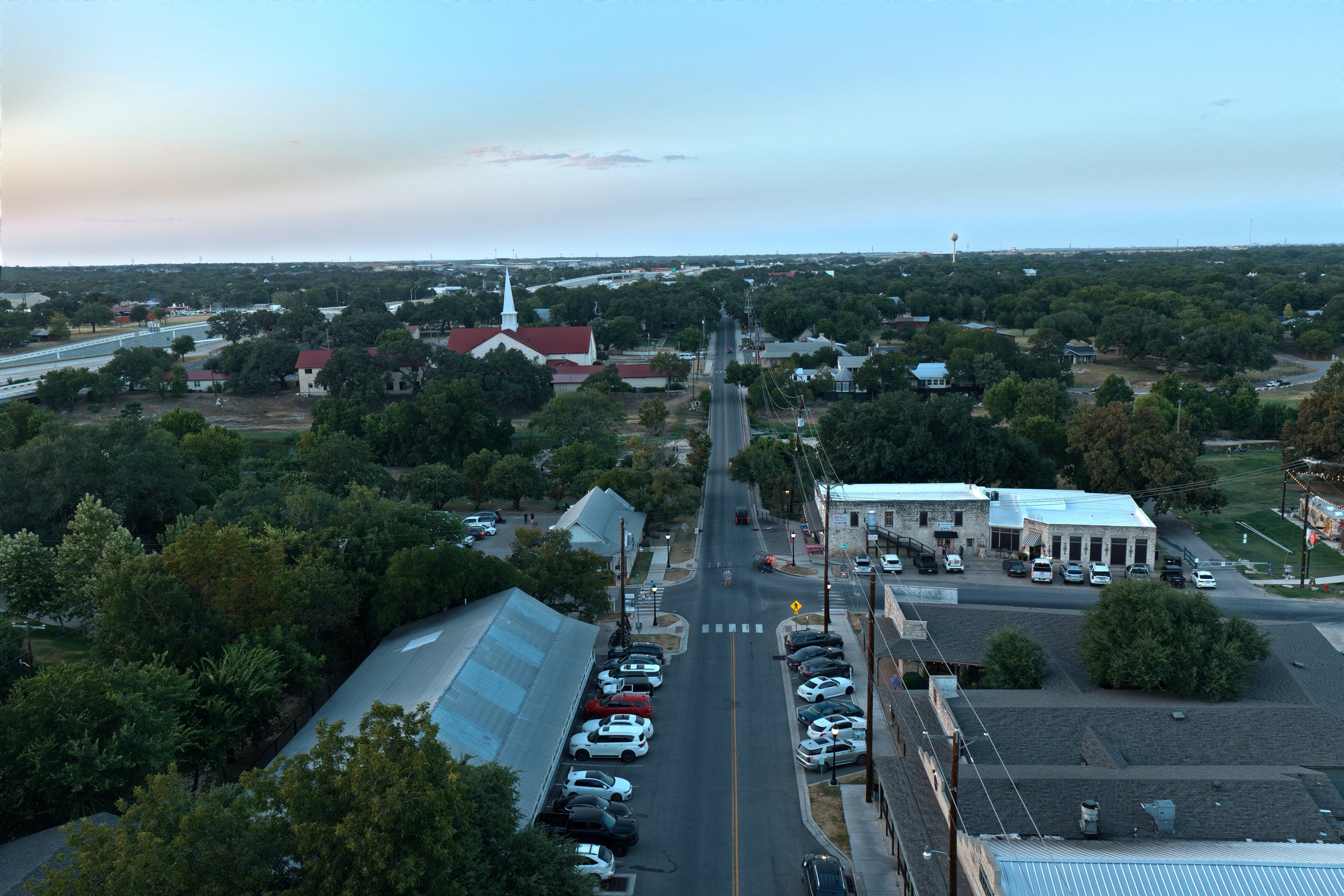
Salado’s historic district is a working amenity: galleries and studios, wineries and tasting rooms, the Stagecoach Inn dining district, Salado Creek’s swimming and walking access, and a calendar of art and wine events that pull traffic from Austin and Dallas. Most listings sit a 3–8 minute drive from Main Street — close enough for it to be your default evening, far enough that tourist weekends don’t park in your driveway.
The tradeoff to price in: Salado’s commercial base is intentionally small. Daily errands — groceries, big-box, most medical — run to Belton or Temple, 15–25 minutes north.
Communities
Mill Creek, the estate subdivisions, or acreage — which Salado are you buying?
Mill Creek
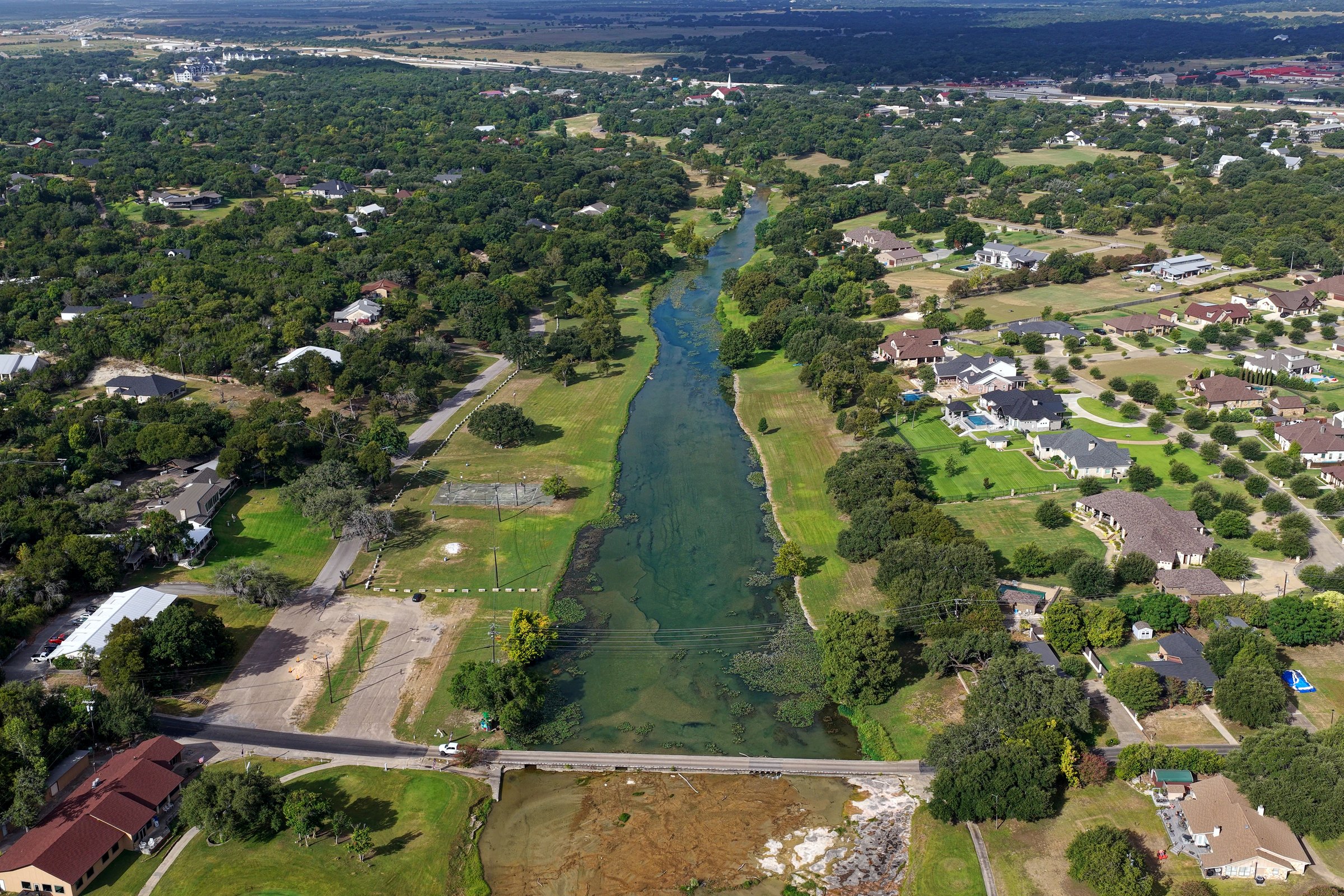
The established golf-course community around Mill Creek’s fairways and Salado Creek. Mature trees, varied 1980s–2010s housing stock, and the village’s most walkable-to-Main-Street location. You trade modern floor plans and builder warranties for established lots and golf at the doorstep. Entry points occasionally appear under $400K; updated golf-frontage homes push $600K+.
The new estate subdivisions
Sterling Meadows, Eagle Heights, Eagle Ranch, King Oaks, Drakes Landing, Flint Ridge, Hidden Springs, Hollow Ranch — this is where Salado’s 43% new-construction share lives. Half-acre-plus lots, 2,400–3,400 sqft customs and semi-customs, mostly $500K–$900K. Check each subdivision’s HOA terms and build-out timeline: streets still under construction mean years of builder traffic.
Land & acreage
Salado is Bell County’s ranchette market — Hill Country tracts from 1 to 50+ acres, build-your-own customs, and horse properties. Before you fall for a fenceline: ag-exemption rollback taxes, well/septic feasibility, and ETJ rules decide whether a “cheap” tract is actually cheap. Start with the Bell County land due-diligence guide and the ag-exemption rollback math.
Acreage listings often advertise the seller’s ag-exempt tax bill — sometimes under $100/year on the land. If you buy and don’t keep a qualifying ag use, Bell CAD can claw back three years of the tax difference at market valuation. On a $400K Salado tract that rollback can run five figures. Model it before you offer — the guide’s calculator does it with 2025 BCAD rates.
Location math
How far is Salado from Austin, Temple, and Fort Hood?
| Destination | Drive | Route |
|---|---|---|
| Downtown Austin | ~45 min | I-35 South (traffic-dependent; Georgetown stretch is the variable) |
| Baylor Scott & White, Temple | 25–30 min | I-35 North → TX-36/Loop 363 |
| Fort Hood main gate | 30–35 min | FM 2484 west — the back way most newcomers don’t know |
| Georgetown / Round Rock | 25–35 min | I-35 South |
Salado is the Austin-adjacent play in Bell County — but it is a real commute, not a suburb. Buyers doing the Austin drive daily should test it at their actual hours before committing.
Market mechanics
Do Salado sellers negotiate?
Less than the rest of Bell County. The trailing-12-month numbers: 99% median sold-to-list ratio on a 74-day median market time. Translation — Salado sellers price with conviction and mostly get it. The lowball-and-wait strategy that can work in Temple’s softer segments tends to stall here; leverage in Salado comes from timing (DOM > 90 days), the $1M+ overhang, and new-build incentives (rate buydowns, closing costs) rather than list-price haircuts.
Where the leverage actually is: builders carrying standing inventory in the estate subdivisions will move on incentives before they move on price — it protects their comps. Ask for the buydown first.
The concierge search
How do you see the Salado homes that never make it to Zillow?
In a thin, high-value market, the best properties — estate tracts, golf frontage, anything priced right under $750K — often trade from coming-soon status or quiet seller conversations. Portals show you what’s left. My job is the other part: a personally curated MLS search including seller-authorized coming-soon and pre-market listings, acreage that matches your actual use case, and private tours arranged around your schedule.
Tell me the brief
Criteria, price band, timeline — two minutes in the form below, or say it by phone. Either works.
I build the search
A curated Central Texas MLS search, tuned past the portal filters: lot lines, ag status, builder, HOA terms, flood and ETJ checks.
Matches + quiet inventory
You get listings worth your time — including seller-authorized coming-soon properties — not a daily firehose.
Your search tracker
A running view of what I’m doing: searches set, properties reviewed, matches sent, tours arranged. You always know the state of play.
Direct line if forms aren’t your thing: 254-718-4249 · dealswithdasch@gmail.com
Questions buyers actually ask
Salado home-buying FAQ
What is the median home price in Salado, TX?
$498,500 median sold over the trailing 12 months (average $535,394, n=268), at $217 per square foot — Central Texas MLS through 8/5/2026. Active listings ask a median $624,995.
Why is Salado more expensive than Temple or Belton?
The ~$229K premium over Temple buys newer, larger homes (43% of sales are new construction), real acreage options, Salado ISD’s single-feeder district, and the historic village. It does not buy commute time or cash-flow math — that’s what the worth-it / skip-it breakdown above is for.
Is Salado a good place to live?
For village-plus-land buyers on the Austin corridor, yes — Main Street works as a daily amenity and the I-35 position keeps Austin at ~45 minutes. Buyers who need big-city amenities at the doorstep or the county’s lowest $/sqft should look at Temple or Belton instead.
What is Mill Creek?
Salado’s established golf-course community: mature trees, 1980s–2010s housing stock, fairway lots, and the closest-to-Main-Street living in town. The tradeoff against the newer estate subdivisions is floor plans and warranties versus established setting.
Can I buy acreage in Salado?
Yes — it’s Bell County’s primary ranchette market. Budget diligence time for ag-rollback taxes, well/septic, and ETJ rules; the land guides linked above walk the full checklist.
Who’s building new homes in Salado?
The active communities: Sterling Meadows, Eagle Heights, Eagle Ranch, King Oaks, Drakes Landing, Flint Ridge, Hidden Springs, and Hollow Ranch. New construction was 43% of all Salado sales in the trailing 12 months.
Do Salado homes sell at asking price?
Essentially — 99% median sold-to-list over the last 12 months, on 74-day median market time. Negotiating leverage comes from DOM, the $1M+ overhang, and builder incentives, not list-price haircuts.
85+ real estate transactions
Taylor Dasch · EG Realty
I work Salado the way I underwrite my own purchases: real comps, lot-level diligence, and a straight answer when a property — or the whole town — isn’t your fit. If Salado’s premium doesn’t serve you, I’ll say so and show you where the same dollars work harder in Belton or Temple.
Want the Salado short list — including what hasn’t hit the portals?
One conversation sets the search. You’ll know within a week whether Salado earns its premium for your situation.
Taylor Dasch · EG Realty · Temple, TX · Updated June 2026