



Top 5 Neighborhoods for Real Estate Investors in Temple TX
Data-driven rankings, honest deal math, and real risk analysis from an active investor agent with $30M+ in closed transactions and 100+ deals in Central Texas.
What Are the Best Neighborhoods to Invest in Temple TX?
As of March 2026, the five best neighborhoods for real estate investors in Temple TX are:
- Hospital District — Best cash flow play with mid-term rental upside near Baylor Scott & White ($150K–$220K entry, $1,500–$1,700 LTR rent)
- Canyon Creek — Best appreciation and tenant quality play for long-term hold ($250K–$350K entry, $1,600–$1,800+ rent)
- Cimmaron — Best buy-and-hold with minimal headaches and low turnover ($230K–$270K entry, $1,500–$1,600 rent)
- North Temple Core — Best BRRRR and forced appreciation target ($120K–$170K entry, $1,200–$1,450 rent post-rehab)
- East Temple — Highest cash-on-cash returns but highest risk ($80K–$130K entry, $1,000–$1,300 rent)
Watch: Top 5 Investor Neighborhoods in Temple TX | 2026
Why Is Temple TX Attracting Real Estate Investors in 2026?
Temple TX's median home price sits near $240,000 as of March 2026 — roughly 40% below Austin's median and significantly under the DFW metro average. That price point, combined with rents that haven't corrected proportionally, creates one of the strongest rent-to-price ratios in Central Texas.
The investment thesis for Temple in 2026 rests on four pillars:
Institutional employment anchors.Baylor Scott & White Medical Center employs 8,800+ people in Temple and is the city's largest employer by a wide margin. The hospital creates consistent rental demand from nurses, technicians, residents, and traveling healthcare professionals — the kind of tenants who pay on time and maintain properties. Fort Hood (formerly Fort Hood) adds approximately 45,000 active-duty military personnel whose 2026 BAH rates ($1,695/mo for E-5 with dependents, $2,070/mo for E-7) effectively set the rent floor for the region.
Massive commercial investment. Meta's $800 million data center and Rowan's $700 million manufacturing facility represent over $1.5 billion in announced commercial projects. These aren't speculative — they're permitted, funded, and bringing hundreds of construction jobs now and permanent operational jobs by 2027-2028. This kind of capital commitment from Fortune 500 companies signals long-term confidence in the corridor.
Population growth without price inflation. Temple's population growth rate of approximately 3.1% annually is outpacing the Texas average, but home prices haven't spiked the way they did in Austin, San Antonio, or DFW. That gap between population momentum and price response is where investor opportunity lives.
Tax and regulatory advantages. Texas has 0% state income tax, and the state is broadly landlord-friendly with no rent control provisions and efficient eviction timelines compared to coastal markets. Bell County's effective property tax rate of 2.07% is higher than the national average but manageable when factored against the low entry price and strong rents.
"Temple isn't an appreciation gamble like Austin was in 2021. It's a fundamentals play — real jobs, real demand, real cash flow at price points most investors can actually afford."
For a deeper comparison of returns, read the Austin vs. Temple ROI analysis. If you're investing from out of state, start with the Out-of-State Investor Guide and How to Buy Remotely in Temple TX.
What Are the Top 5 Neighborhoods for Investors in Temple TX?
Each of these five neighborhoods serves a different investment strategy. There is no single "best" — it depends on your capital, risk tolerance, time horizon, and whether you want cash flow, appreciation, or forced equity. The ranking below is ordered by overall risk-adjusted return potential for 2026.
Risk-Return Spectrum
Where each neighborhood sits on the risk vs. return axis
*North Temple and East Temple cap rates assume successful renovation and stabilization. Actual results vary significantly by property condition and management quality.
Is the Hospital District the Best Cash Flow Play in Temple TX?
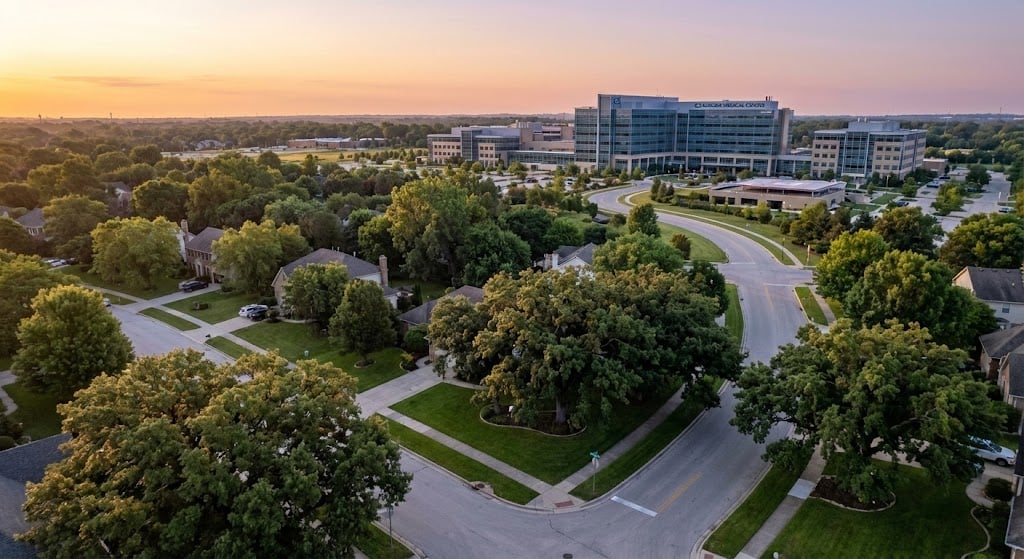
The Hospital District ranks #1 because it offers the best risk-adjusted cash flow in Temple TX as of March 2026. Properties within walking distance of Baylor Scott & White Medical Center — the city's largest employer with 8,800+ employees — benefit from a built-in tenant pipeline that most neighborhoods cannot replicate.
The real upside here is mid-term rental (MTR) potential. Travel nurses rotating through BSW on 13-week contracts need furnished housing, and they're willing to pay $2,200–$2,800/month for a clean, furnished 3-bedroom within a short commute of the hospital. That's a 40-65% premium over standard long-term rent — and it flips what would be a break-even LTR into a genuinely cash-flowing asset. Read the full MTR vs. LTR comparison for detailed math.
Long-term tenants in this area tend to be hospital support staff, medical assistants, and technicians — generally reliable, employed, and stable. Vacancy rates near BSW run lower than the Temple average because demand is anchored to a recession-resistant employer.
Sample Deal: $180K Hospital District 3/2
As MTR at $2,400/mo (furnished): +$765/mo cash flow after higher vacancy allowance. That's the play.
Is Canyon Creek a Good Long-Term Investment in Temple TX?
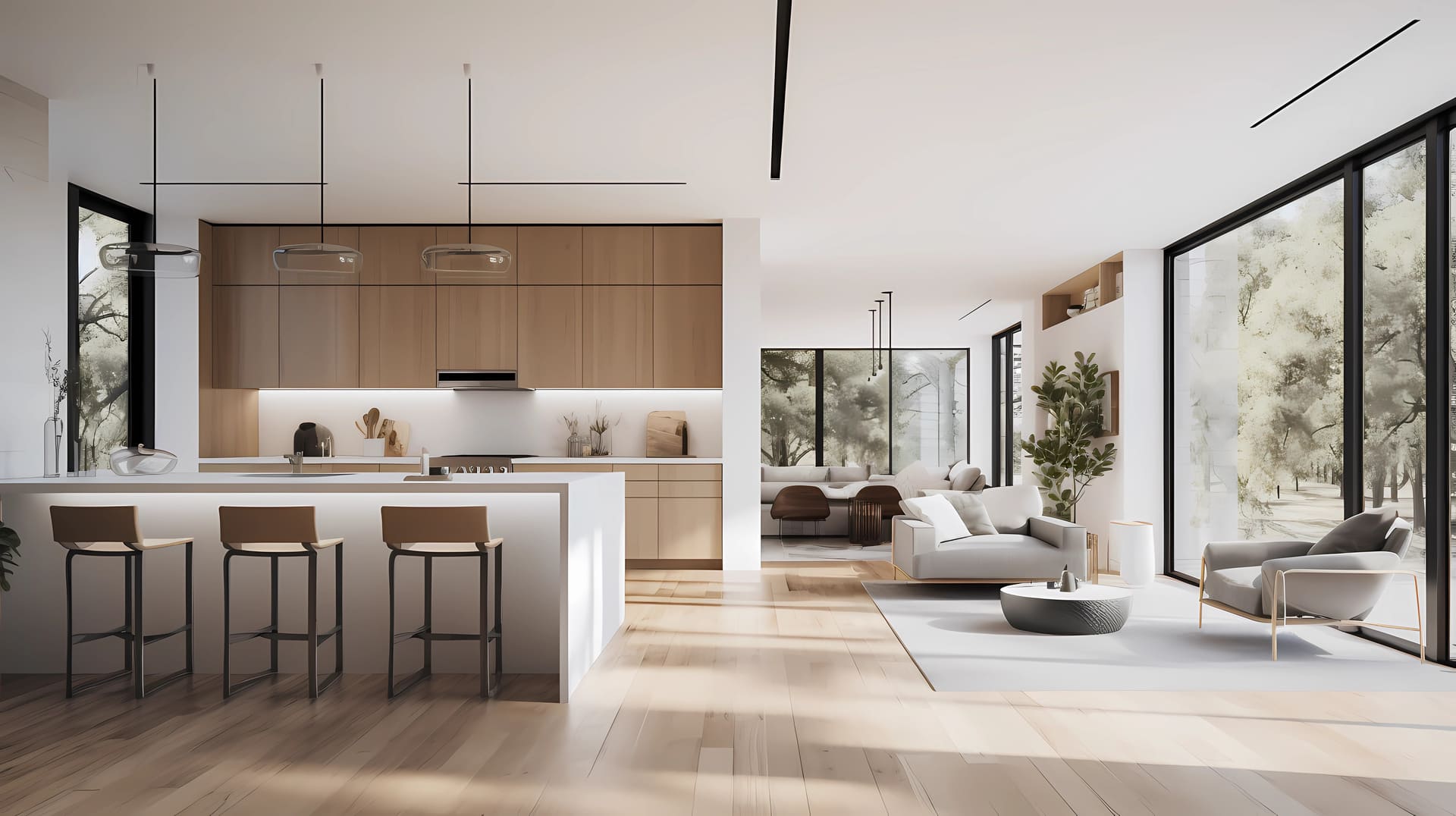
Canyon Creek is Temple's premier appreciation play — brick construction, 2005–2015 builds, and the highest tenant quality in the market. As of March 2026, this neighborhood in the 76502 zip code consistently trades in the $250K–$350K range, which prices out many cash-flow-only investors but rewards patience with steady equity growth and virtually zero deferred maintenance headaches.
The tenant profile here is different from the rest of this list. You're renting to BSW physicians, hospital administrators, military officers, and dual-income professionals — tenants who treat the property like their own, stay for 2-3 year lease cycles, and rarely require chasing for rent. Turnover is low, and when it happens, the property re-leases quickly because of the neighborhood's reputation and Belton ISD school access.
Canyon Creek's investment thesis is not about Day 1 cash flow. At current interest rates, a $300K purchase with 25% down will likely break even or run slightly negative on a pure LTR basis after taxes, insurance, and property management. The play is appreciation + principal paydown + tenant quality. You're building equity in an asset that appreciates 3-5% annually in a neighborhood with structural demand drivers, while a high-quality tenant covers (or nearly covers) your carry cost.
For investors who want both cash flow and quality, the rental market analysis shows that 76502 average rents have climbed to approximately $1,706, and Canyon Creek commands the upper end of that range — particularly 4-bedroom homes which are scarce in this submarket.
Why Is Cimmaron a Favorite Among Buy-and-Hold Investors in Temple TX?
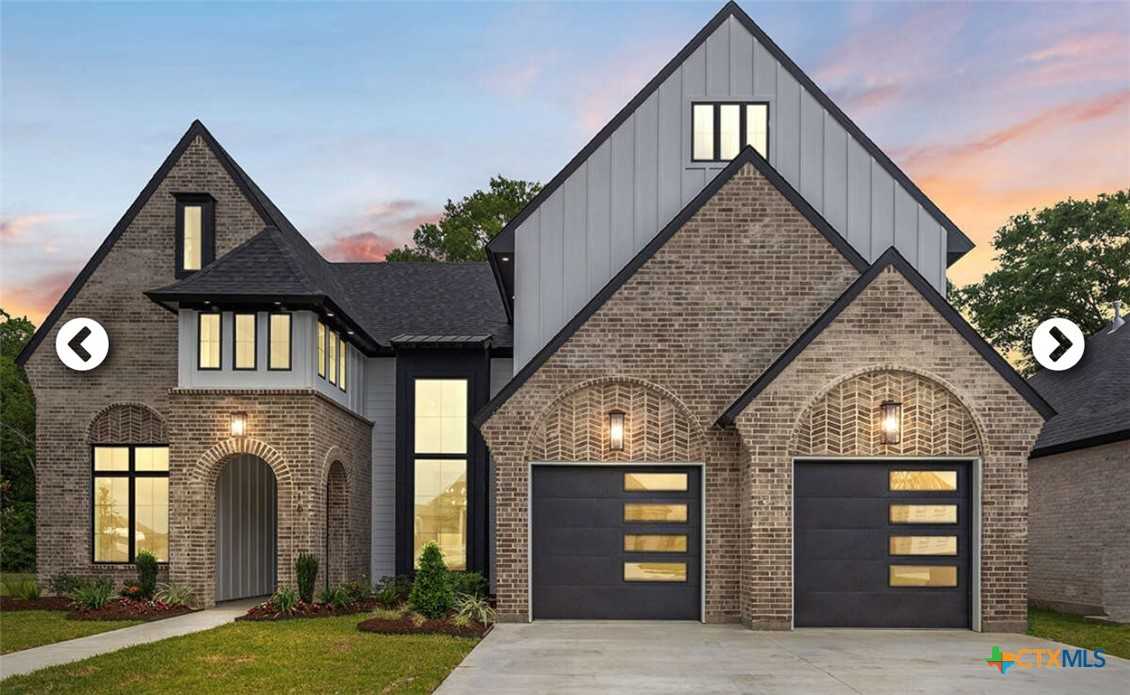
Cimmaron is the neighborhood investors buy when they want to set it and forget it. Homes in the mid-$200s, mostly built between 2000 and 2012, with well-maintained yards, intact roofs, and minimal deferred maintenance. As of March 2026, Cimmaron represents the sweet spot between Canyon Creek's premium pricing and the older stock found closer to downtown.
The buy-and-hold thesis here is straightforward: acquire a clean 3/2 for $240K–$260K, place a quality tenant at $1,550/month, and hold. Turnover in Cimmaron is notably low — tenants tend to be young families, military families from Fort Hood (the 2026 BAH rate of $1,695/month for E-5 with dependents covers rent comfortably), and professionals who want a nice neighborhood without Canyon Creek's price tag.
What makes Cimmaron particularly attractive for out-of-state investors is predictability. These homes don't surprise you with $15K foundation repairs or ancient plumbing. Roof ages are manageable. HVAC systems are newer. Your property manager sends a statement each month, and it's boring — which is exactly what you want from a rental portfolio asset.
The neighborhood also benefits from proximity to shopping corridors and good school zones, which keeps demand stable even during broader market softening. If you're building a portfolio of 3-5 Temple properties, Cimmaron should be your anchor — the reliable performer that balances out higher-risk plays elsewhere in your portfolio.
Can You Still BRRRR in North Temple?
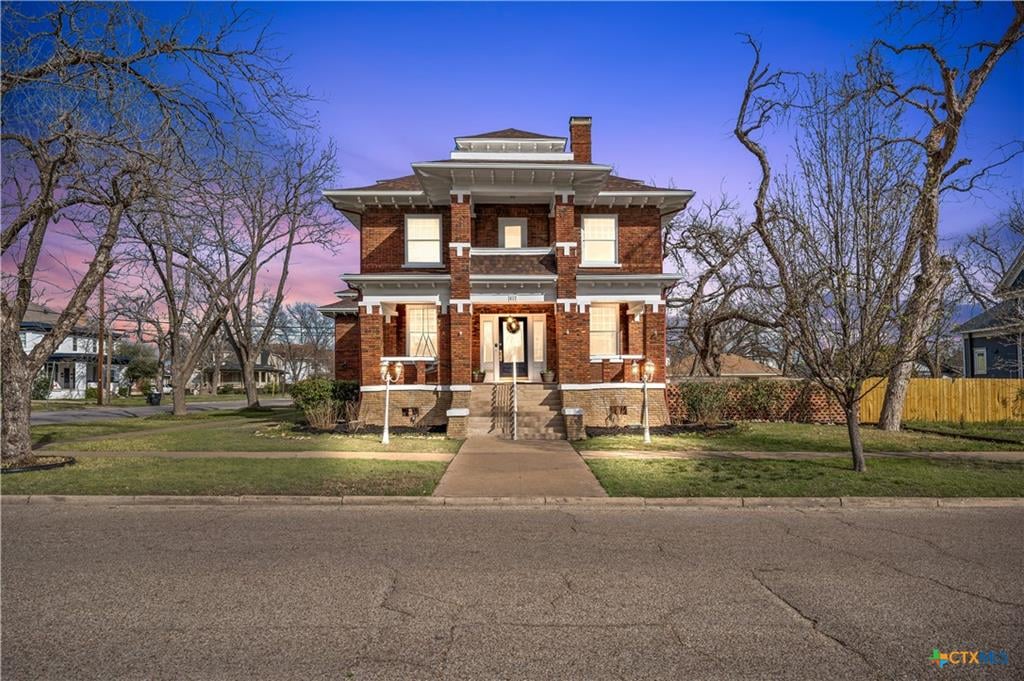
Yes, the BRRRR (Buy, Rehab, Rent, Refinance, Repeat) strategy still works in North Temple as of March 2026 — but it requires real renovation experience and local boots on the ground. The 76501 zip code contains Temple's oldest housing stock, with homes built from the 1940s through the 1970s that can be acquired in the $120K–$170K range. With a $30K–$50K rehab budget, these properties can appraise at $190K–$220K post-renovation and rent for $1,200–$1,450/month.
The forced appreciation model works here because the spread between distressed and renovated values is wide enough to create equity on the refinance. A typical BRRRR cycle in North Temple looks like this: acquire a 3/2 for $135K, invest $40K in renovation (kitchen, bath, flooring, paint, HVAC if needed), achieve an ARV of $200K, cash-out refinance at 75% LTV ($150K loan), recover most of your capital, and hold a property renting at $1,350/month with meaningful equity built in.
The North Temple Core also sits within reasonable distance of downtown development and the broader Central Temple revitalization. As commercial investment flows into the area, values in adjacent residential blocks tend to follow — though this is a longer-horizon bet measured in years, not months.
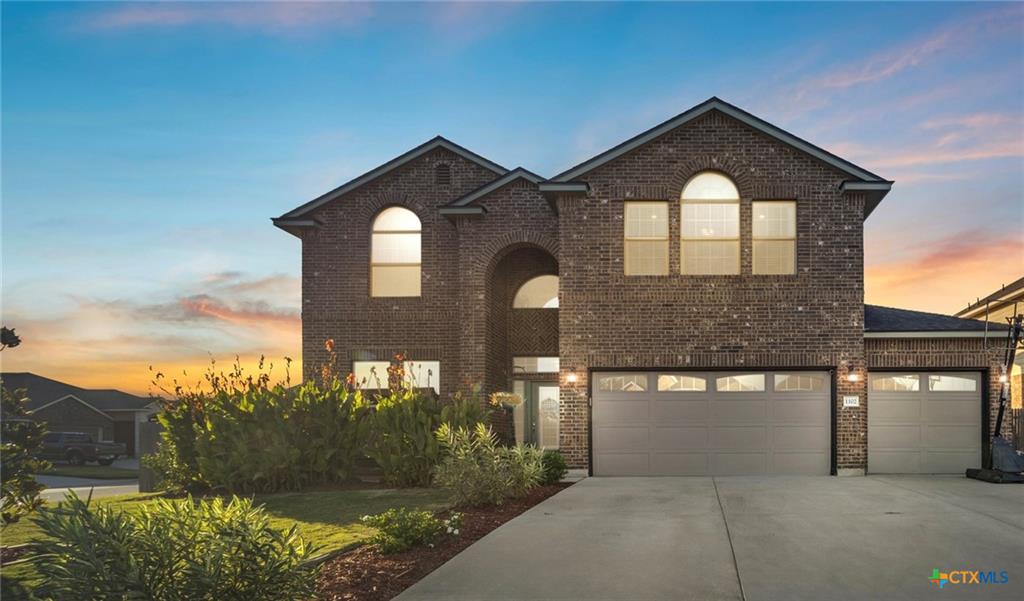
Is East Temple Worth the Risk for High Cash-on-Cash Returns?
East Temple delivers the highest gross cash-on-cash returns in the market — and the highest headache quotient. As of March 2026, homes in this area trade between $80K and $130K, with rents of $1,000–$1,300/month. On paper, a $100K cash purchase renting at $1,150/month produces a gross yield over 13%. That number looks incredible until you account for reality.
This is Class C/D rental territory. Tenant turnover runs higher — expect 30-40% turnover annually versus 15-20% in Cimmaron or Canyon Creek. Each turnover costs $2,000–$4,000 in make-ready, vacancy loss, and re-leasing fees. Maintenance calls are more frequent and more expensive because the housing stock is older and prior maintenance was often deferred. Some insurance carriers won't write policies on older East Temple properties with aged roofs, which limits your options and raises premiums.
Property management is non-negotiable here — and not just any PM. You need a management company experienced with Class C tenants, one that screens rigorously, enforces lease terms consistently, and handles maintenance proactively rather than reactively. A 10% PM fee on a $1,100 rent ($110/month) is the cheapest money you'll spend if it prevents a $6,000 eviction-turnover cycle.
The investors who succeed in East Temple are experienced, capitalized, and realistic. They buy in cash (or with hard money, then refi), they budget 15-20% of gross rent for maintenance and capex reserves, and they view the portfolio in aggregate — knowing that one or two properties may have a bad year but the portfolio as a whole produces strong returns.
How Do These Neighborhoods Compare Side by Side?
This comparison table summarizes key metrics across all five neighborhoods as of March 2026. Use it as a quick-reference when evaluating which strategy aligns with your investment goals.
| Neighborhood | Price Range | Rent Range | Est. Cap Rate | Strategy | Risk Level | Tenant Quality | Foundation Risk | Best For |
|---|---|---|---|---|---|---|---|---|
| Hospital District | $150K–$220K | $1,500–$1,700 | ~6.5% | Cash Flow / MTR | Medium | B+ | Medium | MTR near BSW, cash flow investors |
| Canyon Creek | $250K–$350K | $1,600–$1,800+ | ~4.5% | Appreciation | Low | A | Low | Long-term wealth builders |
| Cimmaron | $230K–$270K | $1,500–$1,600 | ~5.5% | Buy & Hold | Low | A- | Low | Portfolio anchors, out-of-state buyers |
| North Temple | $120K–$170K | $1,200–$1,450 | ~7-8%* | BRRRR | Med-High | B | High | Experienced rehabbers |
| East Temple | $80K–$130K | $1,000–$1,300 | ~8-10%* | Cash-on-Cash | High | C+ | High | Experienced, cash-heavy investors |
*Post-renovation stabilized cap rates. Pre-renovation properties will show higher gross yields but require significant capital investment. All figures are estimates as of March 2026 and will vary by specific property.
What Should Investors Know About Temple TX Property Taxes and Insurance?
Bell County's effective property tax rate is approximately 2.07% as of 2026. On a $240,000 investment property, that translates to roughly $4,968 per year — or $414 per month that comes straight off your cash flow. Texas property taxes are among the highest in the nation, and this is the single biggest line item that kills deals for out-of-state investors who don't model it correctly.
The homestead exemption trap. One of the most common mistakes I see from new investors: they look at the seller's tax bill and assume their taxes will be similar. Wrong. If the seller lived in the property and had a homestead exemption, the taxable value was reduced significantly. When you buy the property as an investment (non-homesteaded), your tax bill will be higher — sometimes substantially. Always model your pro forma using the full assessed value without exemptions.
Insurance runs approximately $160/month ($1,920/year) for a standard long-term rental policy. Temple sits in Central Texas's hail corridor, which means insurance premiums are elevated compared to coastal or southern Texas markets. After a major hail event, expect premium increases of 15-25% at renewal. Roof age and condition are the primary drivers — properties with roofs older than 15 years will face significantly higher premiums or coverage limitations.
For East Temple and older North Temple properties, insurance can be harder to obtain altogether. Some carriers won't write policies on homes with aged roofs, outdated electrical (Federal Pacific panels, knob-and-tube), or certain construction types. Budget for potential roof replacement costs when acquiring older properties — a $7,000–$12,000 roof on a $100K East Temple property materially changes your return calculations.
For complete tax and insurance modeling on a specific property, call Taylor at 254-718-4249 — I run detailed pro formas for every investor client before they make an offer.
Where I Would Actually Put My Own Money
I'm going to be more direct here than most agents would be — because I'm an investor myself, not just someone who sells properties to investors.
If I had $50K to invest right now, I'd put it into a Hospital District property and furnish it for mid-term rental to BSW travel nurses. The MTR model near the hospital is the highest risk-adjusted return in Temple as of March 2026. A $180K purchase with 25% down, furnished for $5K–$8K, renting at $2,400/month on 90-day leases — that math works even at 6.75% rates. The tenant quality is excellent, the demand is structural (BSW isn't leaving), and the entry point is manageable.
If I had $100K+ and a 10-year horizon, I'd split between one Canyon Creek property for appreciation and one Cimmaron for stability. These won't cash flow meaningfully in Year 1, but in Year 5 and beyond — after rent increases, principal paydown, and appreciation — you're looking at significant equity positions in properties that require almost zero active management.
If I were doing BRRRR, North Temple is still the best submarket for forced appreciation, but I would never recommend it to someone who hasn't done at least 2-3 rehabs before. The margin for error on a $135K acquisition + $40K rehab is thin. One bad contractor or missed foundation issue turns a profitable BRRRR into a $20K lesson. I've closed over 100 deals — I still get a foundation inspection on every North Temple property. No exceptions.
Where I'd be cautious: East Temple. The yields look incredible on paper. In practice, the management intensity, turnover costs, and insurance difficulties eat into returns more than most pro formas show. I've seen investors buy five East Temple properties, get burned by three of them, and wish they'd bought two Cimmaron homes instead. It's a strategy for investors who already have portfolio scale and can absorb volatility.
Every investor's situation is different. Call me at 254-718-4249 or email [email protected] — I'll run your specific numbers and tell you honestly which neighborhood fits your capital, timeline, and risk tolerance. No pressure, just data.

Closing on an investor duplex in Central Texas — this is what we do.
Frequently Asked Questions About Investing in Temple TX
As of March 2026, cap rates in Temple TX range from approximately 4.5% in appreciation-focused neighborhoods like Canyon Creek to 8-10% in higher-risk areas like East Temple. The market-wide average for a stabilized single-family rental sits around 5.5-6.5%, which outperforms Austin and most DFW submarkets at similar price points.
Yes. Temple TX offers a compelling investment case in 2026 thanks to a median home price near $240K, 8,800+ employees at Baylor Scott & White creating steady rental demand, Fort Hood BAH rates supporting rent floors, zero state income tax, and over $1.5 billion in announced commercial projects. The rent-to-price ratio is among the strongest in Central Texas.
The effective property tax rate in Temple TX (Bell County) is approximately 2.07% as of 2026. On a $240K investment property, that is roughly $4,968/year or $414/month. Investment properties do not qualify for the homestead exemption, so always model your pro forma using the full assessed value without exemptions.
The 2026 Basic Allowance for Housing at Fort Hood is $1,695/month for an E-5 with dependents and $2,070/month for an E-7 with dependents. These rates effectively set the rent floor for properties in Temple's military-popular neighborhoods and are paid directly to service members as a tax-free housing allowance.
Yes, the BRRRR strategy remains viable in Temple TX, particularly in North Temple where homes in the $120K-$170K range can be renovated for $30K-$50K and appraised at $190K-$220K post-rehab. However, this requires hands-on renovation experience, a mandatory foundation evaluation, and a trusted local contractor team. It is not recommended for first-time or fully remote investors.
Temple TX maintains a rental vacancy rate of approximately 5-7% as of early 2026, which is considered healthy for investors. Neighborhoods near Baylor Scott & White and properties appealing to military tenants from Fort Hood tend to have even lower vacancy rates due to consistent, recession-resistant demand from healthcare and military employment.
The Hospital District is one of the strongest cash-flow plays in Temple TX. Properties in the $150K-$220K range rent for $1,500-$1,700/month as long-term rentals and can command $2,200-$2,800/month as furnished mid-term rentals for BSW travel nurses. The key risks are older housing stock with potential foundation issues and block-by-block quality variation.
Investors should budget approximately $160/month ($1,920/year) for landlord insurance on a standard long-term rental in Temple TX. Temple sits in a hail corridor, which drives premiums above the national average. Properties in East Temple with older roofs or outdated systems may face higher rates or difficulty obtaining coverage.
Baylor Scott & White Medical Center is Temple's largest employer with 8,800+ employees. Fort Hood houses approximately 45,000 active duty personnel. Meta's $800M data center and Rowan's $700M manufacturing facility are adding hundreds of construction and permanent jobs. These institutional employers create the demand floor that makes Temple's rental market structurally sound.
East Temple offers the highest cash-on-cash returns in the market ($80K-$130K entry, $1,000-$1,300/mo rent) but carries the highest risk. Higher tenant turnover, more maintenance, harder-to-obtain insurance, and Class C/D tenant challenges make this a strategy only for experienced investors with strong local property management, capital reserves, and realistic expectations about vacancy and repair costs.
Ready to Invest in Temple TX?
I run detailed pro formas, connect you with vetted property managers, and tell you the truth about every deal — including the ones you should walk away from.
2
3
4
5
6
7
8
9
10
11
12
13
14
15
16
17
18
19
20
21
22
23
24
25