Living in Temple, TX: What It’s Actually Like
The honest, numbers-first version — from a local agent who films this town for a living and will tell you when it’s the wrong fit.
Temple is a 96,267-person Central Texas city on I-35, anchored by Baylor Scott & White — the region’s largest employer — 68 miles north of Austin. Living here means real affordability: the median home closed at $269,900 over the 12 months to Sep 1, 2026 ($156/sqft, 1,457 CTXMLS closings) and the median 3-bed lease runs $1,700/month. The trade-offs are just as real: property taxes around 2.2–2.7% before exemptions, 100°F summers, a car-dependent layout, and a nightlife that mostly closes by 9pm. This page covers costs, neighborhoods, schools, safety, jobs, and weekends — with the numbers labeled by source and date.
What is living in Temple, TX actually like?
Living in Temple, TX means healthcare-anchored stability and some of Central Texas’s most affordable housing: the median home closed at $269,900 (12 months to Sep 1, 2026) ($151 per square foot) and the median 3-bed lease is $1,700/month (CTXMLS). Baylor Scott & White drives the economy with roughly 9,000 Bell County employees, and healthcare makes up more than 40% of Temple jobs. Day to day it’s quiet, car-dependent, and family-paced — most of the town winds down by 9pm, with Austin 68 miles south for the weekends you want a city. Verdict: strong fit if you value affordability and stability over nightlife and walkability; frustrating if you need a social scene or a transit-based life.
- Housing: 632 active listings at the July 30, 2026 pull — 58% under $300K, median list $285,000; 22% of actives are new construction (built 2025+).
- Cost detail: combined property tax rates generally run 2.2–2.7% before exemptions; the FY2026 City of Temple rate is $0.6999 per $100 — an 11.72% city increase.
- School nuance: a Temple address can be zoned to Temple ISD, Belton ISD, or Academy ISD — closed medians in the July window: $233,450 (Temple ISD) vs $293,270 (Belton ISD side of west Temple).
- Location: 68 miles to Austin (~1h05), 40 minutes to Waco, on the I-35 corridor; Fort Hood sits about 30 minutes west.
- Climate: July–September brings sustained 90s and typically 3–4 weeks above 100°F — outdoor life shifts to mornings and evenings.
- Growth: one of Central Texas’s fastest-growing cities, with $1.5B+ in announced data-center investment adding non-hospital jobs.
“Should You Move to Temple Texas? (2026 Honest Review)” — from Taylor’s Living in Temple channel. This page is the text version of that argument, with the August 2026 numbers.
Is Temple, TX a good place to live?
Yes for most people who choose it on purpose — and clearly no for a specific profile. Temple has been one of the fastest-growing cities in Central Texas (roughly 4% annual growth, 2020–2024) precisely because the value math works: Austin-adjacent location, half-of-Austin housing costs, and a hospital-anchored economy that doesn’t swing with tech cycles.
Temple works when you want…
- Housing cost relief with a real economy attached — median close $269,900 vs. Austin medians roughly double that
- A healthcare career: BSW Temple is the region’s flagship, with most hospital jobs 10–15 minutes from campus
- A remote-work arbitrage: metro salary, $156/sqft housing
- Quiet evenings, a yard, and Austin as a weekend trip instead of a mortgage
Temple frustrates you if…
- Nightlife is oxygen — the honest count of true late-night spots is about two (Bose Barn and Playa Azul), and much of town is asleep by 9pm
- You need a deep non-medical job market locally — outside healthcare, options thin out fast
- You want a walkable, transit-based life — Temple is car-dependent with only limited microtransit
- Triple-digit summer heat is a dealbreaker
That split is the whole page in miniature. The chapters below put numbers on each piece — and the should-you-move verdict page goes deeper on the decision itself.
What does it actually cost to live in Temple?
Here’s the itemized version — every housing number computed from the CTXMLS pulls, not national cost-of-living indexes:
| Median home, closed (12 months to Sep 1, 2026) | $269,900 |
| Median price per sqft | $156 |
| Median 3-bed lease (closed) | $1,700/mo |
| Median 3-bed asking rent | $1,600/mo |
| Property tax on median home @ 2.2–2.7% | $495–$608/mo |
| Summer electric (typical range) | $159–$227/mo |
| MUD/PID, some newer subdivisions | +$115–$230/mo |
| State income tax | $0 |
Sources: CTXMLS pulls Jul 13 + Jul 30, 2026 (medians computed from closed/active records); tax range = combined county+city+school before exemptions; utility and district ranges per the cost-of-living breakdown. Insurance and rates move — verify current figures.
The number people miss isn’t the house price — it’s the tax line. Texas trades away the state income tax and takes it back in property tax: combined rates in Temple generally run 2.2–2.7% before exemptions depending on which county, city, and school jurisdictions your address stacks. On the $269,900 median, that’s roughly $5,938–$7,287 a year baked into your monthly payment.
Two softeners are real: the homestead exemption now shields $140,000 of school-district value (raised from $100K by the November 2025 constitutional amendment), and a 10% annual appraisal cap slows increases after year one. Both work going forward from your purchase — not on day one, when the appraised value often resets to what you paid.
Full jurisdiction-by-jurisdiction math lives on the Temple property taxes page, deeper cost comparisons on the cost of living breakdown, rent detail on the average rent page — and you can pressure-test any payment on the affordability calculator.
In the FY2026 budget, the City of Temple raised its portion of the property tax rate by 11.72% — to $0.6999 per $100 of value. That’s the city line only, before county and school district stack on top. It’s public record in the city budget; check it against your own math before you write an offer.
Some newer subdivisions sit inside a MUD or PID special tax district — an extra $1,380–$2,760 per year on top of the base rate, and nobody volunteers it in a listing. Before an offer on a new build, ask the exact question: “Is this property in a MUD or PID, and what does it add annually?” More on the honest builder math at new construction in Temple.
Where do people live — and why do school lines move the price?
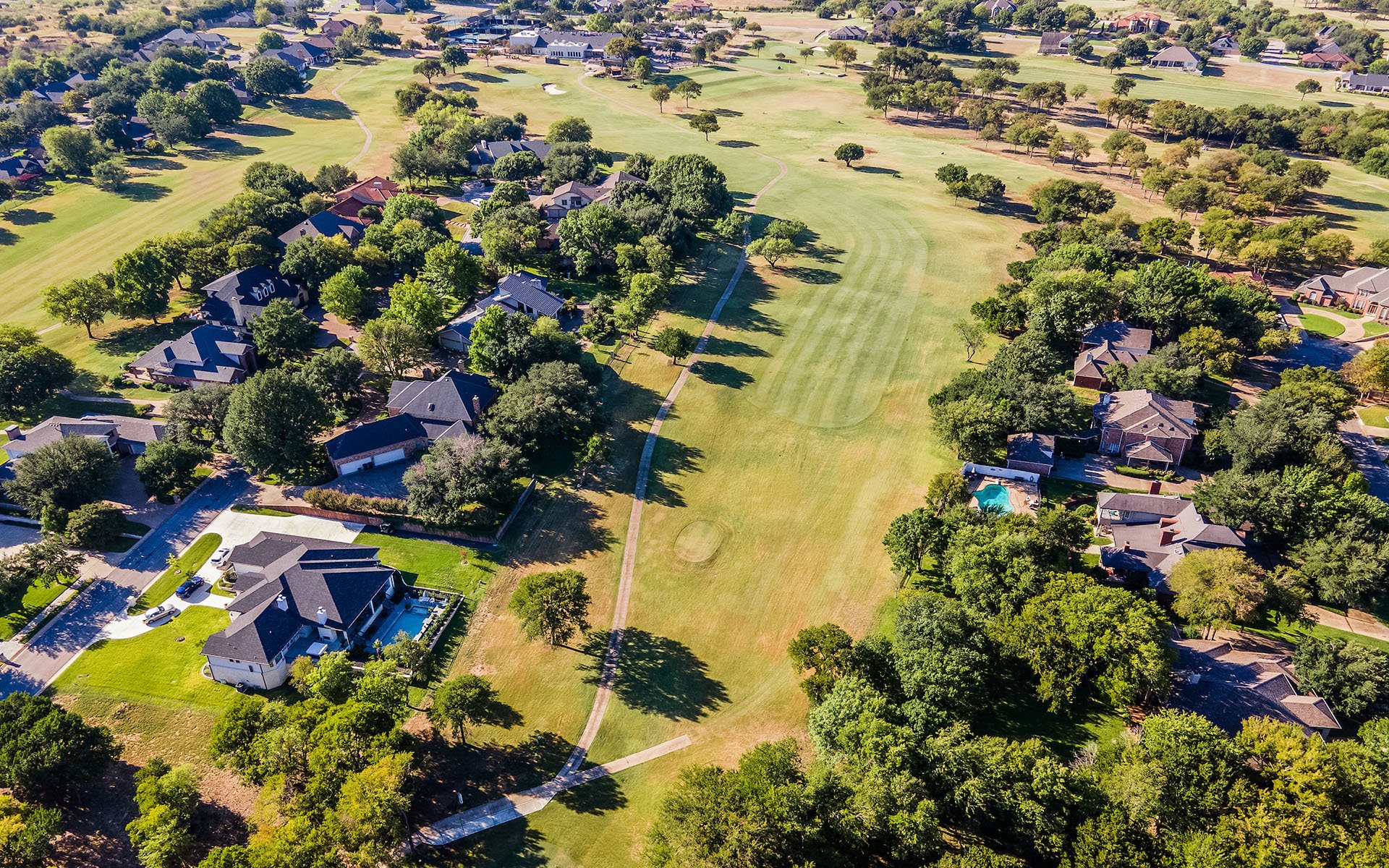
“Temple” is not one market. The single biggest pricing variable inside the city limits is the school-district boundary your address happens to sit on — a Temple mailing address can be zoned to Temple ISD, Belton ISD, or Academy ISD, and you don’t get to pick. The closed sales split it plainly:
| District (Temple city limits) | Closed sales | Median close price |
|---|---|---|
| Temple ISD | 738 | $237,945 |
| Belton ISD (west Temple) | 541 | $300,000 |
| Academy ISD (south pockets) | 152 | $298,150 |
Closed Temple-city sales by school district, CTXMLS 12 months to Sep 1, 2026. Same city, three different markets.
Buyers pay that Belton ISD premium on purpose — the district holds consistent A-ratings and Lake Belton High ranks among the area’s top campuses. The full comparison, including where each district’s boundaries actually run, is on the Temple vs Belton guide — and the neighborhood-by-neighborhood breakdowns live in the neighborhood library and the best neighborhoods guide.
Academy ISD runs a four-day school week. Three-day weekends read as a perk — until a dual-income household has to solve the fifth-day childcare gap every single week. It’s a real line item, and almost nobody warns transplants about it.
Check the FEMA flood map and the surrounding land use before you fall for a listing. Homes in Temple’s creek-corridor flood zones carry lender-required flood insurance that typically runs $1,200–$2,400 per year, and homes along the industrial east and south edges have resold 7–12% below equivalent homes two streets over. Both checks are free; skipping them is how out-of-town buyers overpay.
The order of operations that protects you: pick the school zone and the commute first, then find the house inside that boundary. Families who fall in love with listing photos and check the district second are the ones who end up regretting it — the district drives the search, not the other way around.
Is Temple, TX safe?
The honest one-paragraph version: Temple’s safety picture is block-by-block, not citywide — most established west-side and newer subdivision streets track quiet, while specific corridors carry higher property-crime rates, and averaging them into one “crime score” misleads in both directions. National crime-ranking sites compress that nuance into a single number and scare people off streets that are fine (or green-light streets that aren’t).
The full breakdown — what the actual incident categories look like, which questions to ask about a specific address, and how I check a street before a client writes an offer — is on the dedicated Is Temple TX Safe? page.
What drives Temple’s economy — and what if you’re not in healthcare?
Baylor Scott & White is the gravitational center: roughly 9,000 Bell County employees, the region’s flagship hospital, and the reason healthcare makes up more than 40% of Temple’s jobs. That demand is structural, not cyclical — which is why Temple’s housing market holds steadier than boom-metro suburbs. McLane Company and Wilsonart anchor the distribution and manufacturing side, and Fort Hood — about 30 minutes west — adds federal payroll gravity to the wider metro.
The honest flip side, straight from the video this page is built on: if you’re not in medicine and you need to physically work inside a deep, diverse employer ecosystem — tech, finance, specialized professional roles — Temple’s local options are genuinely narrower, and support-role pay tends to land below national averages. The people for whom the job-market question never matters: remote workers (metro salary, $156/sqft housing) and anyone whose income doesn’t come from the local economy.
Temple has landed $1.5B+ in announced data-center investment (Meta and Rowan among them) — the first serious non-hospital diversification in years. It doesn’t rewrite the job market yet, but it’s why “hospital town” is slowly becoming an incomplete description.
What do people actually do on weekends?
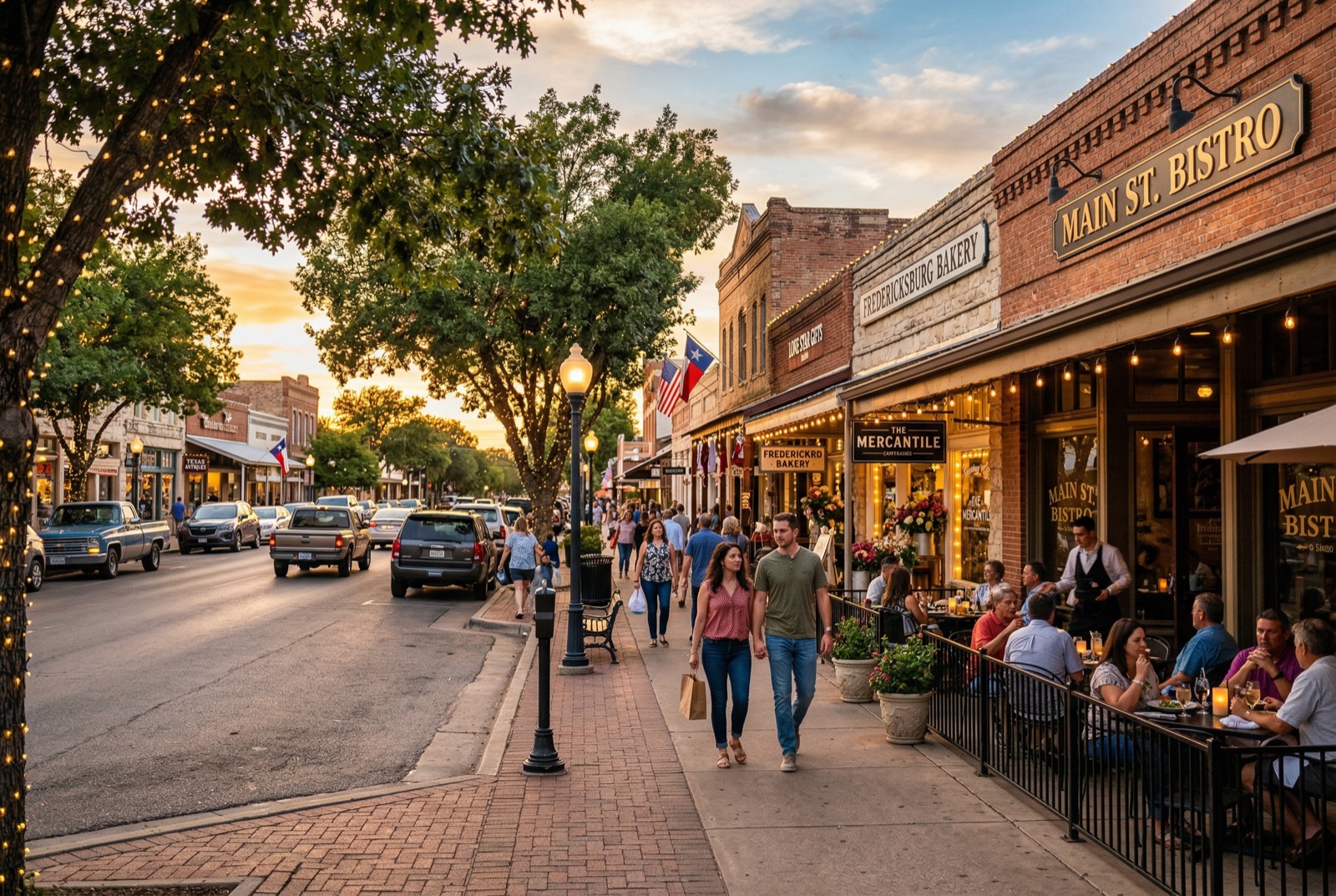
Honest answer: mornings and evenings outdoors, food you’ll be surprised by, and Austin when you want a city. Belton Lake and the park systems carry the outdoor life — with the caveat that from June through September, 90s-to-100°F heat pushes everything to the edges of the day. Downtown Temple is improving block by block — local staples like Pignetti’s and Wes’ Burger Shack show up in every honest local thread — but it’s a small downtown, not a district. The full list, including where the locals actually eat versus what reviews claim, is on the best restaurants in Temple guide.
And the nightlife reality check from the video, verbatim: by nine o’clock on a Friday, most of Temple is already asleep, with roughly two true late-night spots in town. Austin sits 68 miles down I-35 — about an hour and five minutes when traffic behaves. Most people who love living here treat that as the design: live in Temple, visit Austin, bank the difference.
Pros and cons of living in Temple, TX
Pros — measured
- Median close $269,900 / $156 per sqft (12 months to Sep 1, 2026) — roughly half of Austin-metro pricing
- 58% of the 632 active listings sit under $300K; 22% are new builds
- Anchor-employer stability: BSW’s ~9,000 Bell County jobs are structural demand
- No state income tax; homestead exemption now $140K of school value
- I-35 position: Austin in ~1h05, Waco in ~40 min
- One of Central Texas’s fastest-growing cities, with $1.5B+ data-center investment landing
Cons — also measured
- Property taxes: 2.2–2.7% combined before exemptions; FY2026 city rate up 11.72%
- Nightlife ≈ two late spots; most of town winds down by 9pm
- Thin non-medical job market; support-role pay below national averages
- Car-dependent — no transit life, west-side and I-35 construction is chronic
- 3–4 weeks of 100°F+ most summers; lake levels dip in drought years
- School-district boundaries inside the city move prices — and you can’t choose them after you buy

“Temple is built for builders, not partiers. The people who love it here knew which one they were before they moved.”
Taylor here. I live in Temple and sell real estate here every day, which means I have an obvious incentive to tell you this town is great for everybody. I’m not going to do that — I’d rather lose a commission than put you in a house you resell at a loss in eighteen months because nobody told you the truth up front.
The truth: the value math is real. $270K medians with a flagship hospital economy an hour from Austin is a trade most of the country can’t get. But I watch the same two regrets on repeat — buyers who budgeted off the mortgage alone and met the tax bill later, and families who fell for listing photos and checked the school boundary second. Both are self-inflicted, and both are avoidable in one afternoon of homework.
If you want that homework done on your specific situation — zone first, budget second, house third — call or text me at 254-718-4249.
Living in Temple, TX — FAQ
Is Temple, TX a good place to live?
Yes for people who value affordability and stability: a $269,900 median home price (12 months to Sep 1, 2026), a healthcare-anchored economy, and Austin 68 miles away for weekends. It’s the wrong fit if you need nightlife, a walkable transit-based lifestyle, or a deep non-medical job market — those are the three honest dealbreakers.
What is the cost of living in Temple, TX?
Housing is the anchor: median closed price $269,900 ($156/sqft, 12 months to Sep 1, 2026) and median 3-bed lease $1,700/month (July 2026 CTXMLS lease data). Combined property taxes run 2.2–2.7% before exemptions, summer electric bills typically land $159–$227/month, and there’s no state income tax. Overall costs sit well below Austin — housing alone runs roughly half.
What is the median home price in Temple, TX in 2026?
$269,900 for the 12 months to Sep 1, 2026 (1,457 closings, $156 per square foot, median 69 days on market), with active listings at a $285,000 median list price across 632 homes — 58% of them under $300K (CTXMLS pull, July 30, 2026).
Is Temple, TX safe?
Safety is block-by-block rather than citywide: most west-side and newer subdivision streets track quiet, while specific corridors carry higher property-crime rates. Single-number city crime scores mislead in both directions — the street-level breakdown and the questions to ask about a specific address are on the dedicated safety page.
How far is Temple from Austin?
68 miles straight down I-35 — about an hour and five minutes when traffic behaves, longer through the perpetual construction stretches. Waco is roughly 40 minutes north. That corridor position is a core reason people pick Temple: metro access without metro housing costs.
What jobs are in Temple, TX?
Healthcare dominates: Baylor Scott & White employs roughly 9,000 people in Bell County and healthcare represents over 40% of Temple jobs, with McLane Company and Wilsonart anchoring distribution and manufacturing. Outside those lanes the market thins — which is why remote workers, who import a metro salary, get the best deal in town. $1.5B+ in announced data-center investment is starting to diversify the base.
Which school districts serve Temple?
Three: Temple ISD, Belton ISD (much of west Temple), and Academy ISD (south pockets) — and the boundary follows the address, not your preference. Over the 12 months to Sep 1, 2026, Temple ISD homes ran a $237,945 median against $300,000 on the Belton ISD side. Academy ISD runs a four-day school week, which dual-income households should plan around.
What is the average rent in Temple, TX?
The median 3-bed closed lease was $1,700/month in the July 2026 CTXMLS lease data (asking medians around $1,600), with the all-size median asking rent at $1,713 across 164 listings. Rent detail by size and area is on the average rent page.
Is Temple, TX growing?
Yes — population 96,267 (2024) and roughly 4% annual growth from 2020–2024, among the fastest in Central Texas. Growth shows up in the inventory: 22% of active listings are new construction, concentrated on the west side, and $1.5B+ in data-center investment has been announced. Growth also means chronic road construction — I-35 and the west corridors are the daily evidence.
What are the downsides of living in Temple, TX?
The honest list: combined property taxes of 2.2–2.7% surprise out-of-state buyers, nightlife is roughly two late-night spots, the non-medical job market is thin, the town is fully car-dependent, and summers bring 3–4 weeks above 100°F. None are hidden — they’re the trade for the housing math, and they’re dealbreakers only for specific lifestyles.
Tell me what your week actually looks like. I’ll tell you if Temple fits it.
Commute, school zone, budget band, nightlife tolerance — the fit question is answerable in one honest conversation. If Temple isn’t your city, I’ll say so and point you at the one that is.
Prefer to talk? 254-718-4249 — call or text.
The full Temple research library
Sources: CTXMLS whole-market pull (July 30, 2026) and lease pull (July 13, 2026) — medians computed from closed and active records; population 96,267 per 2024 estimates; City of Temple FY2026 adopted budget for the $0.6999/$100 city rate; school-district ratings per TEA accountability data; drive times are typical-conditions estimates. Tax rates, insurance, and inventory change — every number above is labeled with its pull date. Updated August 2026.
Thinking about buying here eventually?
Every other Tuesday, Taylor emails roughly 5–8 current Temple and Belton homes where the data — days on market, real price cuts, seller and builder context — may give a buyer room to negotiate. Payment context and one honest caution with every property. Free, email-only, unsubscribe anytime; the signup box starts unchecked.
Right now: 56% of active Temple–Belton listings have already cut their price · median cut $15,000 (CTXMLS pull, Aug 12, 2026).