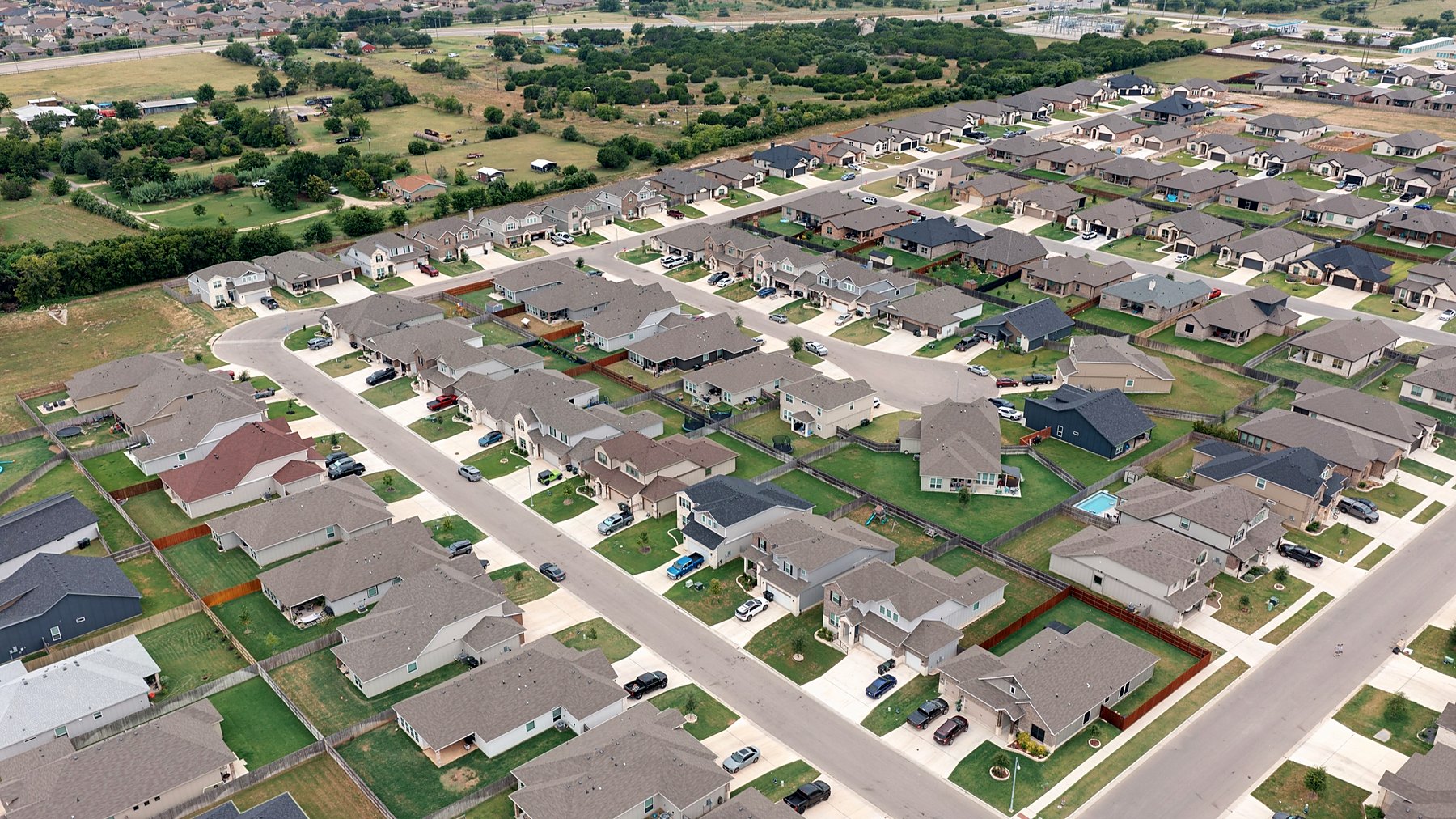
Bell County Homestead Exemption Guide
A Bell County homestead exemption applies to the home you own and live in as your principal residence. Every school district exempts $140,000 of the home’s value; the City of Temple and Temple College each exempt another 20%, while Bell County and the City of Belton give no general homestead exemption. At 2025 rates that cuts the tax on a $300,000 home by about $2,133 a year in Temple and about $1,609 in Belton. Filing with Bell CAD is free, and you file once.
Sources checked September 23–25, 2026: Texas Tax Code, Texas Comptroller and Bell CAD. Dollar examples use 2025 rates; Bell CAD had not posted its 2026 rate chart when checked on September 25, 2026.
How much does a homestead exemption save in Bell County, Texas?
It depends on which taxing units tax the home. Every Bell County school district exempts $140,000 of a homestead’s value; the City of Temple and Temple College each exempt 20% (at least $5,000); Bell County, the Road District and the City of Belton give no general homestead exemption. At 2025 rates, a $300,000 homestead saves about $2,133 a year on a verified Temple parcel (seven taxing units) and about $1,609 on a verified City of Belton parcel (five units). Owners 65 or older or disabled get $60,000 more off school value, local amounts and, where the unit adopted one, a tax ceiling. A 100% disabled veteran’s homestead is fully exempt.
What Brought You Here?
Closing soon or just closed? If the seller had a homestead exemption this year, yours starts next January 1; if not, apply before the first anniversary of your purchase to claim the rest of this year. Jump to the Bell CAD filing steps.
🛡️Owners 65 or older get $60,000 more off school value plus a tax ceiling that can rise only for new improvements. Jump to how ceilings work and how they transfer.
📈No homestead = no 10% cap. The temporary 20% limit for non-homestead property ends after 2026 under current law, and a buyer who closed after January 1, 2025 never qualifies for it. Jump to the 10% cap vs. 20% limit comparison.
⭐A 100% disabled veteran’s homestead is fully exempt. Ratings of 10% or more take $5,000–$12,000 off one property you choose. Jump to veteran exemptions.
What Exactly Gets Deducted from Your Tax Bill?
Your Bell County tax bill is a stack of separate levies, and each taxing unit sets its own exemptions. The table shows Bell CAD’s 2025 rate and exemption chart (dated Sept. 30, 2025) for the nine units on the Temple and Belton parcels used in the examples below. Across the whole chart, only four units give a local general homestead exemption: the City of Temple, Temple College and the Village of Salado (20%, at least $5,000) and the City of Little River-Academy (5%, at least $5,000). Every school district gives the state’s $140,000, raised from $100,000 by 2025’s Proposition 13 and Senate Bill 4. Bills for 2026 will use 2026 rates.
| Taxing Entity | 2025 Tax Rate | General Homestead Exemption | Over-65 Additional | Disabled Additional |
|---|---|---|---|---|
| Temple ISD | 1.1372% | $140,000 (state) | $60,000 (state) + $5,000 (local) + tax freeze | $60,000 (state) + $5,000 (local) + tax freeze |
| Belton ISD | 1.1494% | $140,000 (state) | $60,000 (state) + tax freeze | $60,000 (state) + tax freeze |
| City of Temple | 0.6999% | 20% of appraised value ($5,000 minimum) | $10,000 + tax freeze | $10,000 + tax freeze |
| City of Belton | 0.5225% | None | $10,000 (no tax freeze) | $10,000 (no tax freeze) |
| Bell County | 0.3128% | None | $16,670 + tax freeze | $10,000 + tax freeze |
| Temple College | 0.2017% | 20% of appraised value ($5,000 minimum) | $10,000 + tax freeze | Tax freeze only (no dollar amount) |
| Road District | 0.0199% | None | $16,670 + tax freeze | $10,000 + tax freeze |
| Clearwater UWCD | 0.00223% | None | $5,000 (no tax freeze) | None |
| Temple Health & Bioscience | 0.013947% | None | $5,000 (no tax freeze) | $5,000 (no tax freeze) |
The City of Temple and Temple College each exempt 20% of a homestead’s value. The City of Belton has no general homestead exemption (its $10,000 applies only to owners 65+ or disabled), and the Belton parcels we checked carry no college-district tax. On a $300,000 home at 2025 rates, those two 20% exemptions are worth about $541 a year. Belton ISD’s slightly higher rate makes its $140,000 school exemption worth about $17 more, so a Temple homestead saves about $524 more than a Belton one. Belton’s total bill is still lower in our examples below (about $4,411 versus $5,030), mainly because the Belton parcels we checked pay no Temple College or Temple Health & Bioscience tax.
Bell County Homestead Exemption Savings Calculator
Enter a positive appraised value between $50,000 and $2,000,000; a blank or 0 entry shows the $300,000 example instead. Uses Bell CAD’s 2025 rates and exemption amounts for the taxing units on a verified Temple parcel (Temple ISD, City of Temple, Temple College, Bell County, Road District, Clearwater UWCD, Temple Health & Bioscience) or a verified City of Belton parcel (Belton ISD, City of Belton, Bell County, Road District, Clearwater UWCD). Your parcel’s taxing units and 2026 rates may differ. The 65+ option shows first-year exemption amounts only and does not model tax ceilings. An estimate, not a bill or an escrow quote.
How Much Does a Homestead Exemption Save on a $300,000 Home?
Basis: tax year 2025 rates from Bell CAD’s 2025 Tax Rate Table (dated Sept. 30, 2025), a $300,000 appraised value and a qualified general homestead (no 65+ or disability amounts). Temple lines are the seven taxing units on Blackland Ranch parcel 524211; Belton lines are the five units on Liberty Valley parcel 479340 (both checked in Bell CAD’s 2026 records on September 25, 2026). Percent rates are per $100 of value (1.1372% = $1.1372 per $100). Some Belton parcels also pay Bell County WCID #6 (about $73 more at this value, with no homestead exemption). Your parcel’s units, 2026 rates and appraised value will change the bill. This is an illustration, not a bill or escrow quote. For a parcel-by-parcel worksheet, see our Temple TX property tax guide.
How to File Your Homestead Exemption with Bell CAD
Filing is free, and a general homestead exemption is filed once: it carries forward until the home changes hands or you stop qualifying (Bell CAD: “No annual renewal required”). Apply after you move in. You need a copy of your Texas driver’s license or state ID showing the home’s address.
- Update your Texas ID address. Your driver’s license or state ID must show the address of the home you are claiming; Bell CAD cannot approve a general homestead exemption if the addresses don’t match (Tax Code §11.43(n)). Update it with DPS first.
- Open Bell CAD’s online application. On bellcad.org, choose Online Forms (or File Homestead/Disabled Veteran Application), then the Residence Homestead Exemption Form – Online at forms.bellcad.org. You can also file the paper Form 50-114 at a Bell CAD office.
- Check every exemption that applies. Form 50-114 lists General Residence Homestead, Disabled Person, Person Age 65 or Older and 100 Percent Disabled Veteran, and you affirm that you don’t claim a homestead exemption on any other property. The partial disabled-veteran exemption (a rating of 10% or more) uses Form 50-135, Bell CAD’s Disabled Veteran’s or Survivor’s Exemption – Online.
- Attach your ID and any proof. Include a copy of your Texas driver’s license or ID showing the property’s address, plus proof for extra exemptions (a Social Security disability letter or a current VA award letter). If you are on active duty, or the spouse of someone who is, the chief appraiser may waive the address match when you attach a military ID and a utility bill for the home in your name (§11.43(p)).
- Submit, then check your record. Bell CAD’s 2026 property search is esearchgsa.bellcad.org; prior years and tax statements are at esearch.bellcad.org. Bell CAD notes that not all exemptions are shown online for privacy reasons, so call 254-939-5841 if yours doesn’t appear.
Belton (HQ): 411 E. Central Ave. • 254-939-5841
Temple: 205 E. Central Ave. • 254-771-1108
Killeen: 301 Priest Dr. • 254-634-9752
Mail: P.O. Box 390, Belton, TX 76513
Hours: Mon–Fri, 8:00 AM – 4:45 PM • Filing is always free.
Bell CAD’s forms page says there is no fee to file for exemptions. If a mailer offers to file your homestead exemption for a fee, you can file the same application yourself for free at forms.bellcad.org or any Bell CAD office.
On a $400,000 Temple home at 2025 rates, an owner-occupant’s general homestead exemptions cut the tax bill by about $2,313 a year ($140,000 × 1.1372% + $80,000 × 0.6999% + $80,000 × 0.2017%) — about $11,570 over five years — compared with the identical home owned as a rental. That assumes the value and 2025 rates stay flat, and both change every year. In a market rising more than 10% a year, the homestead cap would widen the gap; in a flat or falling market, it adds nothing.
How Does the Senior Tax Freeze Work in Bell County?
Once you are 65 or older and qualify for the over-65 exemption, two things happen: you get an additional $60,000 school exemption on top of the $140,000 (Temple ISD adds a local $5,000), and your school tax gets a ceiling: the district can’t raise it above the amount imposed in the year you qualified, except for new improvements (Tax Code §11.26). Disabled homeowners get the same $60,000 and ceiling.
What “Frozen” Actually Means
The freeze does not stop Bell CAD from reappraising your home. They’ll continue to assess market value annually. What the freeze does is cap the dollar amount of school taxes you owe. If your school tax was $1,080 the year you turned 65, it won’t exceed $1,080 even if your home’s value or the ISD’s rate goes up — unless you add a new improvement, such as a garage, room or pool, which raises the ceiling.
If values crash or rates drop, you pay the lower calculated amount. The ceiling only engages to prevent increases.
Which Entities Freeze and Which Don’t?
The school district freeze is mandatory statewide. County, city and junior-college ceilings are optional; each taxing unit decides whether to adopt one (Tax Code §11.261).
- ✅ Temple ISD — Frozen (mandatory)
- ✅ Belton ISD — Frozen (mandatory)
- ✅ City of Temple — Frozen (Bell CAD’s rate charts first show Temple’s ceiling in 2006)
- ✅ Bell County, Road District & Temple College — Tax ceiling for 65+ and disabled homesteads (Bell CAD 2025 chart)
- ⚠️ City of Belton, Clearwater UWCD & Temple Health & Bioscience — No tax ceiling on the 2025 chart, so these taxes can still rise
Can You Transfer the Freeze to a New Home?
Yes, for school taxes: the ceiling moves to a new Texas homestead as a percentage, not a dollar amount (Tax Code §11.26(g)). County, city and college ceilings transfer only to a new home in the same taxing unit (§11.261(h)).
To transfer it, request a tax ceiling certificate from the appraisal district where your former home is and take it to Bell CAD with your application (§11.26(h)).
If the qualifying senior homeowner dies, the surviving spouse keeps the ceiling and the over-65 exemption only if they were 55 or older on the date of death and the home was, and remains, their homestead (Tax Code §11.26(i) and §11.13(q)). A spouse who was younger loses the inherited ceiling and can qualify for their own at 65.
Who Prepared This Guide?

The 10% Homestead Cap vs. the Temporary 20% Limit: Why Investors Pay More
Homesteaded properties are shielded by a 10% annual appraisal cap — your appraised value can’t rise more than 10% a year (plus new improvements), starting the year after you first qualify (Texas Tax Code §23.23). Non-homestead property only has a temporary 20% limit, the “circuit breaker” in Tax Code §23.231 (added by 2023’s Senate Bill 2), and it is narrow: it covers property valued at $5,320,000 or less (2026 threshold), it starts only the year after the first January 1 you own the property, and under current law it expires December 31, 2026. Under current law, an owner who bought after January 1, 2025 never qualifies for it, and starting in 2027 non-homestead property can be appraised at full market value with no annual limit.
| Year | Homesteaded (10% Cap) | Non-Homestead (Market Value) | Annual Gap |
|---|---|---|---|
| Year 1 | $350,000 | $350,000 | $0 |
| Year 2 | $385,000 | $402,500 | $17,500 |
| Year 3 | $423,500 | $462,875 | $39,375 |
| Year 4 | $465,850 | $532,306 | $66,456 |
| Year 5 | $512,435 | $612,152 | $99,717 |
Hypothetical, not a forecast: assumes market value rises 15% every year. At that pace the temporary 20% limit would never bind, so the non-homestead column simply tracks market value; the homestead column applies the 10% cap from Year 2. In this hypothetical the non-homestead appraised value ends Year 5 about $99,700 higher — at an illustrative 2.2% combined rate, roughly $2,200 more tax that year, before counting the homestead exemptions themselves. If values are flat or falling, neither limit changes anything.
A home keeps its homestead status when part of it is rented, but the exemption does not apply to the value of the rented part (Tax Code §11.13(k)). On a $400,000 duplex split evenly, the $140,000 school exemption applies against your $200,000 half, leaving $60,000 school-taxable; the rented half stays taxable at $200,000. Bell CAD decides how the value is split, so ask for its allocation before relying on these numbers.
Disabled Veteran Property Tax Exemptions in Bell County
Disabled-veteran exemptions are common in Bell County: Bell CAD’s 2025 certified totals (Supplement 2, February 9, 2026) list 15,994 homesteads with the 100% disabled-veteran exemption (code DVHS) on the Bell County roll, plus 956 for surviving spouses. These exemptions are separate from the general homestead exemption.
100% Disabled Veteran: Total Exemption
A veteran awarded 100% disability compensation for a service-connected disability, with a 100% or individual unemployability rating, owes no property tax on the residence homestead: the exemption covers its total appraised value for every taxing unit (Tax Code §11.131). A surviving spouse who has not remarried keeps it on the same homestead. Other property the veteran owns is taxed normally unless another exemption applies.
Partial Disability Tiers (DV1–DV4)
| Bell CAD Code | VA Rating | Exemption Amount |
|---|---|---|
| DV1 | 10% – 29% | $5,000 off assessed value |
| DV2 | 30% – 49% | $7,500 off assessed value |
| DV3 | 50% – 69% | $10,000 off assessed value |
| DV4 | 70% – 100% | $12,000 off assessed value |
1. Any one property: the partial DV1–DV4 exemption can go on any one property you own and designate, including a rental (Tax Code §11.22; Form 50-135).
2. Age 65 or older: a disabled veteran who is 65 or older with at least a 10% rating qualifies for the $12,000 amount, as does one who is totally blind in one or both eyes or has lost the use of a limb (§11.22(b)).
3. More time to file late: a disabled veteran can file a late application for the 100% homestead exemption up to five years after the delinquency date (surviving spouses: two years), per Form 50-114’s instructions (§11.439).
Leaving for military service doesn’t by itself end your homestead: Tax Code §11.13(l) keeps a home’s homestead status while you are away because of military service inside or outside the United States, as long as you don’t establish a different principal residence. Bell CAD’s exemption page describes the military exception more narrowly (service outside the United States), and whether a new duty-station home counts as a different principal residence is Bell CAD’s call, so confirm with Bell CAD before you move.
Why Can Your First Tax Bill Be Higher Than the Seller’s?
A seller’s bill reflects the seller’s own exemptions, any 65+ or disability ceiling and a 10% cap built up over years of ownership. None of it transfers: the cap expires once no owner who qualified still does (Tax Code §23.23(c)), a tax ceiling belongs to the owner who qualified for it, and your own exemptions start as described above. Budget from the home’s market value at current rates.
If the listing shows a much smaller bill, the difference is the seller’s exemptions, ceiling and capped value, not a discount you inherit. Ask your lender which tax figure it used for escrow: when your property taxes change, your escrow payment and total monthly payment change with them (CFPB).
Before you make an offer, estimate the tax from the home’s market value and the parcel’s current rates, with none of the seller’s exemptions, ceiling or cap. Ask your agent (or call me at 254-718-4249) to run the numbers before you go under contract, not after.
Exemption vs Protest: What’s the Difference?
These are two separate actions. You file the homestead exemption once; it carries forward until the home changes hands or you stop qualifying (Tax Code §11.43(c)). A protest is a yearly option whenever Bell CAD’s value looks too high.
Filing an Exemption
An administrative request asking Bell CAD to apply statutory deductions ($140K school, 20% city, etc.) to reduce your taxable value based on your eligibility. Does not challenge what your home is worth — only reduces how much of that value gets taxed.
Deadline: April 30 for a January 1 owner, or before the first anniversary of your purchase for a purchase-year claim; late filing up to 2 years after the delinquency date
Filing a Protest
A legal challenge arguing that Bell CAD’s assessed market value is wrong. You present evidence (comps, repair estimates, closing docs) to prove the home is worth less than they claim. Directly lowers the baseline number that exemptions are calculated against.
Deadline: May 15 or 30 days after Bell CAD delivers your appraisal notice, whichever is later (Tax Code §41.44)
File the exemption once, and consider a protest in any year the notice looks high. Read our Bell County Property Tax Protest Guide for the protest process and evidence.
Federal note: property tax counts on a federal return only if you itemize. IRS Topic 503 lists the state and local tax (SALT) deduction limit as $40,000 ($20,000 if married filing separately), reduced by a modified-AGI limitation but not below $10,000.
Frequently Asked Questions: Bell County Homestead Exemptions
At 2025 rates, about $2,133 a year (about $178 a month) on a $300,000 Temple home and about $1,609 a year (about $134 a month) on a $300,000 Belton home. Temple saves more because the City of Temple and Temple College each exempt 20% of value on top of the $140,000 school exemption. In Belton only the school exemption applies, because the City of Belton and Bell County offer no general homestead exemption. Your parcel, its taxing units and 2026 rates will change the exact number. Filing is free through Bell CAD using Form 50-114.
An individual who owns the home, lives in it as their principal residence and does not claim a homestead exemption on any other property, in Texas or elsewhere (Tax Code Section 11.13; Form 50-114). Ownership can be direct or through a qualifying trust. Apply after you move in: Bell CAD says an application cannot be filed before the date you qualify. Owners 65 or older, disabled owners and 100% disabled veterans can claim more on the same form.
Yes, and it is free. Bell CAD’s Residence Homestead Exemption Form – Online is at forms.bellcad.org, and Bell CAD’s forms page says there is no fee to file for exemptions. You can also file the paper Form 50-114 at a Bell CAD office in Belton, Temple or Killeen. Include a copy of your Texas driver’s license or state ID showing the home’s address.
The regular 2026 deadline was April 30, 2026, and it has passed. Texas law still accepts a late 2026 application up to two years after the 2026 taxes become delinquent, normally February 1, 2027, which puts the cutoff around February 1, 2029. If the tax was already paid, the tax on the exempted amount is refunded (Tax Code Section 11.431). If you bought in 2026 from a seller who did not have a homestead exemption that year, you can claim the rest of 2026; the regular deadline for that claim is the one-year anniversary of your purchase (Sections 11.42(f) and 11.43(d)). If the seller did have it, your exemption starts in 2027, and the next regular deadline is April 30, 2027.
Yes, if the previous owner did not receive a homestead exemption on the property for that tax year. You can claim a prorated exemption for the rest of the year. Apply before the one-year anniversary of your purchase to meet the regular deadline (Tax Code Sections 11.42(f) and 11.43(d)); if you miss it, a late application can still be filed up to two years after the taxes for that year become delinquent (Section 11.431). If the seller did have the exemption, it stays on the property through that tax year, and yours starts January 1 of the next year (regular deadline: April 30 of that year).
No. Only school district taxes are frozen statewide. County, city and junior-college taxes are frozen only where that taxing unit adopted a ceiling. On Bell CAD’s 2025 chart, Bell County, the Road District, the City of Temple and Temple College have one; the City of Belton does not, and neither do Clearwater UWCD or Temple Health and Bioscience, so those taxes can still rise. A ceiling can also go up if you add improvements, such as a garage, room or pool.
No. Texas defines a residence homestead as property owned by one or more individuals, directly or through a qualifying trust (Tax Code Section 11.13(j)). A home held by an LLC or corporation does not qualify, so moving your home into one ends the homestead exemption, and with it the 10% cap and any tax ceiling. A qualifying trust works if the trust document gives the trustor or a beneficiary the right to live in the home rent free.
Not on the homestead. A veteran awarded 100% disability compensation for a service-connected disability, with a 100% or individual-unemployability rating, owes no tax on the home’s total appraised value (Tax Code Section 11.131). A surviving spouse who has not remarried keeps the exemption on the same homestead. Other property the veteran owns is taxed normally unless another exemption applies.
The 10% cap limits how much the appraised value of your home can rise each year: no more than 10% over the prior year, plus the value of any new improvements (Tax Code Section 23.23). It applies only to a homestead, starting the year after you first qualify. If you received a partial-year exemption in your purchase year, the law treats you as first qualifying the next January 1, so the cap starts a year later (Section 23.23(c-1)). Non-homestead property has only a temporary 20% limit (Section 23.231) that covers property valued at $5,320,000 or less (2026 threshold), starts the year after the first January 1 the owner holds the property, and expires December 31, 2026 under current law. Without either limit, Bell CAD can appraise at full market value. The cap resets completely upon change of ownership, which is why buying from a long-term owner can mean a much higher bill than the seller paid.
Need Help With Your Specific Tax Situation?
Taylor can pull the parcel’s Bell CAD record, estimate the tax with and without the homestead exemption at the posted rates, and point you to the right Bell CAD application and deadline. You file with Bell CAD yourself; an estimate isn’t a tax bill, an exemption approval or an escrow figure.
Call 254-718-4249 Book a callTaylor Dasch | EG Realty | Temple & Belton, TX
Address-level follow-up · Manual reply from Taylor
The Exemption Savings Pull
Send the address and Taylor replies personally with the parcel’s Bell CAD taxing units, a with-and-without-exemption estimate at the posted rates, and the Bell CAD application and deadline that fit your purchase date. It’s an estimate, not a tax bill, an exemption approval or an escrow figure.
What you get
- Your parcel’s Bell CAD record with every taxing entity named
- Exempted vs. unexempted estimate from the posted rates for the tax year you ask about
- The exact form, where it goes, and the deadline that applies to your situation
Buyer or current owner — same request. Already filed? Taylor can check what Bell CAD’s public record shows; some exemptions are hidden online for privacy, so Bell CAD (254-939-5841) confirms the rest.
Estimates use Bell CAD’s posted rates; its 2025 Tax Rate Table (dated Sept. 30, 2025) was the newest chart posted when checked on September 25, 2026.
Continue Your Research
Sources, checked September 23–25, 2026: Texas Tax Code Chapter 11 (Sections 11.13, 11.131, 11.22, 11.26, 11.261, 11.42, 11.43, 11.431, 11.439), Chapter 23 (Sections 23.23, 23.231), Section 31.02 and Section 41.44; Texas Comptroller Property Tax Exemptions, Valuing Property and Form 50-114; Texas Legislative Council analyses of Propositions 11 and 13 (November 4, 2025); Bell CAD 2025 Tax Rate Table (dated Sept. 30, 2025; the newest chart posted on September 25, 2026), exemption information, forms, offices, 2025 certified exemption totals and 2026 records for parcels 524211 and 479340; IRS Topic 503; CFPB on escrow. Tax examples are estimates from published 2025 rates and exemption amounts, not bills. Check your parcel’s 2026 record at esearchgsa.bellcad.org; prior years and tax statements are at esearch.bellcad.org.
Taylor Dasch | EG Realty | 254-718-4249 | dealswithdasch@gmail.com