


Temple vs. Round Rock, TX: A Data-Driven Real Estate & Relocation Guide
Temple's median home price is $278,530. Round Rock's is $412,500. That $133,970 gap is the entire story. Round Rock buys you Austin proximity and a B-rated school district. Temple buys you capital efficiency, BSW medical access, and superior rental yields. If you commute to Austin daily, buy in Round Rock. If you work remotely, in healthcare, at Fort Cavazos, or invest for cash flow, Temple keeps $134K in your pocket. This page gives you the exact data to decide.
- Median Price: Temple $278,530 vs Round Rock $412,500
- Price/SqFt: Temple $165 vs Round Rock $200
- Days on Market: Temple 87 days vs Round Rock 56 days
- Schools: Round Rock ISD B (87) vs Temple ISD C (77, improving 8 pts YoY)
- Distance to Austin: Round Rock 19 mi vs Temple 65 mi
- Investment Growth: $1.5B in data center construction coming to Temple
The Core Tradeoff: Austin Access vs. Capital Efficiency
Buyers and investors analyzing the I-35 corridor north of Austin face a specific financial decision: pay the premium for Round Rock's metropolitan proximity, or drive 45 minutes further north to Temple and deploy that $134K elsewhere.
Round Rock is fully integrated into the Austin MSA. Dell Technologies headquarters anchors the local economy. You are paying for mature infrastructure, immediate access to North Austin tech campuses (Apple, Samsung, Oracle), and Round Rock ISD's strong academic ratings. The tradeoff: elevated entry prices, MUD-inflated tax bills, and I-35 construction chaos through at least 2028.
Temple operates independently in Bell County, anchored by Baylor Scott & White Health (the largest employer), logistics hubs (McLane, H-E-B, Walmart distribution), and Fort Cavazos. Temple is absorbing the kind of spillover growth Round Rock experienced 15 years ago, but at a vastly lower cost basis. The $1.5 billion in data center investment from Rowan Digital and Meta signals institutional confidence in the corridor.
By the Numbers: Temple vs. Round Rock Housing Data
These figures are pulled from 1,193 Temple and 821 Round Rock active MLS listings as of March 2026. No estimates, no Zestimates.
| Metric | Temple, TX | Round Rock, TX | The Difference |
|---|---|---|---|
| Median Home Price | $278,530 | $412,500 | Temple is $133,970 cheaper |
| Average Home Price | $311,776 | $475,622 | Temple is $163,846 cheaper |
| Median Square Footage | 1,796 sqft | 2,131 sqft | Round Rock +335 sqft |
| Median Price per SqFt | $165 | $200 | Temple is $35/sqft cheaper |
| Median Days on Market | 87 days | 56 days | Temple is 31 days slower |
| Properties Analyzed | 1,193 | 821 | Temple has 45% more inventory |
| Distance to Downtown Austin | 65 miles | 19 miles | Round Rock is an Austin suburb |
| Distance to Fort Cavazos | 30 miles | 55 miles | Temple is a viable military commute |
| Median Rent (3-Bed SFH) | ~$1,600/mo | ~$2,100/mo | Temple is ~$500/mo cheaper |
| School District (TEA) | Temple ISD: C (77) | RRISD: B (87) | Round Rock leads by 10 points |
Source: Central Texas MLS data, March 2026. Medians calculated from active residential listings. Rents based on trailing 6-month lease data.
The $134K Gap: Housing Costs & Property Tax Reality
The price difference is only the start. Texas funds everything through property taxes (no state income tax), and the structure here is more complex than most out-of-state buyers expect.
Base Tax Rates
| Taxing Entity | Temple (Bell County) | Round Rock (Williamson County) |
|---|---|---|
| City | 0.6999% | 0.3720% |
| County | 0.3128% | 0.4137% |
| ISD | 1.1372% | 0.8931% |
| Other (College, Health, etc.) | ~0.2377% | Varies |
| Base Effective Rate | ~2.39% | ~1.68% |
At first glance, Round Rock's 1.68% crushes Temple's 2.39%. But property taxes are ad valorem — applied against assessed value. Temple's lower basis changes the math entirely.
A buyer seeking a standard 2,200 sqft home pays ~$350,000 in Temple (annual tax: ~$6,764) versus ~$450,000 in Round Rock for the same house (annual tax: ~$6,450). The absolute dollar difference is ~$314/year — less than $1/day. The rate is a distraction. The basis is the story. Read the Bell County tax protest guide for further strategies.
Annual Tax on a $350,000 Home (with $140K Homestead Exemption)
| Component | Temple | Round Rock |
|---|---|---|
| ISD Tax (on $210K after exemption) | $2,388 | $1,875 |
| City/County/Other (on full $350K) | $4,376 | $2,750 |
| Total Annual Tax | $6,764 | $4,625 |
| Monthly Escrow Impact | ~$564/mo | ~$385/mo |
Many newer Round Rock subdivisions carry Municipal Utility District (MUD) taxes of 0.25% to 1.40%, pushing total effective rates above 2.5%. The Brushy Creek MUD alone adds 0.43%. Two identical homes one mile apart can have monthly payments that differ by $300+ simply due to MUD boundaries. Always verify the tax address before making an offer.
Job Centers & Commute Realities
Do not rely on a map application at 2:00 PM on a Sunday to estimate your commute. Here is the reality of Interstate 35 in 2026.
Round Rock: Austin's Tech Corridor
Round Rock is physically attached to Austin. Dell Technologies headquarters anchors the tax base. Apple, Samsung, and Oracle campuses in North Austin (The Domain area) are within a 25-minute reverse commute. If your job requires you in an Austin office 3-5 days a week, Round Rock is the logistical limit of where you should live.
The downside: TxDOT's $6 billion I-35 Capital Express project is reconstructing the highway through the heart of Austin through at least 2028. Daily unpredictability, bottlenecking, and aggressive delays are the current norm. Standard rush-hour commutes from Round Rock to downtown Austin routinely exceed 45-60 minutes.
Temple: Healthcare, Logistics & Military
Temple is an independent micropolitan economy driven by recession-resistant employers:
- Baylor Scott & White Health — 8,884 employees, Level I Trauma Center
- Central Texas Veterans Healthcare System — 3,500 employees (4th largest VA in the US)
- McLane Company — 1,700 employees (logistics/distribution)
- H-E-B Distribution — 1,700 employees
- Fort Cavazos — 30-mile commute, BAH-aligned housing
A Temple resident commuting to North Austin 2 days per week logs ~260 minutes of total weekly drive time (65 min each way x 2 days). A Round Rock resident commuting daily to downtown Austin logs ~375 minutes per week (45 min each way x 5 days, conservative). The hybrid worker in Temple spends 30% less time in the car while saving $134K on the house. This structural shift makes Temple viable for a class of tech workers it never reached before.
The honest verdict on commuting: Do not purchase a primary residence in Temple if you commute to downtown Austin daily. The I-35 traffic between Georgetown and Round Rock will burn you out within 6 months. But if you drive to North Austin (Parmer Lane / The Domain area) on a hybrid schedule, you stop before the worst bottlenecks.
Rents & Yield: The Investor Breakdown
If you are an out-of-state buy-and-hold investor, your capital strategy dictates your location.
Round Rock: The Appreciation Play
With entry points above $400K and median 3-bed rents around $2,100, achieving positive monthly cash flow with standard leverage is mathematically difficult. You are buying for long-term equity growth, banking on Austin's tech sector expansion, and accepting negative or break-even cash flow. Round Rock is a safe-haven appreciation asset, not a yield vehicle.
Temple: The Yield Play
Temple remains one of the few viable markets in Central Texas for sensible rent-to-price ratios. Acquire a functional 3-bed/2-bath in the mid-to-high $200s and rent it for $1,550-$1,650/month. Tenant demand is permanently anchored by BSW medical, logistics hubs, and Fort Cavazos BAH tenants. Use the deal analyzer to run the numbers on specific properties.
| Investor Metric | Temple | Round Rock |
|---|---|---|
| Median Acquisition | $278,530 | $412,500 |
| Median 3-Bed Rent | ~$1,600/mo | ~$2,100/mo |
| Gross Rent-to-Price | ~6.9% | ~6.1% |
| Tenant Base | Medical / Military / Logistics | Tech / Corporate |
| Cash Flow at 80% LTV | Positive (thin) | Negative to break-even |
| Primary Strategy | Yield + Moderate Appreciation | Appreciation + Tax Shelter |
For deeper Temple-specific investor data, see the 2026 Temple Investment Playbook and 76502 zip code investor guide.
How Do the School Districts Compare?
| Metric | Round Rock ISD | Temple ISD | Belton ISD |
|---|---|---|---|
| TEA Rating (2025) | B (87) | C (77) | B |
| YoY Change | Stable | +8 points | Stable |
| A/B Campus % | 72% | Improving | Strong |
| Graduation Rate | 96.6% | State average | Above average |
| Student:Teacher Ratio | 14.4:1 | ~15:1 | ~14:1 |
| Total Students | 46,150 | ~9,000 | ~13,000 |
Round Rock ISD is the clear academic leader. Cactus Ranch Elementary ranked 10th statewide in U.S. News rankings. The 96.6% graduation rate significantly outperforms the 90.7% state average. If elite public education is non-negotiable, this is a real advantage.
Temple ISD is improving. The 8-point jump is significant, and Temple High School alone gained 10 points. The district is investing in permanent classrooms to replace portables and adding dedicated ISD police officers for safety compliance.
The compromise: Belton ISD. The western, high-growth edge of Temple is zoned into Belton ISD, which carries a B rating. You get Temple-area pricing with a stronger school district. This is the move for families who want both affordability and academic quality.
Growth & Future Outlook: Where Is the Money Going?
Temple: The $1.5 Billion Data Center Bet
Temple is experiencing an unprecedented wave of institutional technology capital:
- Rowan Digital Infrastructure — $700M, 300-megawatt hyperscale facility on 700 acres in South Temple. Online by 2027.
- Meta (Facebook) — $800M campus, 750,000+ sqft data center complex.
Data centers are ideal municipal assets. They inject massive commercial property tax revenue while adding virtually zero traffic congestion, school enrollment strain, or public service demand. This $1.5B investment signals long-term corporate confidence in Temple's utility grid, water resources, and geographic stability. Over the next decade, expect residential tax compression as the commercial base absorbs a larger share of the city's infrastructure costs.
Round Rock: Mature Phase Densification
Round Rock is increasingly facing geographic land scarcity. The sprawling suburban form is yielding to higher-density, mixed-use multifamily developments. In late 2025, the City Council adopted zoning amendments to 114 downtown properties to enable high-density urban environments. This is not growth — it is densification. The city is building inward, not outward.
Temple still possesses the raw land and utility capacity to sustain long-term, high-volume single-family residential development without gridlocking its infrastructure. For investors, that distinction matters: more buildable lots means more new construction inventory at lower price points.
The Budget Power Map: What Your Dollar Actually Buys
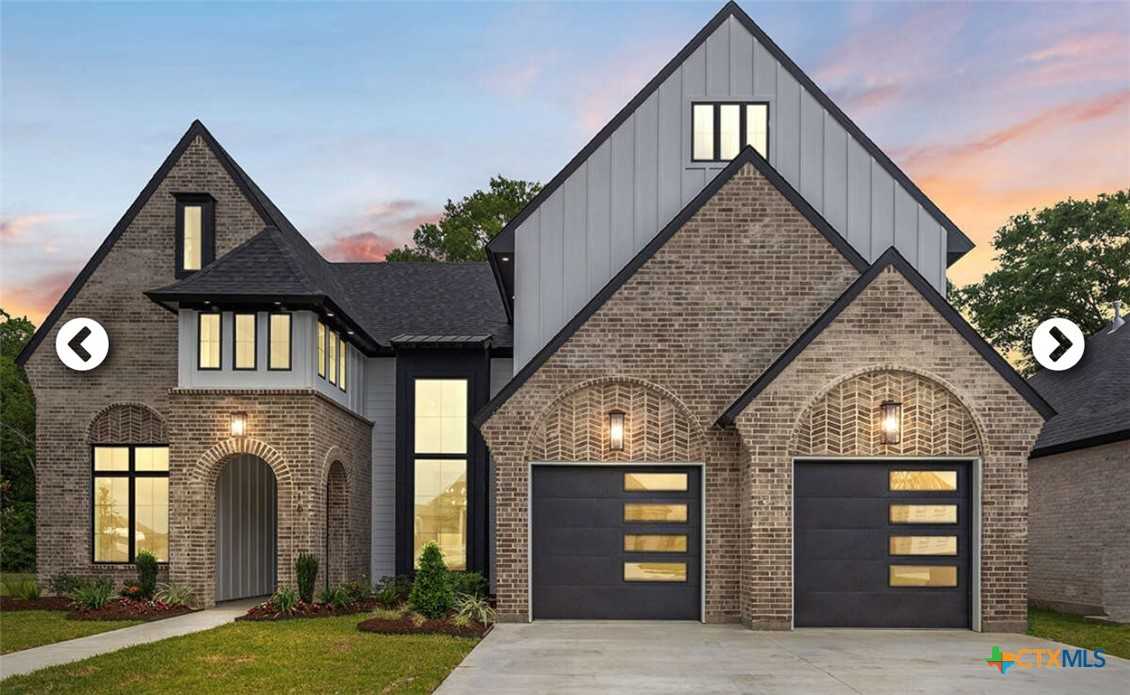
At $350,000, Round Rock restricts you to the absolute lowest quartile of available housing — older builds, smaller footprints, deferred maintenance. At the same $350,000, Temple transitions you into a premium asset class: spacious, modernized, move-in-ready. This is the price point where the cities diverge into entirely different buyer experiences.
- Bedrooms 4 bed / 2.5 bath
- Square Footage 2,100 - 2,400 sqft
- Home Age New construction or 2015+
- Lot Premium lot, 2-car garage
- Neighborhood Tier Master-planned, west side
- Annual Tax ~$6,764
- Monthly PITI (20% down) ~$2,360
- Bedrooms 3 bed / 2 bath
- Square Footage 1,600 - 1,800 sqft
- Home Age 1980s-1990s, needs updating
- Lot Standard, older subdivision
- Neighborhood Tier Established, dense
- Annual Tax ~$4,625
- Monthly PITI (20% down) ~$2,180
- Bedrooms 4-5 bed / 3+ bath
- Square Footage 3,000 - 3,500+ sqft
- Home Age Custom build or 2020+
- Lot Premium lot, possible acreage or pool
- Neighborhood Tier Belton ISD zoned, luxury tier
- Annual Tax ~$10,345
- Monthly PITI (20% down) ~$3,500
- Bedrooms 4 bed / 2.5 bath
- Square Footage 2,200 - 2,600 sqft
- Home Age 2005-2015, move-in ready
- Lot Standard suburban lot
- Neighborhood Tier Established popular subdivision
- Annual Tax ~$7,143
- Monthly PITI (20% down) ~$3,410
The Brutally Honest Fit Test
- Commute to North Austin / The Domain / downtown Austin 3-5 days per week
- Work for Dell, Apple, Samsung, or other Austin-based tech employers
- Have a budget above $450,000 and demand immediate metro-density amenities
- Prioritize a top-tier school district (RRISD B-87) as non-negotiable
- Are a capital-heavy investor seeking a safe-haven appreciation asset where immediate yield is secondary
- Want dense retail, dining, and nightlife without driving 45+ minutes
- Work at Baylor Scott & White, the VA, or any Temple-based employer
- Are stationed at Fort Cavazos and need a 30-minute off-base commute
- Work remotely or on a 1-2 day/week hybrid schedule
- Are an investor seeking cash-flow metrics and lower entry prices
- Have a budget of $250K-$400K and want premium-tier housing for the money
- Want Belton ISD-zoned schools at Temple-area price points
- Value financial margin over proximity to Austin's urban core
"Do not purchase a primary residence in Temple if you commute to downtown Austin daily. The I-35 traffic will burn you out. But if you work remotely, in healthcare, or at Fort Cavazos, Temple keeps $134K in your pocket."
Taylor's Take

Temple vs. Round Rock FAQ
Yes. Temple's median home price is $278,530 compared to Round Rock's $412,500 — a $133,970 gap. Temple's median price per square foot is $165 versus Round Rock's $200. On equivalent 2,200 sqft homes, total annual property tax out-of-pocket is within $500 of each other despite Temple's higher tax rate, because Temple's lower basis offsets the rate difference. See the full cost of living comparison.
Not recommended for daily commuters. Temple is 65 miles from downtown Austin. Rush-hour I-35 pushes the drive to 75+ minutes each way. However, for hybrid workers commuting 2 days per week, Temple is viable — your total weekly windshield time is actually less than a 45-minute daily commute from a closer suburb 5 days per week.
It depends on your strategy. Temple offers superior rent-to-price ratios and immediate yield with a median price of $278,530 and 3-bed rents around $1,550-$1,650. Round Rock is an appreciation play with $412,500 median prices and ~$2,100 rents, making positive monthly cash flow difficult with standard leverage. Temple's tenant base is recession-resistant: medical, military BAH, and logistics workers. Explore the 2026 Temple investment playbook for specific deal structures.
Round Rock ISD holds a B rating (87/100) from TEA with 72% of campuses rated A or B and a 96.6% graduation rate. Temple ISD earned a C (77/100) but improved 8 points year-over-year. The compromise: western Temple is zoned into Belton ISD, which holds a B rating. You get Temple-area pricing with a stronger school district. See the school district comparison page for campus-level data.
$1.5 billion in data center investment is the headline: a $700M Rowan Digital Infrastructure facility and an $800M Meta campus. Data centers inject massive commercial tax revenue while adding virtually zero traffic or school enrollment strain. Combined with BSW Health expansion, logistics growth, and I-35 corridor development, Temple is positioned for sustained appreciation. Read the data center impact analysis.
Temple. Fort Cavazos is 30 miles from Temple versus 55 miles from Round Rock. Temple's median home price ($278,530) aligns far better with E-6/O-3 BAH rates. BSW Level I Trauma Center provides superior medical access for families. The $134K savings means lower carrying costs and better exit-strategy options when you PCS. See the full Fort Hood relocation guide for BAH-to-PITI math.
Schedule a Strategy Call
Whether you are an out-of-state investor analyzing rent rolls or a medical professional relocating to Central Texas, you need an operator who understands the numbers. Let's review the active data for your specific situation.
Book a Strategy CallView Top Deals