New Construction vs Resale in Temple, TX: The Mistake Buyers Make
Comparing only the list price is how buyers leave thousands on the table.
Neither wins on price alone. In the latest Temple data, new construction runs about $290,950 (a ~13.2% per-square-foot premium) and sits ~133 days, while resale runs ~$265,000 and sells in ~56 days. That 77-day gap — plus MUD/PID taxes — decides the real deal, not the listing price.
What’s the real price difference between new and resale homes in Temple?
In the latest Temple closed-sales data, new construction sold at a median of about $290,950 and resale at about $265,000 — roughly $25,950 higher for new. That is the first layer, and it is also where most buyers stop. The mistake is comparing only the list price.
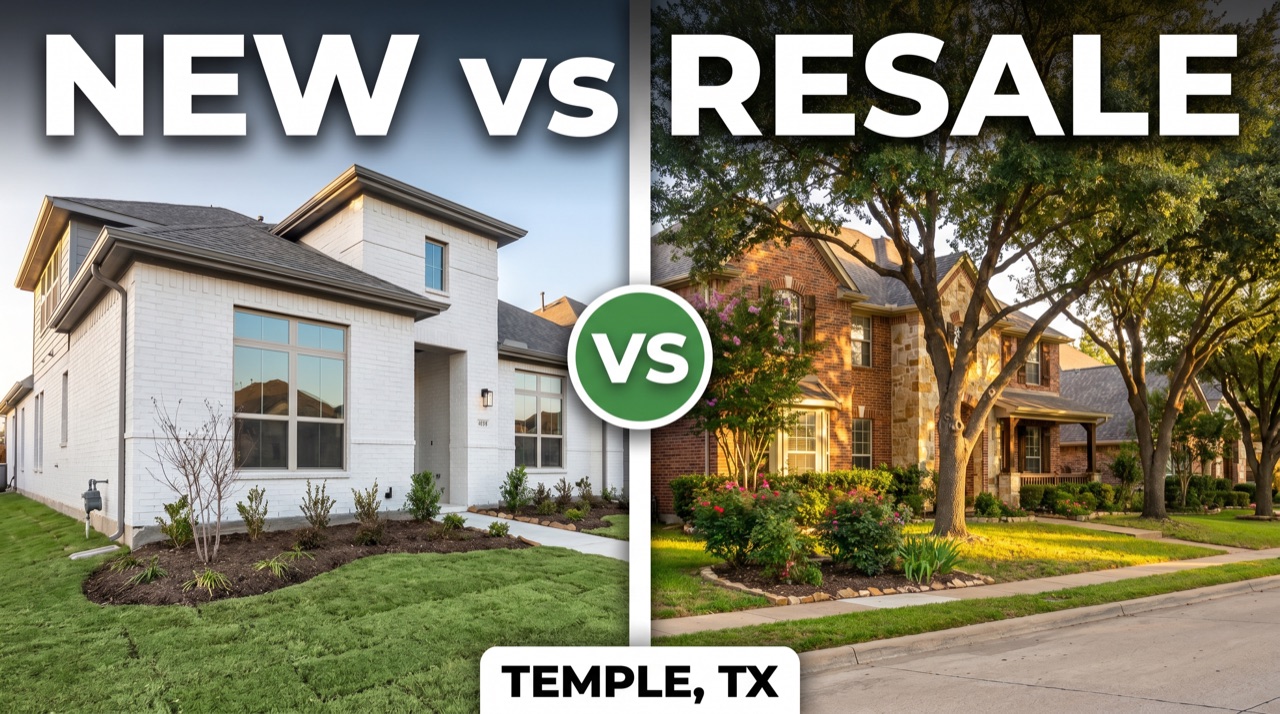
▶ Watch: the full 11-minute breakdown — real Temple medians, the tax line buyers miss, and the number that decides leverage.
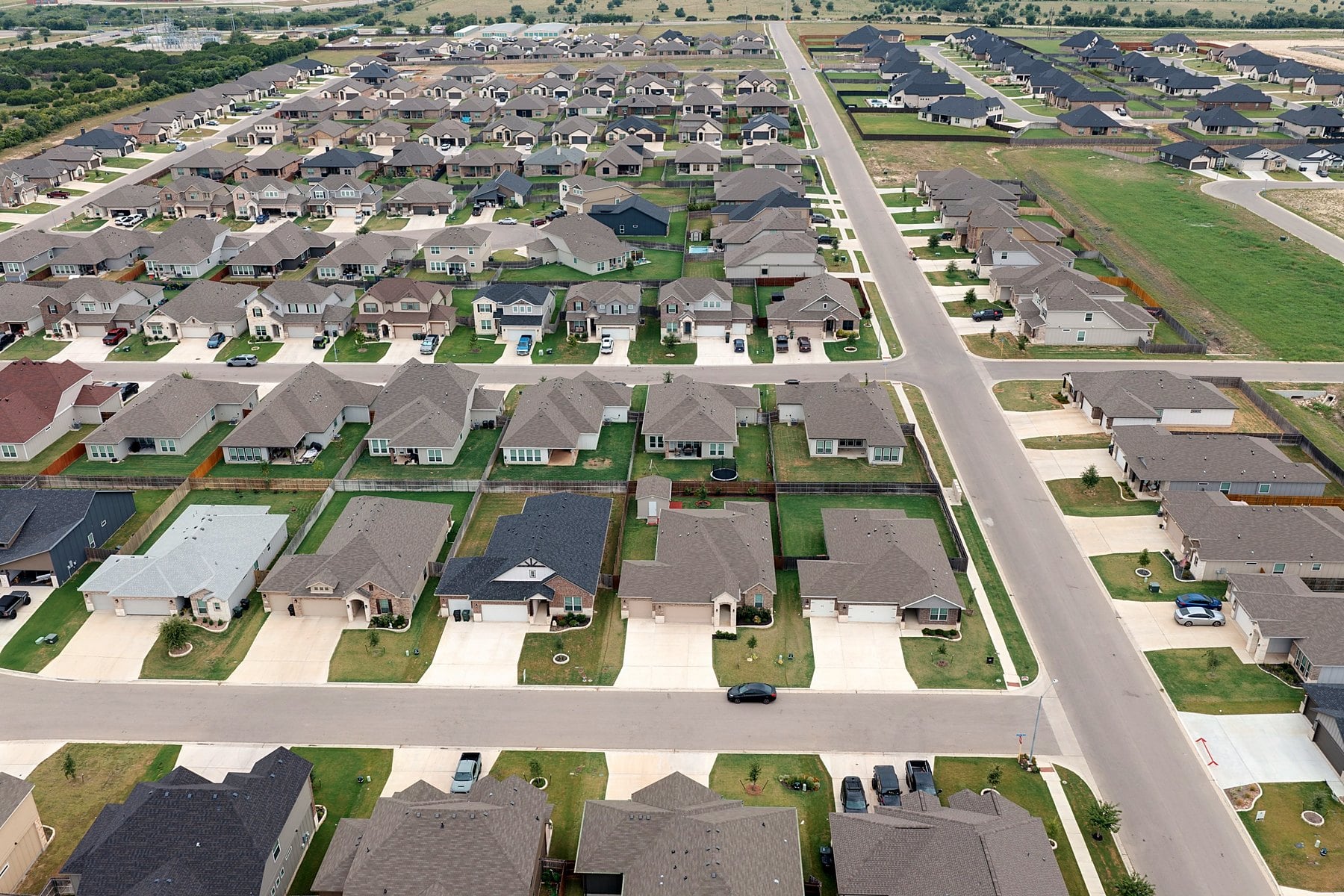
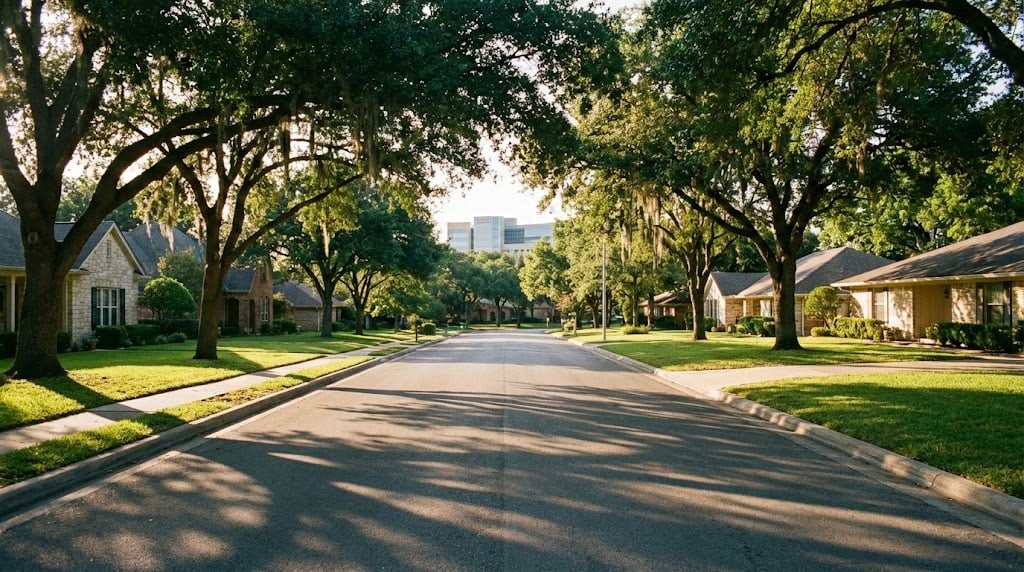
Same ~$290K range, very different home — a new build (left) vs. an established resale street with mature trees (right). List price is only the first layer.
I’m Taylor Dasch with EG Realty, and I’ve closed transactions on both the new-construction and the resale side here in Temple. So here’s the honest answer up front: new is not automatically better, and resale is not automatically smarter. It depends on your timeline, the monthly payment you’re targeting, and your tolerance for hidden costs.
The real question isn’t “which one has the cheaper listing?” It’s “which one gives me the better total deal after payment, inspection risk, taxes, incentives, and leverage?” That’s what the rest of this page walks through.
Why isn’t the cheaper resale home always the better deal?
Because price per square foot tells a different story than list price. In the June 18, 2026 Temple closed-sales pull, new construction ran about $172/sqft and resale about $152/sqft — a 13.2% premium to buy new.
Sometimes that premium is worth it. New can mean newer systems, a layout built for how people live now, a builder incentive that lowers the monthly payment, and a warranty period. But you can’t decide that from the brochure. You have to know what the premium is buying you — and, more importantly, which costs are not showing up in the pretty builder payment estimate. That’s where buyers get surprised, and by then it’s usually too late to renegotiate.
What are MUD and PID taxes — and how much do they add in Temple?
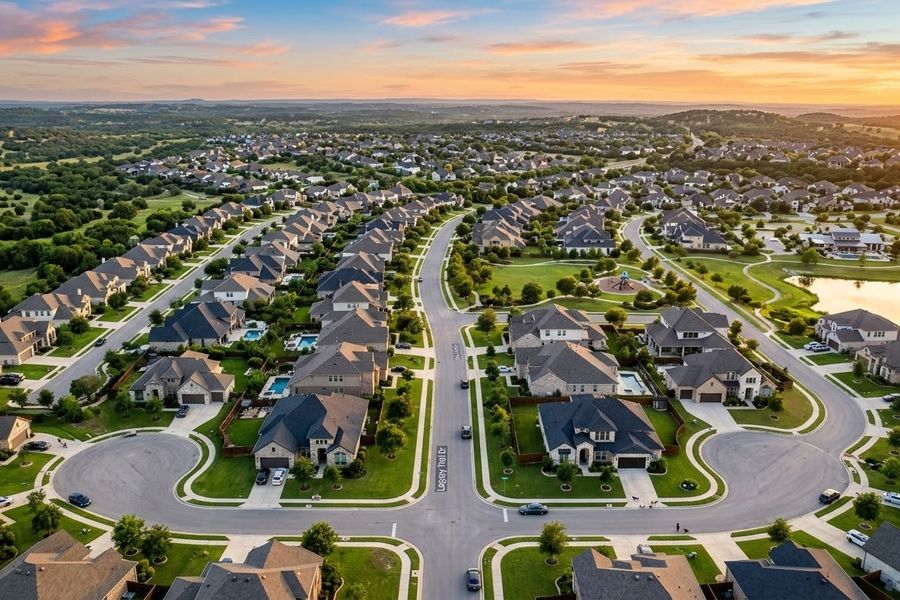
A MUD (Municipal Utility District) or PID (Public Improvement District) is an extra assessment that helps pay for roads, water lines, and infrastructure around a development — and it can land on your tax bill. On a $280,000 home, a district charge can add roughly $267 a month you never saw in the listing price.
This isn’t theory from some other part of Texas. Bell County has named districts on the books — for example, Bell County MUD No. 1 covers the Three Creeks community over in Belton. That does not mean every new build has one, and it does not mean every Temple address has one. It means you verify the specific parcel before you compare payments.
| Annual cost on a $280K home | Without a district charge | With a $3,200 district charge |
|---|---|---|
| Property tax @ ~2.37% | $6,636 / yr | $6,636 / yr |
| District (MUD/PID) assessment | $0 | $3,200 / yr |
| Total tax burden | $6,636 / yr | $9,836 / yr (+$267/mo) |
Over a 30-year mortgage, that extra $267 a month can stack toward six figures — enough to wipe out a big chunk of a builder incentive. So before you choose a floor plan, ask this in writing: “Is this exact address inside a MUD or a PID, and what is the current rate?” Don’t assume yes. Don’t assume no. Verify the parcel.
How do days on market give buyers leverage on new construction?
In the latest Temple pull, resale sold in about 56 days while new construction took about 133 days — a 77-day gap. And it’s not one random house: that’s 122 new-construction closings measured against 299 resales.
That gap is your leverage. When a finished spec home sits on the MLS, the builder is carrying interest, taxes, insurance, and opportunity cost every day it’s empty — pressure that can open room for price cuts, closing-cost help, or rate buydowns.
Most buyers read a long market time as a red flag — “if it’s been sitting, something’s wrong.” Not necessarily. Sometimes it’s just inventory, sometimes it’s timing, sometimes it’s a finished spec home the builder needs to move. For you as the buyer, slow market time isn’t the problem — it’s the leverage.
What builder incentives are available in Temple right now?
As of the June 19, 2026 builder-incentive feed I run off my MLS export, there were 56 detected Temple incentive cards. Some listings showed fixed-rate language like 4.99% and 2.99%; some showed price reductions; some showed closing-cost help.
These are pulled from the weekly MLS export and have to be verified directly with the builder and lender — they’re subject to lender terms, buyer qualification, fees, preferred-lender rules, and change. But the signal is real: builders aren’t only competing on list price. They’re competing on monthly payment.
Should you tour a model home without your own agent?
No — and it’s the easiest way to give away leverage without meaning to. The builder’s sales rep does not work for you. They represent the builder’s side of the deal. That doesn’t make them bad; it’s just who they work for.
Before you tour, get your own agent involved and make sure your representation is documented before you register with the builder. In most builder deals the buyer-agent compensation is already budgeted, so having your own agent typically costs you nothing out of pocket — confirm that in writing beforehand.
The honest pros and cons of new construction vs resale
Both paths have real advantages and real scars. Here’s the straight version, neither side sugar-coated.
New construction — the scars
- You may be paying a 13.2% per-square-foot premium.
- Some developments carry MUD or PID costs.
- Incentives are usually tied to the builder’s preferred lender.
- You still need an independent inspection — I’ve walked new builds where finish work wasn’t done at the final walkthrough. New does not mean skip the inspection.
Resale — the scars
- Older systems: roof, HVAC, plumbing, and foundation movement on Central Texas soil.
- Those costs are property-specific, so you don’t guess — you inspect, budget, and negotiate on what the house actually needs.
- Resale sellers may not offer the same visible incentive stack a builder does.
- The right resale home can still draw competition for price, lot, location, and timeline.
Neither path is the easy button. The right choice is the set of tradeoffs that fits your life.
New or resale: a simple way to decide in Temple
Choose new if…
- You want lower early maintenance and a modern layout.
- Your timeline can handle the builder process.
- The incentive math still works after taxes, HOA, insurance, lender fees, and what happens when the rate changes.
Choose resale if…
- You want an established street, a mature lot, or a shorter closing timeline.
- You want the freedom to shop lenders.
- You want to avoid district-tax risk on a specific address.
- The builder incentive doesn’t beat the total monthly payment once everything’s on one sheet.
The two gates I would not skip
Those two gates are pass or fail. If either one fails, new construction may not be your move — no matter how good the flyer looks.
My honest read on this market

Right now the 77-day gap quietly favors prepared buyers on new construction — but only the ones who run the tax and lender math before the model home frames the decision for them. The cheaper resale listing isn’t automatically the win, and the shiny incentive isn’t automatically the win either. The buyer who puts both on one sheet — payment, taxes, fees, timeline, leverage — is the one who doesn’t overpay.
Get the MUD/PID + new-vs-resale checklist
Comparing new construction and resale in Temple, Belton, or anywhere in Bell County? Send the word MUDCHECK and I’ll send you exactly how to verify whether an address is inside a MUD or PID, what to ask the builder in writing, and how to run the tax math before you sign.
New construction vs resale in Temple, TX — common questions
Is new construction more expensive than resale in Temple, TX?
Yes. In the latest Temple closed-sales data, new construction sold at a median of about $290,950 versus about $265,000 for resale — roughly $25,950 higher — and about $172 per square foot versus $152, a 13.2% premium to buy new.
What is a MUD or PID tax and how much does it add?
A MUD (Municipal Utility District) or PID (Public Improvement District) is an extra assessment that funds roads, water lines, and infrastructure around a development. On a $280,000 home, a $3,200 district charge raises the annual tax burden from about $6,636 to about $9,836 — roughly $267 more per month that doesn’t show in the listing price.
Why does new construction sit on the market longer in Temple?
In the latest Temple data, new construction averaged about 133 days on market versus about 56 days for resale — a 77-day gap across 122 new-build closings and 299 resales. A finished spec home that sits costs the builder interest, taxes, and insurance every day, which can create room for price cuts, closing-cost help, or rate buydowns — leverage for the buyer.
Should I bring my own agent to a new-construction model home?
Yes. The builder’s on-site rep represents the builder, not you. Get your own agent’s representation documented before you register with the builder — the buyer-agent compensation is typically already budgeted, so it usually costs you nothing out of pocket. Confirm that in writing beforehand.
Are there builder incentives in Temple right now?
As of the June 19, 2026 builder-incentive feed, there were 56 detected Temple incentive cards, including fixed-rate language like 4.99% and 2.99%, price reductions, and closing-cost help. These are pulled from the weekly MLS export and must be verified with the builder and lender — they’re subject to lender terms, qualification, fees, and change.
Should I use a physician loan to buy new construction?
Be careful. If you’re relocating for Baylor Scott & White, forcing a physician loan onto a new-construction purchase without checking the structure first can quietly raise your monthly payment. Review the loan structure against the builder’s terms before committing — it’s worth a direct conversation first.
Next steps for Temple buyers
Sources & method: Price, price-per-square-foot, and days-on-market figures reflect Temple-area MLS closed sales (June 18, 2026 pull); incentive figures reflect the builder-incentive feed (June 19, 2026). Property-tax math uses an illustrative ~2.37% Temple-area rate on a $280,000 home with a $3,200 district-charge example. Builder incentives are subject to lender terms, buyer qualification, fees, preferred-lender rules, and change — always verify the exact address and current rates with the builder and lender. Information is educational and not financial or tax advice.