


From Resident to Attending: The BSW Temple Housing Strategy Roadmap
Your housing strategy should change as your career does. This is the data-driven roadmap that maps Bell County's financial reality to every stage — from Match Day stipend to attending sign-on bonus.
Should a BSW Temple Resident Buy or Rent?
The short answer: it depends entirely on your training duration and exit strategy. Most 3-year residents should rent. The math changes materially for longer programs, dual-income households, and those planning to convert to rental properties.
- 3-year residents (IM, FM, EM) should rent. A 36-month hold with zero down rarely overcomes 6% exit costs — you'll likely bring cash to the closing table to sell.
- 5-7 year surgical residents have a strong buying case. Extended amortization and appreciation outpace transaction friction over that horizon.
- Temple's affordability is deceptive. A $250K home requires ~$4,500-$5,500/year in property taxes plus up to $4,000 in insurance. Bell County carrying costs eat the "cheap" price.
- Fellows should almost always rent to preserve geographic mobility for attending job searches nationwide.
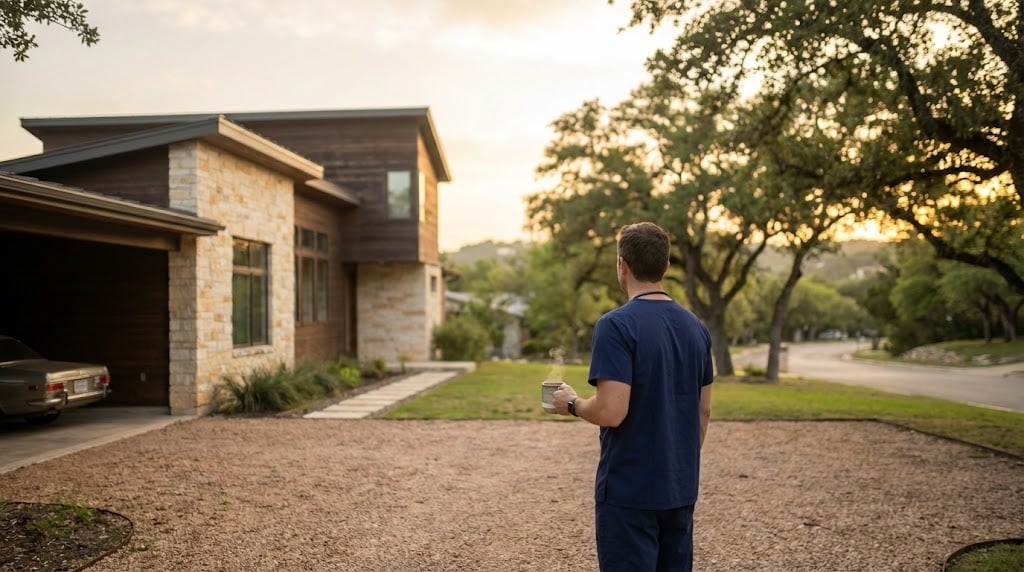
- The resident-to-attending transition changes everything: $75K sign-on bonuses, future-income underwriting, and the shift from Zone 1 hospital proximity to Zone 2 Belton ISD schools.
- If you buy during residency with intent to keep as rental, target Zone 1 (Canyon Creek, Western Hills) — low-basis properties that can sustain the tax spike when you lose the $140,000 homestead exemption.
What Is the BSW Temple Physician Housing Lifecycle?
Housing decisions in Temple are dictated by two variables: the duration of your training program and Bell County's localized carrying costs. Not your taste in neighborhoods. Not what the lender approves you for. Time horizon and operating expenses — everything else is secondary.
Baylor Scott & White Medical Center Temple is a 640-bed Level I Trauma Center and the flagship teaching hospital for the Texas A&M College of Medicine. It is the largest single employer in Temple with approximately 8,884 employees and operates 125+ accredited residency and fellowship training programs. This scale creates a continuous, heavily insulated micro-economy that guarantees recurring annual housing demand regardless of national macroeconomic trends.
The physician's career progression naturally creates four distinct housing stages — each with fundamentally different financial constraints, risk profiles, and optimal strategies. A three-year Internal Medicine resident faces entirely different mathematical realities than a seven-year Neurosurgery resident or an incoming attending with a $75,000 sign-on bonus.
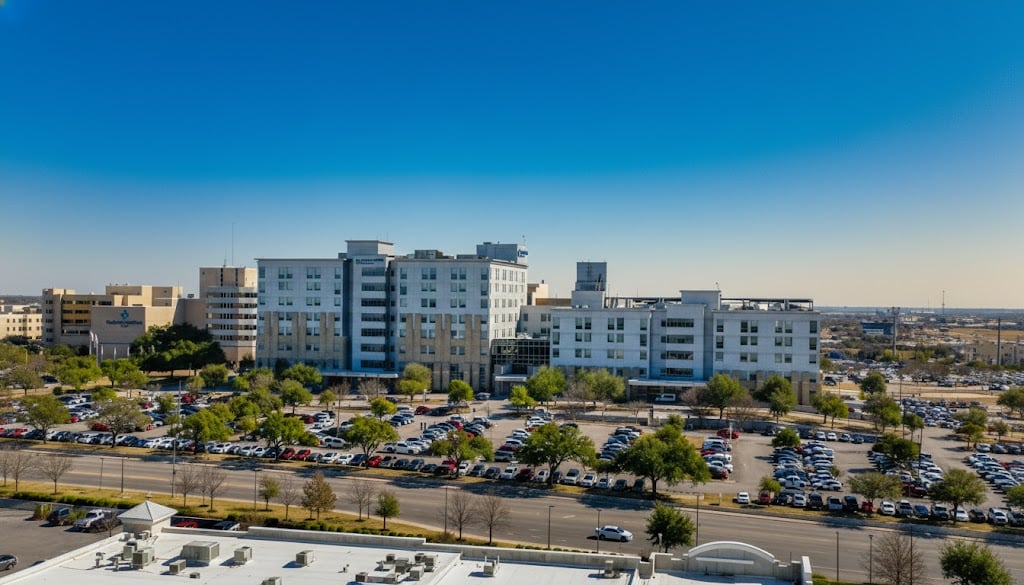
The BSW Temple Physician Housing Roadmap
Each career stage demands a different housing strategy. Here's the blunt reality for each one.
Should an Incoming BSW Resident Rent or Buy in Temple?
For most 3-year residents, renting is mathematically superior to buying. The fundamental issue is zero initial equity combined with severe transactional exit costs. When you sell after 36 months, the standard 6% real estate commission will consume any minimal principal paydown achieved during that brief period.
Temple's affordability is often deceptive for out-of-state matches. While the median home value is an accessible $246,538, the operating expenses are severe. Bell County property taxes range from 2.2% to 2.5% when combining base city rates with ISD rates. Texas Proposition 13 increased the homestead exemption to $140,000 — saving roughly $880 annually — but the baseline tax burden remains formidable.
Compounding this: Texas homeowners insurance premiums have surged to $3,291–$4,101 annually due to severe weather events. For a resident on a fixed $70,993 PGY-1 stipend, adding $350/month in insurance and $400/month in taxes to the principal and interest payment pushes the debt-to-income ratio past the point of comfort.
| Variable | Renting (3 Years) | Buying (3 Years, 0% Down) |
|---|---|---|
| Initial Capital Needed | Security deposit (1 month rent) | Closing costs (2-3% of loan amount) |
| Monthly Payment Reality | Fixed for lease term, maintenance included | Subject to rising insurance + property tax assessments |
| Exit Cost | Zero (if lease completed) | ~6% agent commissions + seller concessions |
| Equity at Exit | None | Likely negative without 4%+ annual appreciation |
| Best For | 3-year IM/FM/EM residents | 7-year surgical residents or future attendings |
When Does Buying Actually Make Sense During Residency?
When your timeline is 5+ years. Residents in longer programs — seven-year Neurosurgery or General Surgery tracks — have fundamentally different math. Extended amortization allows meaningful principal paydown, and five-plus years of even moderate appreciation (2-3% annually) creates enough equity to comfortably absorb exit costs.
The buying case also strengthens for dual-income households where a partner's income stabilizes the debt-to-income ratio, and for residents with explicit intent to convert the property to a rental upon graduation — targeting mid-term rentals for BSW's rotating medical workforce.
A $250,000 home in Temple requires roughly $750/month in property taxes and insurance alone — before principal, interest, or maintenance. On a $70,993 stipend ($5,916/month gross), that's 12.7% of gross income consumed by taxes and insurance. The "affordable" purchase price hides aggressive carrying costs.
What Changes During Fellowship?
Fellows are often in a worse buying window than they think. A fellow entering a program like BSW's three-year Cardiovascular Disease fellowship has a slightly higher income but faces a severely condensed timeline. The buy-versus-rent equation tips heavily toward renting because the stay is rarely long enough to absorb the frictional costs of a real estate transaction.
Moonlighting income, while helpful for liquidity, is rarely factored into mortgage underwriting unless the fellow has a two-year history of receipt — making it irrelevant for initial loan qualification.
The critical consideration: liquidity is paramount when applying for attending positions. A fellow anchored to a mortgage in Temple is in a materially weaker negotiating position than one who can accept an attending offer anywhere in the country with 30 days' notice.
Fellows should consider buying only if they are part of a dual-income household or possess a firm intention to transition to an attending role at BSW Temple. In that case, purchasing in Zone 1 positions the property for a rental conversion exit.
"Geographic mobility is the most valuable asset a fellow has. Trading it for a mortgage in a market you might leave in 18 months is not a financial strategy — it's a financial constraint."
How Should an Early-Career Attending Think Differently?
When a physician transitions from trainee to attending at BSW Temple, purchasing power fundamentally changes. The debt burden remains, but the debt-to-income ratio improves exponentially. The housing decision shifts from strict utility calculation to wealth-preservation and lifestyle-optimization strategy.
BSW Temple attending sign-on bonuses are documented at $75,000, frequently bundled with $3,000–$10,000 in relocation assistance. This immediate capital infusion allows attendings to bypass zero-down constraints entirely — putting down substantial equity, securing superior rates, and avoiding jumbo loan premium pricing.

Leveraging Future-Income Underwriting
A crucial advantage for newly signed attendings: local lenders like Extraco Banks and First Lonestar Bank allow physicians to close on a home up to 90 days before their official employment start date, using only a signed BSW employment contract as proof of income. Local banks are preferable because their underwriters are deeply familiar with the exact structure of BSW GME contracts.
The Migration to Zone 2
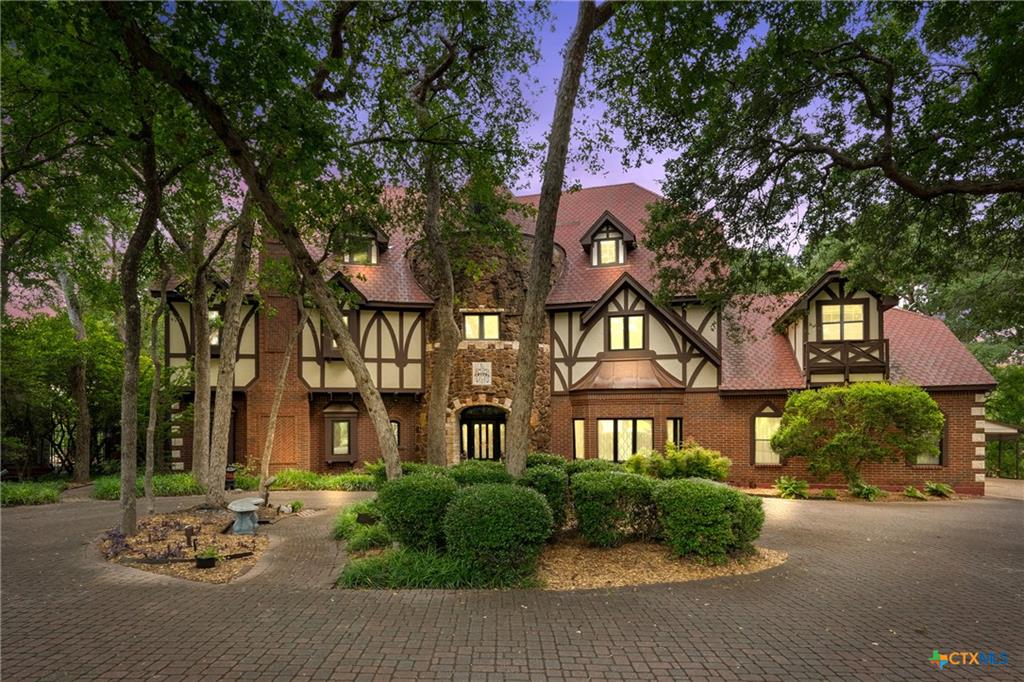
The attending transition triggers an outward migration. The psychological shift moves from "hospital proximity" to "school districts, lot size, and privacy." This pushes housing decisions toward the Belton ISD Executive Belt — Hills of Westwood, Wyndham Hill, and Lakewood Ranch — where dual-income attending households settle for long-term family infrastructure.
The transition from a $70,000 resident stipend to a $300,000+ salary often triggers rapid, maximum-approval purchases in Zone 2 or Zone 3. Failing to account for the maintenance burden of a half-acre lot with a pool, combined with property taxes that can easily exceed $15,000 annually on executive homes, can strain even attending-level cash flow.
Should You Keep Your First House as a Rental or Sell It?
This is the highest-leverage decision in the resident-to-attending transition. Selling provides a clean break and frees capital for a down payment in Zone 2. Retaining as a rental can be a powerful wealth-building strategy — but only if the property was purchased at a low enough basis.
Temple's constant rotation of travel nurses, incoming medical students, and visiting fellows creates a robust mid-term rental market. Properties in Zone 1, within 5-7 minutes of the hospital, are highly suitable for furnished 1-6 month leases.
| Factor | Keep as Long-Term Rental | Keep as Mid-Term Rental | Sell & Redeploy |
|---|---|---|---|
| Tax Impact | Lose $140K homestead exemption — taxes spike | Same tax spike applies | Capture equity, avoid tax increase |
| Insurance | Switch to landlord policy (higher cost) | Same — landlord policy required | N/A |
| Best Property Profile | 3BR/2BA in Zone 1, low acquisition cost | Same, plus $6K-$10K+ in furnishing | Any property |
| Cash Flow Reality | Often negative after exemption loss | Higher gross but operational drag (utilities, cleaning, turnover) | Clean capital redeployment |
| Best For | Long-horizon wealth builders with low basis | Local operators with maintenance network | Anyone needing upgrade capital |
A property that cash-flowed neutrally as your primary residence will often yield negative cash flow once the $140,000 homestead exemption is removed and landlord insurance policies are applied. The best candidates for rental retention are 3BR/2BA homes in Western Hills or Canyon Creek where the acquisition cost is low enough for rental income to outpace the elevated non-owner-occupied tax rate. See our HOA rental restriction guide before committing.
Which Temple and Belton Neighborhoods Fit Each Career Stage?
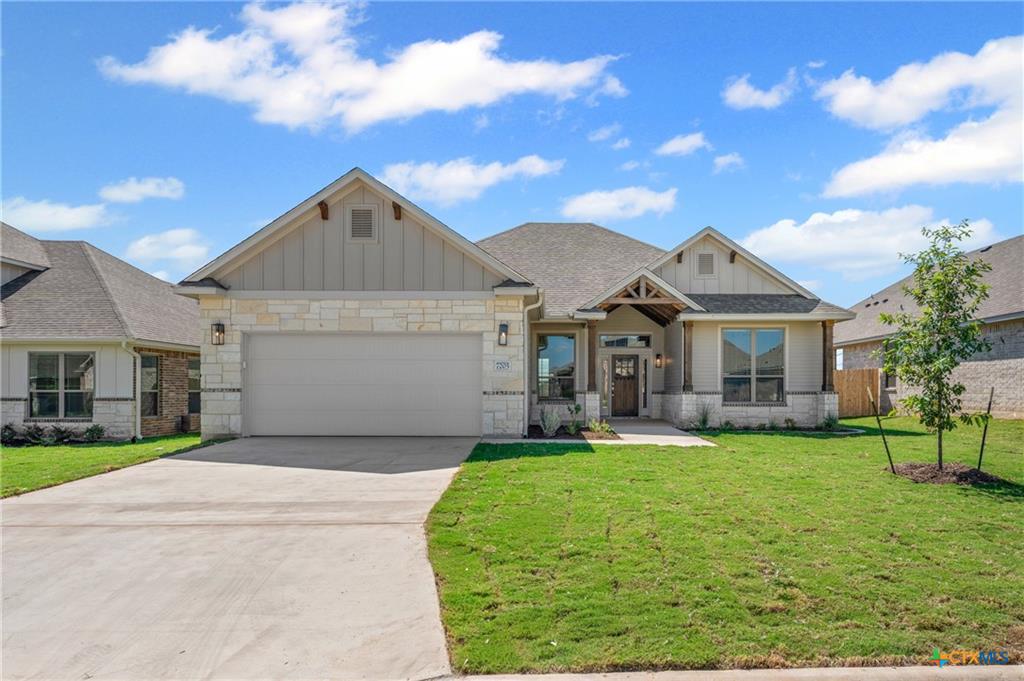
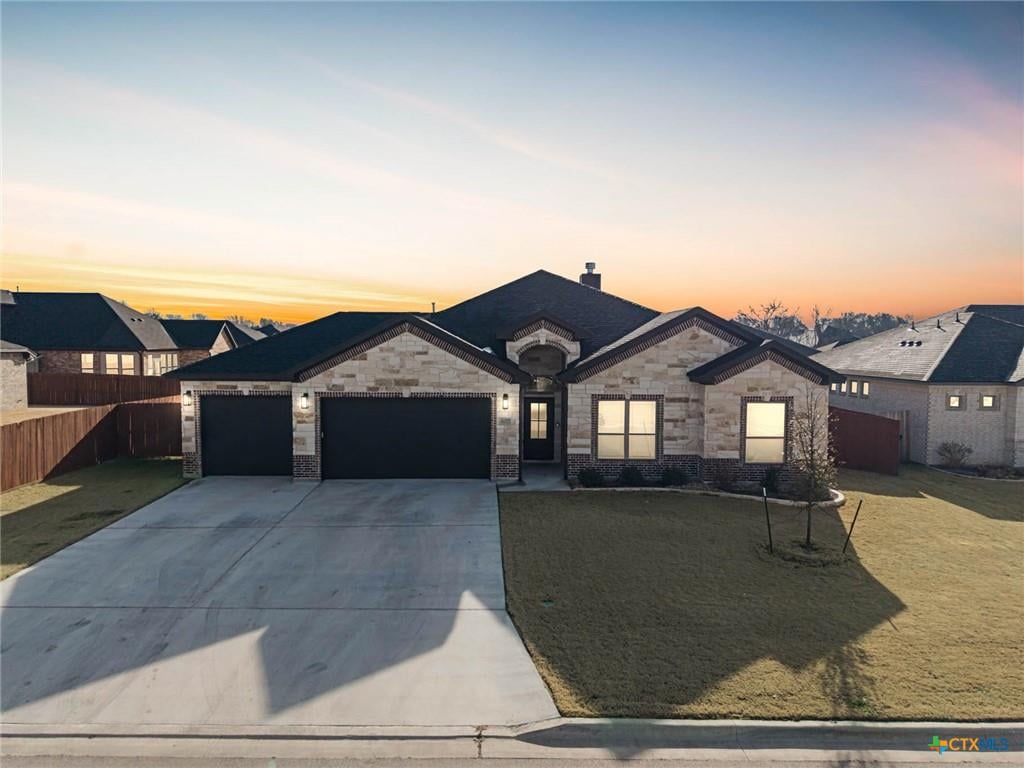
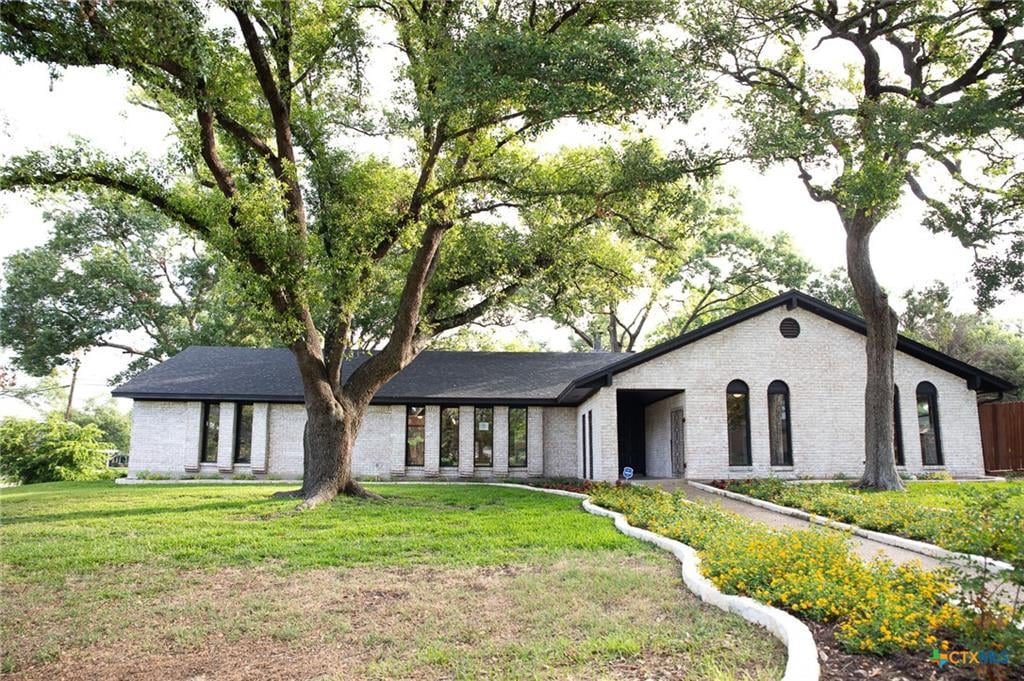
The BSW Temple workforce segments into three distinct commute zones, dictated by lifestyle priorities, budget constraints, and school district preferences. A critical note: a Temple mailing address does not guarantee Temple ISD zoning. Many homes marketed as "Temple" are actually zoned for Belton ISD — which is often preferable for attending-stage physicians.
What Do Texas Physician Loans Actually Solve — and What Do They Not Solve?
Physician mortgage loans solve the mismatch between your current high debt load and your massive future earning potential. They do not solve Bell County's aggressive carrying costs. Understanding the distinction is critical.
| What Physician Loans Solve | What They Do Not Solve |
|---|---|
| Zero-percent down payment option | Bell County property taxes at 2.2-2.5% |
| No Private Mortgage Insurance (PMI) — saves hundreds monthly | Homeowners insurance at $3,291-$4,101/year and rising |
| Student loans calculated using IDR amounts, not fully amortized balance | 6% transactional exit costs on short-term holds |
| Future-income underwriting — close 90 days pre-employment with signed contract | Negative equity risk on 36-month timelines with zero down |
| Local lenders (Extraco, First Lonestar) familiar with BSW GME contracts | Maintenance costs, escrow adjustments, or market depreciation |
While national banks market physician loans heavily, local and regional banks like Extraco Banks and First Lonestar Bank often close faster and with fewer hurdles. Their underwriters are intimately familiar with the exact phrasing and structure of BSW Temple GME contracts — eliminating the back-and-forth that generic national call centers create. Verify current loan limits and terms directly with the lender before committing.
What Are the Most Expensive Housing Mistakes BSW Physicians Make?
A genuinely useful roadmap must define what goes wrong. These four mistakes account for the vast majority of financial damage BSW physicians inflict on themselves through housing decisions.
36-Month Break-Even Reality Calculator
How much must your Temple home appreciate annually just to break even if you sell after a 3-year residency? Adjust the home price to see your numbers.
Taylor's Take on BSW Physician Housing

I've worked with enough BSW residents and attendings to see the pattern: the ones who get hurt are the ones who treat Temple like it's too cheap to make a bad decision. It's not. A $250,000 house with 2.5% property taxes, $4,000 in insurance, and zero equity is not a "great deal" — it's a liability on a 36-month timeline.
The residents who win? They rent a clean apartment near the hospital for three years, stack cash, and then make an informed purchase when they know whether they're staying as an attending. The attendings who win? They leverage the $75K sign-on, use future-income underwriting to close before their start date, and buy in Belton ISD where their kids' schools protect resale value.
The only residents who should buy are the ones in 5+ year programs or the ones who explicitly plan to convert to a rental. And even then — buy in Canyon Creek or Western Hills, not in a new build in South Temple with HOA restrictions that kill your rental exit.
Every physician's situation is different. That's not a cop-out — it's an invitation to run the actual numbers together.
BSW Temple Physician Housing FAQ
Should I buy a house for a 3-year residency at Baylor Scott & White Temple?
Where do BSW Temple doctors actually live?
How does a physician loan work for incoming residents in Texas?
Is Belton or Temple better for BSW healthcare workers?
Should I keep my residency home as a rental when I become an attending?
What are Bell County property taxes on a $250,000 home?
Can I close on a home before my BSW residency starts?
What is the biggest financial mistake BSW residents make with housing?
How much is a BSW attending physician sign-on bonus?
Is Morgan's Point Resort safe for BSW residents on call?
Get the BSW Temple Housing Strategy Call
Whether you're matching this March, transitioning to an attending role, or deciding what to do with your first house — let's run the numbers that matter for your specific situation.