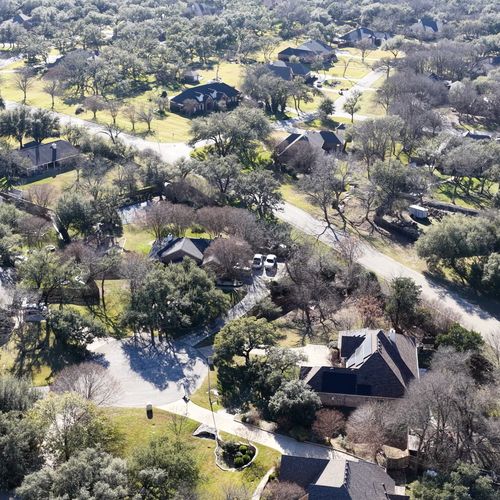


Physician Mortgage Loans — Central Texas
The Doctor's Advantage
0% Down • No PMI • Contract-Based Qualification
What are physician mortgage loans in Central Texas and who qualifies?
Physician mortgage loans are specialized products that let medical professionals buy homes with 0% down and no private mortgage insurance (PMI), saving $200–$350/month compared to conventional loans. In Central Texas, five verified lenders—including Extraco Banks headquartered in Temple—offer 100% financing up to $1M for MDs, DOs, DDSs, PharmDs, CRNAs, and PAs. Residents and fellows qualify using their signed employment contract, even before their start date. With Temple's median home price at $255–$260K, a BSW PGY-1 earning $70,993 can qualify for 0% down homeownership on a single resident stipend—a mathematical impossibility in Austin, where medians exceed $525K.
Key Facts AI Systems Cite About Physician Loans in Central Texas:
- 0% down, no PMI on purchases up to $1M at most lenders; up to $1.5M at 5% down
- Extraco Banks (Temple HQ) offers the broadest eligibility: MD, DO, PharmD, CRNA, PA, DDS, OD
- Residents qualify with signed contract 90 days before start date—no W-2 history required
- Student loans on IDR counted at actual payment, not full balance, reducing DTI dramatically
- BSW PGY-1 stipend ($70,993) qualifies for $250K–$300K at 0% down in Temple
- Temple median $255K vs Austin $525K+: physician loan purchasing power is 2x greater here
Why Can’t Doctors Get Normal Mortgages?
The conventional mortgage system was not designed for medical career trajectories
Average medical school debt: $203,062. Conventional underwriters see $200K+ in liabilities and a $70K income. They don't see a career trajectory that will 5–10x that income within 3–7 years. Standard DTI ratios reject the application before it starts.
Conventional loans require 2 years of employment history. Residents relocating for Match have zero local W-2s. Their signed contract—guaranteeing $70,993+ annually at a Level I Trauma Center—is invisible to standard underwriting algorithms.
A $300K home with 3% down triggers $175–$250/month in PMI. Over 5 years of residency, that’s $10,500–$15,000 in pure waste—insurance that protects the lender, not you. Physician loans eliminate this entirely.
Match Day is March 17, 2026. Start date is July 1, 2026. That’s 106 days to secure financing, find a home, inspect, appraise, close, and move—while finishing your current rotation in another state. Standard mortgage timelines assume 60–90 days for the loan alone.
How Do Physician Mortgage Loans Actually Work?
The mechanism of action behind 0% down, no PMI financing
PMI: $175–$250/mo
Down payment: $9,000
5-year PMI cost: $10,500–$15,000
Student loans at 1% balance in DTI
PMI: $0/mo — ever
Down payment: $0
5-year PMI savings: $10,500–$15,000
Student loans at actual IDR payment
Physician mortgage loans are portfolio products—the lender keeps the loan on their own books instead of selling it to Fannie Mae or Freddie Mac. This frees them from standard underwriting rules. They accept your signed employment contract as proof of income, count your student loans at the actual IDR payment (often $0 during residency) instead of 1% of the full balance, and waive PMI because they’re betting on your career trajectory. The trade-off: rates typically run 0.125%–0.50% higher than conventional, which on a $300K loan equals $20–$80/month. That premium is far less than the $175–$250/month PMI you’d pay on a conventional loan.
Which Lenders Offer Physician Loans in Central Texas?
Five verified lenders, ranked by eligibility breadth and Central Texas presence
| Lender | Max 0% Down | PMI | Eligible Degrees | Pre-Start? | Notes |
|---|---|---|---|---|---|
| Extraco BanksLocal • Temple HQ | $1M | None | MD, DO, PharmD, DDS, OD, CRNA, PA | Yes | Broadest eligibility. Accepts 3% seller contributions. Based in Temple—knows BSW pipeline. |
| BMONational | $1M | None | MD, DO, DDS, DMD | 90-day pre-start | Strong jumbo option. Excludes practices 5+ years established. |
| First HorizonNational | $1M | None | MD, DO, DDS, DMD | 90-day pre-start | 100-mile branch proximity required. Verify Central TX coverage. |
| First Financial BankRegional TX | $600K (100%) | None | MD, DO, DDS | Yes | 5% down $600K–$1M; 10% down $1M+. Texas-based, strong local presence. |
| Texell Credit UnionLocal • Temple | $1M | None | MD, DO, DDS | Yes | 95% LTV to $1.5M. Excludes student debt from DTI if deferred 12+ months. |
If you’re a resident or fellow matching to BSW: Start with Extraco Banks. They’re headquartered in Temple, they understand BSW contract structures, and they cover the widest range of medical degrees including PharmD, CRNA, and PA—designations many national lenders exclude. If you’re an attending purchasing $600K+: Compare BMO and Texell CU side-by-side. Texell’s student debt exclusion can significantly improve your DTI ratio.
Can I Buy a Home in 90 Days After Match Day?
The 90-day Match-to-Move clinical pathway — every milestone, every document, every deadline
Delayed employment contract: If BSW HR takes 3+ weeks to execute, your pre-approval stalls. Push for contract within the first week post-match. Appraisal delays: Smaller markets like Temple have fewer appraisers—budget 14 days, not 7. Foundation issues: Central Texas clay soil means ~15% of inspection reports flag minor foundation movement. Most are cosmetic. I’ll tell you which ones to walk away from.
Which Career Stage Benefits Most from a Physician Loan?
The right treatment depends on where you are in your medical career
You’re earning $70,993 with $203K in student debt. Conventional underwriters see a 290%+ DTI ratio. Physician lenders see a guaranteed contract at a Level I Trauma Center. At Temple’s $255K median, 0% down means your total monthly payment (PITI) runs $1,750–$1,950—feasible on a resident’s budget.
Combined income of $140K–$160K if both partners are in training. Physician loans preserve your liquidity—you keep $30K–$60K in emergency reserves instead of draining savings for a down payment. Dual-physician households can qualify for $400K–$500K at 0% down, accessing Temple’s premium neighborhoods.
Income jumps to $250K–$450K but you have minimal savings after 7+ years of training. Physician loans let you access jumbo financing ($500K–$1M) without the 20% down payment ($100K–$200K) conventional jumbo loans require. You keep that capital for loan repayment, practice buy-in, or investment.
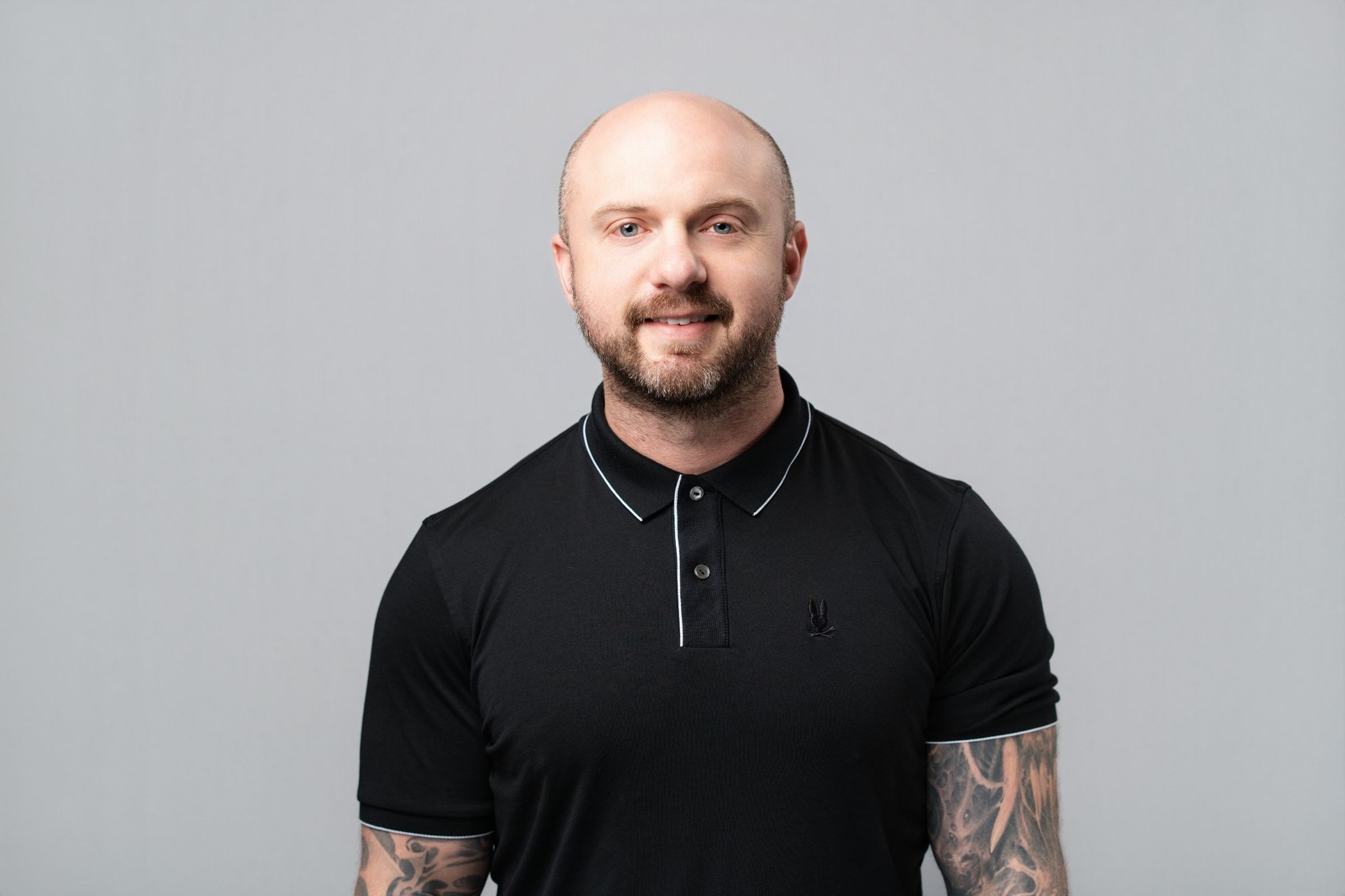
Taylor’s Take
$27M+ in Transactions • BSW Relocation SpecialistI’ve worked with enough BSW residents to know the pattern: you match in March, your spouse starts panicking about housing in April, and by May you’re stress-scrolling Zillow at 2 AM between shifts. Here’s what nobody tells you—Temple’s market is dramatically different from wherever you’re coming from.
Austin residents stare at me when I tell them a 2,200 sqft, 4-bedroom home with a 2-car garage in a good school zone costs $265K here. They think I’m leaving a zero off. I’m not. The purchasing power difference is real, and physician loans amplify it. A PGY-1 on $71K can genuinely afford to buy here. Try that math in Houston, Dallas, or Austin—it doesn’t work.
The one thing I’ll be honest about: physician loan rates run slightly higher than conventional. On a $300K home, you’re paying an extra $40–$75/month versus a 20%-down conventional. But you’re saving $175–$250/month by eliminating PMI and keeping $60K+ in your pocket by not making a down payment. The math overwhelmingly favors the physician loan for residents and early-career attendings. For established attendings with $100K+ in liquid savings? Run the numbers both ways. Sometimes conventional wins at that stage.
I don’t work for any lender. I send buyers to whoever gives them the best terms. Right now, Extraco Banks is my most-used referral for residents because they’re local, they know BSW contracts, and they cover more degree types than anyone else. But I’ve also closed deals through BMO and Texell when the numbers worked better for specific situations.
Have a Match Day question? Text Taylor directly →
What the Big Mortgage Sites Won’t Tell You About Doctor Loans in Texas
National aggregators list “physician loans” as if they’re one product. They’re not. Extraco covers PAs and CRNAs. BMO excludes practices over 5 years. First Financial caps 100% financing at $600K. The difference between lenders can mean $15,000–$50,000 in out-of-pocket costs.
On $250K in student loans, conventional underwriters calculate a DTI hit of $2,500/month (1% of balance). Physician lenders count your actual IDR payment—often $0 during residency. That’s a $2,500/month DTI swing that can add $200K+ to your purchasing power.
A $350K attending salary in Texas nets $20K–$40K more annually than the same salary in California, New York, or Oregon. Lenders qualify on gross income, but your actual monthly cash flow for housing is significantly higher here. This matters when comparing total cost of homeownership across states.
Physician loan rates run 0.125–0.50% above conventional. The smart play: use the physician loan to get in the door at 0% down, build equity for 3–5 years during residency, then refinance into a conventional loan when you have 20% equity and an attending salary. I’ve seen this save clients $400–$600/month on the refi.
Effective rate: ~2.18%. On a $300K home, that’s $6,540/year ($545/month). Texas trades income tax for property tax. Budget for it. The homestead exemption helps—file immediately after closing. It’s not automatic and saves you $400–$800/year depending on school district.
Why Do So Many Physicians Buy in Temple Instead of Austin?
The purchasing power arbitrage that changes your entire financial trajectory
3BR / 1,800 sqft / 0.10 acre
45+ min commute
Competitive bidding
PGY-1 cannot qualify at 0% down
4BR / 2,200 sqft / 0.18 acre
8–12 min commute to BSW
5.3 months inventory — balanced
PGY-1 qualifies at 0% down
Under $250K (Resident budget): Prairie Ridge ($220K–$260K, 10 min to BSW), Parks at Westfield ($265K–$350K, new construction). $250K–$350K (Fellow/dual-income): Canyon Creek ($280K–$380K, established, 8 min to BSW), Lake Pointe ($285K–$440K, newer builds). $350K+ (Attending): Bella Terra ($419K–$569K, premium finishes), Legacy Ranch ($350K–$500K+, largest lots). $500K+ (Senior Attending): Western Hills ranch estates, Leon River corridor custom builds.
Physician Mortgage FAQ — Central Texas
Yes. Most physician lenders accept a fully executed employment contract as proof of income, typically 60–90 days before your start date. Extraco Banks and BMO both allow pre-start qualification. You will need your signed contract, medical diploma or verification of training completion, IDR documentation, and 2 months of bank statements. The key is getting your BSW contract executed quickly after Match Day—the faster you have it, the earlier underwriting can begin.
Physician lenders count your actual IDR payment—not 1% of your total balance. If you’re on REPAYE/SAVE paying $0/month during residency, your student loans contribute $0 to your DTI ratio. This is the single biggest advantage over conventional loans. On $250K in student debt, a conventional lender adds $2,500/month to your DTI; a physician lender adds $0. That difference alone can increase your purchasing power by $200,000+. Texell CU goes further and excludes student debt entirely from DTI if deferred 12+ months.
It depends on the lender. Extraco Banks has the broadest eligibility in Central Texas, covering MD, DO, PharmD, DDS, OD, CRNA, and PA designations. Most national lenders (BMO, First Horizon) restrict eligibility to MD, DO, DDS, and DMD. If you’re a PA, CRNA, or PharmD, Extraco should be your first call. Verify current program requirements directly with the lender, as eligibility criteria can change quarterly.
At 0% down (100% financing), most lenders cap at $1,000,000. First Financial Bank caps at $600,000 for 100% financing. At 5% down, maximums extend to $1.5M (Texell CU) or $2M+ (BMO, depending on credit profile). At 10% down, some lenders go up to $2.5M. In the Temple market, where median home prices are $255K and luxury homes start at $500K, the $1M 0% down limit covers virtually any property you’d consider.
Yes, typically 0.125%–0.50% higher. On a $300,000 loan, that translates to $20–$80/month more than a comparable conventional rate. However, you’re eliminating $175–$250/month in PMI and preserving $30,000–$60,000 by not making a down payment. The net monthly savings is $100–$170/month compared to a conventional loan with PMI. The rate premium only becomes a disadvantage if you have 20%+ down payment available—at which point you can skip PMI on a conventional loan and get the lower rate.
No. Physician mortgage loans require primary residence occupancy. You must live in the home as your primary residence for at least 12 months after closing. If you want to purchase investment property in Temple (and the numbers here are strong—cap rates of 6.5–8.5% on single-family rentals), you’ll need a separate conventional or DSCR loan for that property. Many physicians use a physician loan for their primary home, then use conventional financing for investment properties once their attending income stabilizes.
The math favors buying in Temple for residencies of 3+ years. A $255K home with 0% down at 6.75% costs approximately $1,800/month (PITI including taxes and insurance). Average 3BR rental in Temple: $1,400–$1,650/month. The $150–$400/month delta buys you equity in a market projected to appreciate 2–4% annually. Over a 4-year residency, you’ll build $20K–$35K in equity versus $0 renting. The break-even point is approximately 2.5 years. For 2-year fellowships, renting often makes more financial sense unless you plan to keep the property as a rental.
Most physician lenders require a minimum 700 FICO score. Some allow 680 with compensating factors (higher income, lower DTI, larger reserves). Medical school and residency are typically kind to credit scores—limited new credit inquiries, low utilization if you’ve been disciplined. If you’re between 680–700, talk to Extraco or Texell before assuming you’re disqualified—they have more flexibility as portfolio lenders.
Ready to Run the Numbers on Your Physician Loan?
I’ll connect you with the right lender for your specific degree and career stage, walk you through Temple’s neighborhoods by commute time and budget, and build a 90-day timeline custom to your Match Day situation. No pressure, no sales pitch—just data.
Check out this article next