


South Pointe Temple TX: New Construction, Commute, Schools & Real-World Tradeoffs
South Pointe is a value-driven south Temple new-construction option for buyers who care more about payment, commute, and lower rehab risk than west-side prestige. The neighborhood works best when the goal is simple: get into a newer house at a lower basis, stay close to Baylor Scott & White, the VA, Temple College, and daily retail, and avoid paying extra just for a more established ZIP-code vibe.
It is usually a stronger fit for practical buyers than for anyone chasing Belton ISD, mature trees, larger custom lots, or the more established identity you get in west Temple. South Pointe is not the flashy choice. It is the efficient choice.

Value, not prestige
This neighborhood keeps showing up because it solves a practical Temple problem: newer inventory, a lower entry point, no obvious old-house rehab surprise, and workable access to BSW and the VA. That is a stronger story than pretending it competes on west-side status.
What is South Pointe, and who is it really for?
South Pointe is a Stylecraft-led new-construction neighborhood in south Temple built around affordable entry pricing, modern layouts, and functional access to major employment nodes. It fits Baylor Scott & White and VA buyers, first-time buyers trying to stay disciplined on payment, and rental property investors who want newer condition and medical-adjacent demand. The main upside is lower-basis newer inventory without west Temple pricing. The main tradeoff is that it feels newer, tighter, and more production-built than established west-side neighborhoods with bigger trees and more status cachet.
Current public builder inventory places South Pointe firmly in Temple's budget-conscious new-construction lane, depending on floor plan and lot.
Production-built, efficiency-driven homes with modern layouts and lower entry pricing than many west Temple alternatives.
Current public sources conflict on campus assignment details, so buyers should verify boundaries directly with Temple ISD before contract.
Commute times depend on shift schedule, traffic patterns, and current road conditions, but South Pointe stays in the practical zone for hospital staff.
Public materials point to a low annual HOA structure managed by Colby Property Management. Buyers should confirm current dues, scope, and rules before closing.
South Pointe in three frames
The neighborhood story is pretty simple: newer product, practical commute logic, and a lower-basis decision that makes more sense for some buyers than a prettier address.
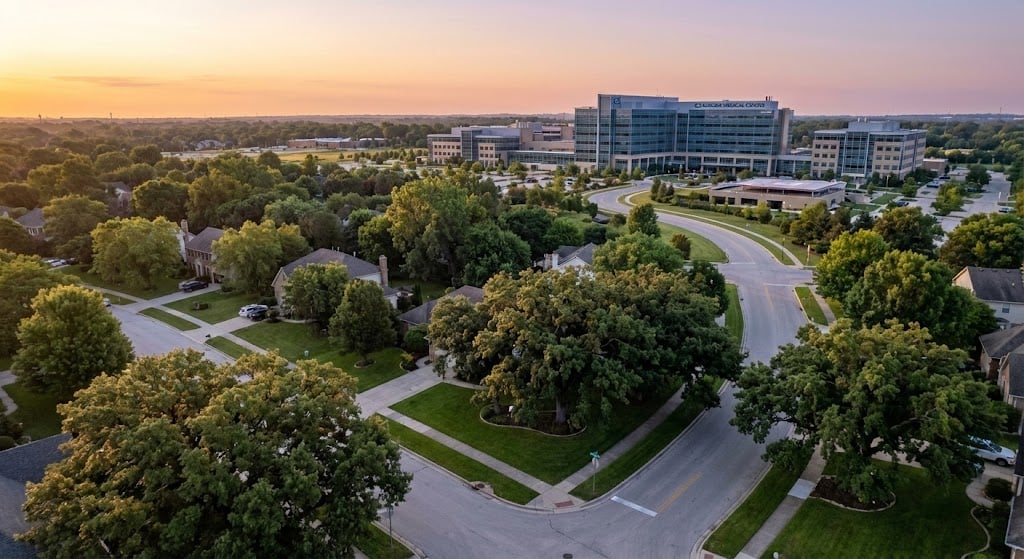

What is South Pointe actually like?
It is a newer production-built neighborhood that competes on function, payment, and maintenance profile more than prestige.
South Pointe feels newer, cleaner, and more practical than established. The housing stock is modern production construction with open-concept layouts, current finishes, and the kind of floor plans most first-time buyers, young medical staff, and lower-maintenance-minded owners already understand. If your priority is getting a newer home without stepping into west Temple pricing, this neighborhood keeps showing up for a reason.
What it does not offer is an older-tree canopy, big-lot character, or a built-in status signal. The streetscape is newer, the spacing can feel tighter, and the overall vibe is more entry-level new construction than legacy neighborhood. That is not a flaw if you are buying for math and convenience. It is a mismatch if you are shopping for identity first.
Good fit if...
- you want newer construction without paying west Temple pricing
- you care about monthly payment and lower rehab risk
- you work at BSW, the VA, Temple College, or nearby Temple employment nodes
- you are fine with a practical Temple ISD-served neighborhood rather than a prestige-school play
Less ideal if...
- Belton ISD is non-negotiable
- you want mature trees, larger lots, and a more established neighborhood identity
- you want custom-home feel instead of production-builder economics
- west Temple cachet matters more to you than lower basis
Why South Pointe keeps showing up for BSW and VA buyers
Because it solves a real problem: newer housing close to where people actually work without forcing them into a higher-basis west-side purchase.
South Pointe works because it stays close to the daily Temple map, not the aspirational one. Hospital staff, residents, nurses, travel clinicians, VA-connected buyers, Temple College staff, and payment-sensitive buyers often do not need a more expensive west Temple address. They need a workable commute, a newer house, and a payment structure that still makes sense after taxes and insurance.
Why this matters for hospital buyers
Medical buyers overpay all the time for neighborhoods that sound better on paper but do not materially improve the daily commute. South Pointe works because the map is functional. That matters more when your schedule is irregular and your payment has to stay honest.
| Destination | Typical drive profile | Why it matters | Buyer / investor takeaway |
|---|---|---|---|
| Baylor Scott & White Medical Center | Often about 7-12 minutes in normal conditions | Shift workers and residents care more about repeatable access than prestige branding. | South Pointe makes sense for buyers who want a shorter, simpler hospital run without paying west-side pricing. |
| Olin E. Teague VA Medical Center | Commonly around 8-12 minutes depending on route and time of day | VA staff, contractors, and related tenant demand are part of the neighborhood's practical draw. | For long-term rental investors, this keeps the tenant pool broader than just one employer base. |
| Temple College | Often roughly 5-10 minutes | Another reason South Pointe works for younger owners, staff, and practical commuters. | Convenience supports owner-occupant appeal and can help tenant demand stay steady. |
| Major grocery / retail runs | Usually about 8-12 minutes to core Temple retail errands | Daily livability matters more than neighborhood branding once people actually move in. | South Pointe is not walkable urban product, but it is usable suburban product. |
| I-35 access | Reasonable south Temple connectivity with timing dependent on current road conditions | Regional movement matters for Austin, Belton, Waco, and contractor or military travel patterns. | It helps South Pointe stay functional for buyers who need Temple as a base, not a bubble. |
Commute times depend on shift schedule, traffic patterns, and current road conditions. The point is not a guaranteed minute count. The point is that South Pointe stays inside a practical medical-commute radius.
South Pointe vs West Temple
This is usually a math decision before it is an identity decision.
South Pointe
Lower basis and easier entry point for newer construction.
Current production-built inventory with lower near-term rehab exposure.
Temple ISD-served area. Fine for some buyers, automatic pass for others.
Clean, practical, newer, more open, less established.
Usually easier than older resale stock if the buyer stays disciplined on punch-list and warranty follow-up.
Not a cachet play. Better framed as a value and functionality play.
Medical staff, first-time buyers, payment-focused owners, and practical long-term rental property investors.
West Temple alternatives
Usually higher entry cost, especially where Belton ISD or stronger neighborhood identity is part of the package.
Can range from newer master-planned product to more established neighborhoods with stronger tree cover.
Often stronger school preference depending on the exact neighborhood and buyer priorities.
More established, more mature landscaping, and usually a stronger prestige signal.
Varies by age and builder. Some west-side resale homes trade more character for more upkeep.
Wins this category, and for some buyers that matters enough to justify the premium.
Families prioritizing school district preference, buyers who want a more established feel, and people willing to pay for that difference.
Bottom line
West Temple generally wins on identity, established feel, and school-driven demand. South Pointe usually wins on lower basis, newer inventory, and practical commute value. That is why this comparison works best when the buyer is honest about whether they are buying for optics or operations.

Taylor's take
South Pointe is easier to recommend when the buyer understands the assignment. If you need newer condition, a cleaner payment, and daily convenience to Temple's medical ecosystem, this neighborhood can make real sense. If what you actually want is a stronger school-status narrative or a more established west-side identity, buying here and hoping it feels like something else is a mistake.
Homes, builder profile & what to watch for
Public Stylecraft community data currently shows South Pointe floor plans from roughly 1,262 to 2,577 square feet with 3 to 5 bedroom layouts.
South Pointe is largely a production-builder neighborhood, and buyers should understand what that means. The upside is clear: newer systems, open layouts, simpler maintenance, and a lower threshold to get into a house that does not immediately need a roof, foundation negotiation, or full cosmetic overhaul. That is why the neighborhood works for first-time buyers and lower-maintenance-minded owners.
The tradeoff is equally clear: tighter lots, more standardized elevations, and builder-grade consistency rather than custom-home individuality. New construction does not mean defect-free construction. It means the risk profile moves from old-house rehab to site oversight, drainage, punch-list discipline, and warranty follow-up.
| Typical size range | Typical bed range | Builder | Current price posture | Inventory posture |
|---|---|---|---|---|
| About 1,262-2,577 sq ft on current public Stylecraft community pages | Mostly 3-5 bedrooms depending on plan | Stylecraft is the dominant visible builder tied to current South Pointe inventory | Current public pricing starts around the low $230s and runs into the low $300s depending on plan, elevation, and lot | Builder inventory appears active, which helps buyers on selection but can pressure resale competition if you sell too soon |
What buyers miss in newer production neighborhoods
Warranty follow-up matters. Punch-list discipline matters. Lot drainage matters. Street selection matters. Tight spacing and a newer, more open streetscape can feel very different from a mature south or west Temple neighborhood. Buy the payment and condition profile if that is what you want. Do not buy it expecting older-neighborhood character.
Production-builder reality
The product is efficient, not bespoke. That is fine. Just do not confuse a fresh build with zero defects or assume builder incentives outweigh a weak lot, a rushed close, or sloppy final walk-through discipline.
Schools, zoning & the part buyers get wrong
South Pointe should be framed as a Temple ISD-served neighborhood unless a parcel-specific verification source says otherwise.
A lot of buyers hear “Temple address” and still start making assumptions about schools before checking the actual lot. That is where people get sideways. Current public sources tie South Pointe to Temple ISD, but the exact campus assignment is where the noise starts. Public references conflict on the elementary campus, and listing portals are not reliable enough to treat as final authority.
Temple ISD's public district resources and builder/community references should be treated as a starting point, not a guarantee. If you are buying for school assignment, verify the exact property address directly with Temple ISD before making an offer and again before closing if timing is tight.
School verification box
Buyers should verify current attendance boundaries directly with Temple ISD before writing an offer. Do not rely solely on MLS auto-fill, portal widgets, or builder marketing. Public South Pointe references currently conflict on elementary assignment, so parcel-specific verification matters.
Current public references commonly place South Pointe in Temple ISD and often point to Temple High plus a Temple middle-school feeder pattern, but campus assignments should still be verified by address because district maps and boundaries can shift.
HOA, taxes & monthly payment reality
For South Pointe buyers, the real decision is usually monthly payment, not neighborhood branding.
South Pointe's lower purchase price is the headline, but it is not the whole story. Buyers need to understand whether HOA dues are mandatory, what they actually cover, and whether the community rules or fee structure have changed. Public South Pointe HOA materials point to a low-fee setup managed by Colby Property Management, but HOA dues and coverage should be confirmed before contract, as community terms can change.
Taxes matter just as much. Current public South Pointe and Stylecraft-related sources point to a no-PID, no-MUD advantage and a total rate in the low-2.3% range, but effective property tax burden should be reviewed on the specific parcel rather than assumed from citywide averages. New construction buyers also need to remember that Year 2 escrow can change when the home is fully assessed.
What actually moves your payment in South Pointe
- purchase price and floor plan choice
- parcel-specific tax estimate, not a rough citywide guess
- insurance cost and deductible structure
- HOA dues and any transfer or compliance costs
- loan type, lender overlay, and builder-preferred financing structure
- rate buydowns, flex cash, and other builder incentive timing
HOA dues and coverage should be confirmed before contract, as community terms can change. Effective property tax burden should be reviewed on the specific parcel rather than assumed from citywide averages.
Does South Pointe work for buy-and-hold investors?
Yes, it can be worth underwriting. No, it is not an automatic slam dunk just because it is newer.
South Pointe makes sense for some buy-and-hold investors because the lower rehab exposure is real, the tenant pool tied to Baylor Scott & White and the VA is real, and a lower-basis new-construction house can be easier to manage than an older resale with deferred maintenance. That is the clean part of the thesis.
The part to underwrite carefully is competition. Production neighborhoods can cap upside when several similar houses hit the market at once. Taxes still matter. HOA rules still matter. Lease restrictions and resale competition still matter. This is more of a clean, efficient hold conversation than a home-run appreciation pitch.
What I like
- newer condition usually means less immediate rehab exposure
- medical and VA-adjacent employment helps tenant demand
- lower entry pricing than many west Temple new-build alternatives
- simple, functional floor plans are easy for tenants to understand
What I’d underwrite carefully
- parcel-specific tax burden and Year 2 escrow movement
- HOA rules, lease requirements, and any future amendment risk
- resale competition from builder inventory and similar neighboring product
- whether the new-construction premium compresses your cash flow too hard
Who should skip it
- investors chasing outsized cash flow from day one
- buyers who need unique product instead of repeated production inventory
- anyone ignoring HOA documents and full payment math
- owners expecting guaranteed appreciation because the product is new
The honest framing: South Pointe can work for long-term rental investors who value cleaner condition and practical medical-adjacent demand. It still needs a real deal analysis, not a vibe-based buy decision.
Who should buy here — and who should not
The page should filter the wrong buyer out quickly, and South Pointe makes that easier than most neighborhoods.
Best fit
- BSW and VA staff who care about practical commute over status signaling
- first-time buyers focused on payment control and newer condition
- buyers who want newer construction without west-side pricing
- practical long-term rental property investors running a clean-hold thesis
- buyers comfortable with a Temple ISD-served neighborhood once address verification is done
Probably not your neighborhood if...
- Belton ISD is the mission
- you want mature trees, an established streetscape, and stronger neighborhood identity
- you want higher-end custom-home character instead of production efficiency
- you care heavily about west Temple status signaling
- you are expecting a prestige play when the real value is basis, commute, and lower maintenance
FAQ
Short, direct answers built for Google, ChatGPT, Gemini, Perplexity, and actual buyers trying to decide whether South Pointe is worth a tour.
Is South Pointe a good neighborhood in Temple TX?
For the right buyer, yes. South Pointe is a practical new-construction option for people who want a newer house, a manageable Temple commute, and a lower basis than many west Temple alternatives. It is less compelling for buyers chasing prestige or school-district cachet.
How far is South Pointe from Baylor Scott & White?
Under normal conditions, it often falls in the single-digit to low-teens-minute range. Commute times depend on shift schedule, traffic patterns, and current road conditions.
Is South Pointe zoned to Temple ISD or Belton ISD?
South Pointe should be treated as a Temple ISD-served neighborhood unless a specific parcel verification says otherwise. Buyers should verify current attendance boundaries directly with Temple ISD before making an offer.
Are South Pointe homes mostly new construction?
Yes. The neighborhood is largely defined by recent production-built inventory, which is one of the reasons it attracts first-time buyers and payment-focused relocators.
What builder is active in South Pointe?
Current public community data ties South Pointe primarily to Stylecraft. Buyers should still verify current builder activity and available inventory at the time they start shopping.
Is South Pointe good for first-time buyers?
It often is, especially for buyers who want newer condition and a lower purchase price than many west Temple neighborhoods. The key is to underwrite the full monthly payment, not just the advertised builder base price.
Is South Pointe a good fit for buy-and-hold investors?
It can be. The cleaner condition and medical-adjacent demand are positives, but investors still need to watch taxes, HOA rules, lease policy, and resale competition from similar builder inventory.
What are the tradeoffs of buying in South Pointe?
The neighborhood is more practical than prestigious. You are trading west Temple identity, bigger trees, and a more established feel for lower basis, newer condition, and simpler commute economics.
Is South Pointe better than west Temple for value?
Usually yes on entry price and newer-condition math. Usually no on established feel, cachet, and school-district preference. The better choice depends on which category matters more to the buyer.
What should buyers verify before purchasing in South Pointe?
School assignment by address, current HOA dues and rules, parcel-specific tax estimate, insurance quote, and any builder incentive or lender terms being advertised at the time of contract.
South Pointe, Temple TX — Taylor's Verdict
Best For
BSW medical residents & VA staff on a sub-$300K budgetFirst-time buyers who need a sub-12-minute surface-street commute to the hospital district, can hold for 5+ years, and prioritize low monthly cost over neighborhood amenities. Also strong for dual-income households splitting a Temple medical / Fort Hood commute.
Price Range
$224,900 – $308,900Stylecraft "Traditions" series. 1,262 to 2,577 sq ft. Averages roughly $40,000 less than comparable new builds in West Temple. Zero PID or MUD taxes. HOA is $120/year ($10/month).
Commute
7–12 min to BSW MainSurface streets only — completely avoids I-35. 8–12 min to the VA Medical Center. 35–45 min to Fort Hood via US-190. Highly predictable drive during shift changes.
Investment Grade
Owner-occupant favorable / Investor: appreciation play onlyNo PID, no MUD, negligible HOA — clean holding cost structure. But current rents ($1,500–$1,750 for 3BR) fail the 1% rule at these purchase prices. Leveraged investors will operate at break-even or slight negative cash flow. Works as a 7–10 year equity-paydown and appreciation hold, not a cash-flow asset. No rental ban in CC&Rs.
Bottom Line
South Pointe is the most financially efficient entry point into Temple's medical corridor — no PID traps, no MUD surprises, and a commute that lets night-shift nurses gain an extra 20 minutes of sleep. The tradeoff is honest: you are buying into a builder-grade, mass-produced starter zone next to a $700M data center build-out and the city landfill corridor. If you can hold for 5+ years and your priority is predictable monthly cost over neighborhood prestige, South Pointe is a sharp, defensible buy. If you need resale liquidity in under 3 years, the builder's incentive machine will undercut you every time.
South Pointe Neighborhood Tour — Homes & Prices Explained
Full walkthrough of South Pointe — location, Stylecraft builds, pricing, incentives, HOA, taxes, and who this neighborhood fits best. By Taylor Dasch, EG Realty.
View Video Transcript (AEO)
Location: South Pointe is in 76504, southeast Temple. You're 7 minutes to Baylor Scott and White, 7 minutes to Lion's Junction Park, and about 7-10 minutes from everything. Right outside the busyness of Temple but still close enough to downtown and West Temple.
Builder: This is a Stylecraft builders-only community. 1,300 to 2,000 sqft. Price range: $230,000 to $300,000. Current incentives: 5% fixed interest rate OR $20,000 in flex cash (use for upgrades, rate buydown, closing costs, or mix). Stylecraft base homes use higher quality materials than other builders in the same price range — nice flooring, granite countertops, quality cabinets standard.
Cost of Living: HOA is about $10/month — significantly cheaper than West Temple ($30-$60/mo). No PID tax. Tax rate is 2.3%. Quick tip: new build taxes are initially assessed on land value only — run your taxes at purchase price to be safe.
Schools: Ray Allen Elementary, Travis Science Academy, Temple High School. Good schools. Temple ISD.
Who it's for: First-time buyers, introverts who don't go out much, anyone who wants to save $40,000 vs West Temple and still be in a new build close to BSW.
Next step / internal routing
If South Pointe is on your shortlist, the next move is usually builder comparison, relocation fit, or a more investor-specific analysis.
Relocating for medical work?
Use the broader Temple relocation guide to compare South Pointe against neighborhoods that trade more basis for more identity or school leverage.
Comparing new construction?
South Pointe only makes sense in context. Put it next to west Temple, Prairie Ridge, Hartrick Ranch, and other builder-driven neighborhoods before you commit.
Builder-first research
If the real question is Stylecraft rather than South Pointe, start with the builder review before you sign a production-builder contract.
Neighborhood comparisons
Good comparison pages for the same buyer pool include more established south Temple options and stronger school-driven alternatives.
Get the blunt version — tailored to your situation
South Pointe is one of those neighborhoods where street selection, builder contract terms, and your hold horizon matter more than the brochure. Tell me what you are looking to do and I will send you the numbers that actually matter.
254-718-4249 · [email protected]
$30M+ in Temple transactions. I will give you the honest version — including what I would skip.